

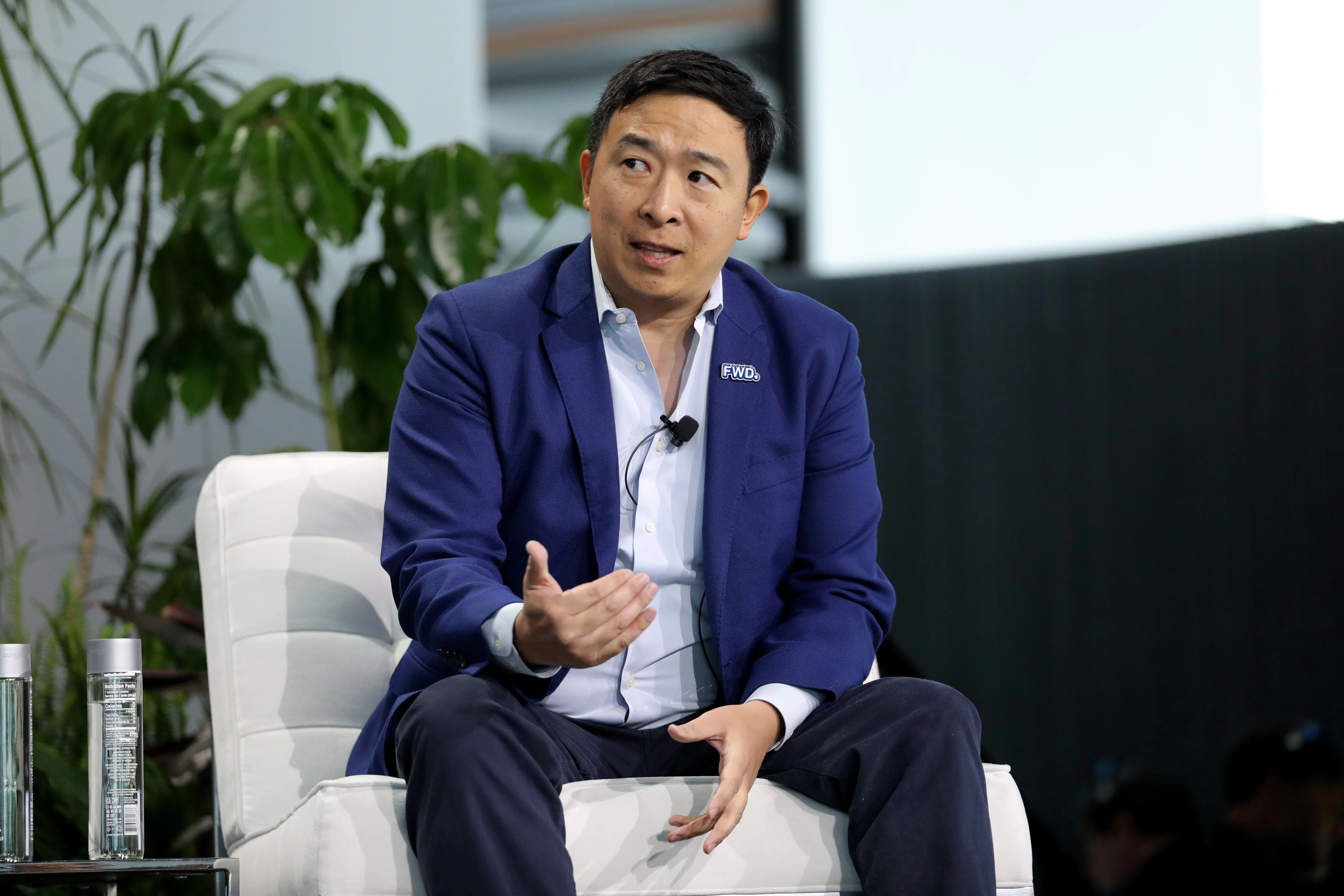
Entrepreneur Andrew Yang posits that the next significant wave of startup innovation will emerge not from extracting value, but from returning it to consumers. This perspective was significantly influenced by Mark Cuban’s Cost Plus Drugs initiative, which offers pharmaceuticals at cost.
Identifying a New Market Opportunity
Yang has identified fundamental aspects of consumer spending—housing, education, food, fuel, transportation, media, and wireless services—as ripe for disruption through cost-reduction models. His own venture, Nobile Mobile, launched last September as a mobile virtual network operator. It aims to provide cellular service at a considerably lower price point than traditional carriers, incentivizing customers by refunding a portion of their payment if they consume less data.
The AI Dividend and Consumer Cost of Living
In an era where artificial intelligence is poised to reshape labor markets, potentially compressing wages and displacing workers, Yang sees a compelling business opportunity in alleviating the cost of living. He views companies like Cost Plus Drugs, Nobile Mobile, niche hardware manufacturers like Light Phone, and value-focused grocery services like Misfits Markets as early indicators of a burgeoning market category. The core value proposition for these startups is the margin they pass directly back to the consumer.
Yang elaborates that as AI concentrates value and potentially reduces employment opportunities, a significant consumer need will arise for more affordable ways to meet basic necessities. He contends that addressing these needs “less expensively” represents a “very rich vein of opportunity.”
From UBI Advocacy to Market Solutions
Yang’s focus on affordability is rooted in his previous political endeavors. During his 2020 presidential campaign, he championed Universal Basic Income (UBI) as a mechanism to counteract AI-driven workforce disruption and wealth concentration. While the campaign did not achieve electoral success, its central thesis regarding AI’s societal impact has only gained relevance.
He remains an advocate for UBI, arguing for the redistribution of AI-generated wealth to the general populace. However, he expresses uncertainty regarding the government’s efficacy as the primary vehicle for such redistribution, questioning whether collected wealth would be used productively or merely to address immediate fiscal needs.
“There is room for a direct connection between the money and the people,” Yang stated, suggesting that market-based solutions can emerge where governmental policy may fall short.
Nobile Mobile: A Case Study
Nobile Mobile serves as Yang’s practical demonstration of this market-driven approach. Since its inception last September, the company has reportedly attracted thousands of subscribers and achieved millions in revenue. Yang explains that while the company is profitable on a per-customer basis, the strategy involves sharing these profits with subscribers. The aim is to foster customer loyalty, encourage retention, and stimulate word-of-mouth referrals.
The economic rationale is straightforward: Yang calculates that an average monthly saving of $50, compounded over 40 years, could accumulate to $24,000, a sum potentially significant for a down payment on a home. In the current economic climate, such avenues for improving personal financial standing are particularly appealing.
Investor Challenges and Shifting Perceptions
The reception from the investment community, however, presents a distinct challenge. Despite the apparent market opportunity, capital investment is currently heavily concentrated in artificial intelligence. Consumer-focused businesses with historically thin margins and a social mission often face skepticism from investors.
Yang shared an anecdote where an investor expressed interest in collaborating but suggested pivoting Nobile Mobile into an “AI company” to secure funding. This highlights the prevailing investment trends.
Nevertheless, a subtle shift may be occurring. Even highly successful, value-extracting companies depend on a healthy consumer economy with sufficient purchasing power. Yang argues that extreme wealth concentration ultimately harms everyone, including large corporations.
He notes that some within Silicon Valley are beginning to acknowledge this dynamic for various reasons, including a desire to avoid the societal friction that can arise from extreme inequality. Yang encourages entrepreneurs and investors to pursue challenges they are passionate about and to build viable enterprises around them, urging a departure from conventional thinking to uncover potentially lucrative opportunities.
Business Style Takeaway: Andrew Yang’s Nobile Mobile exemplifies a strategic pivot towards value-redistribution business models, directly addressing consumer cost-of-living pressures amplified by AI-driven economic shifts. This approach represents a potentially significant market opportunity for investors seeking differentiation beyond pure AI plays, by tapping into a growing demand for services that demonstrably enhance consumer financial well-being.
Based on materials from : techcrunch.com