

SpaceX’s impending public offering on Friday has ignited considerable investor enthusiasm, with reports indicating a substantial oversubscription. The company’s $75 billion valuation is reportedly attracting significant interest from institutional investors, some of whom are considering allocations of up to $10 billion.
Despite potential reasons for skepticism, including the typical performance of large IPOs, the company’s current unprofitability, and concerns surrounding Elon Musk’s public persona, these factors appear to have minimal impact on investor sentiment. The prevailing market dynamic suggests a learned behavior among tech investors to defer to Musk’s track record, often irrespective of conventional financial metrics.
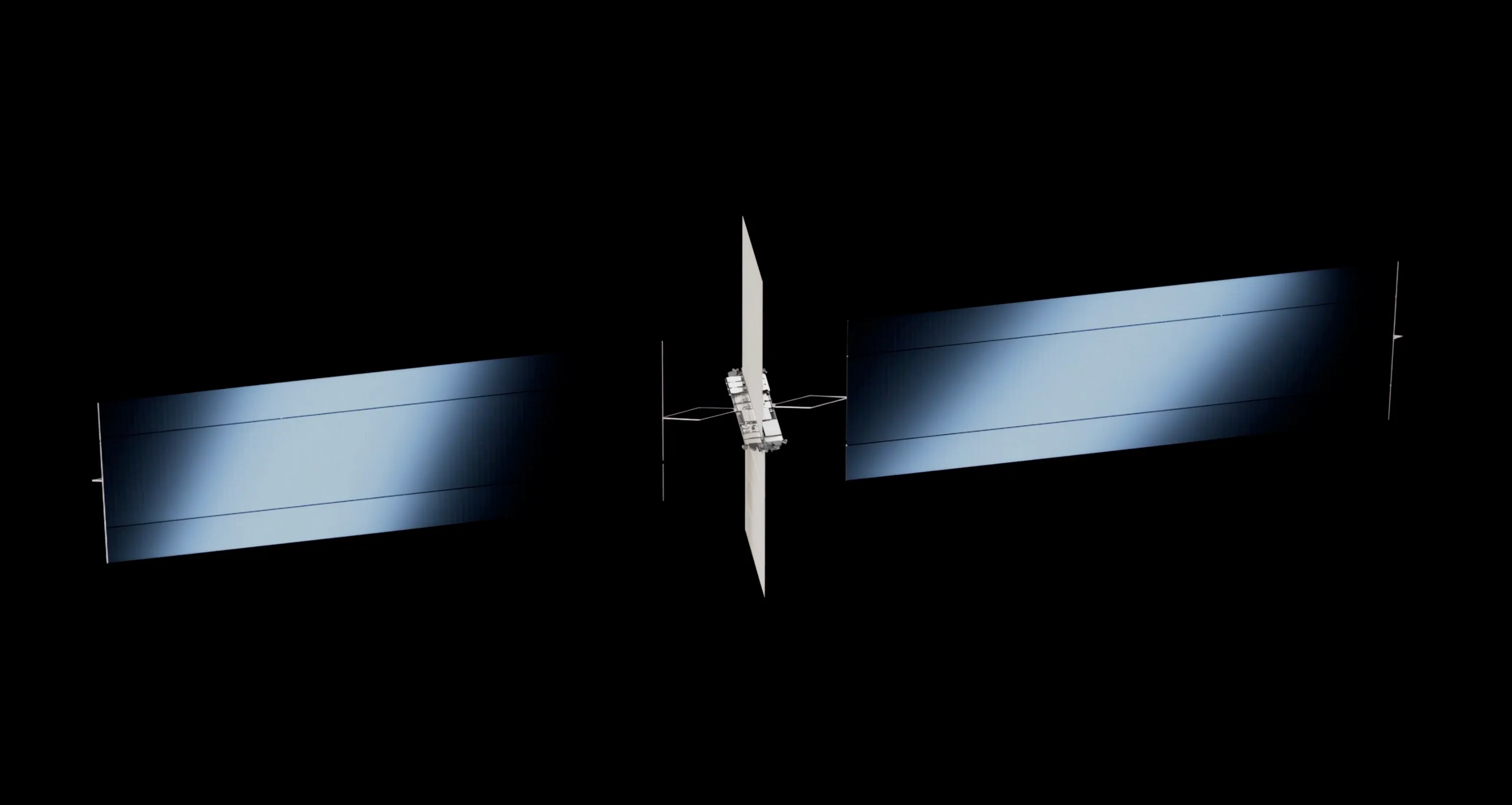
A pragmatic assessment of SpaceX’s strategic roadmap, however, offers insight into its core long-term bet: the development of orbital data centers. This initiative has emerged as a central vision over the past 18 months, intended to unify Musk’s various ventures in anticipation of the IPO.
Characteristically ambitious, this plan necessitates overcoming formidable engineering challenges, including achieving full rocket reusability, establishing a domestic chip foundry, and accelerating satellite production at an unprecedented pace.
The viability of such a business model faces scrutiny. Recent analyses from financial research firm Morningstar and New York University finance professor Aswath Damodaran offer more conservative valuations than the nearly $1.8 trillion figure presented by the company’s bankers. Morningstar estimates the company’s value at approximately $825 billion, while Damodaran suggests $1.2 trillion.
The divergence in these valuations can be largely attributed to the integration of a highly profitable space launch business and satellite internet network with a more speculative artificial intelligence venture. Morningstar’s analysis, for instance, frames the discrepancy between its fair value estimate of $63 per share and the offering price of $135 as a significant “call option” on SpaceX’s capacity to realize its vision for orbital data centers.
Both assessments highlight the robust margins within SpaceX’s existing space operations as key strengths, while its AI endeavors are identified as the primary sources of uncertainty.
To Cloud or Not to Cloud?
The precise nature of SpaceX’s AI business model remains a point of discussion. In its S-1 filing, the company identifies its most significant opportunity within enterprise AI, envisioning its models powering coding tools developed by the former Cursor team and its “Macrohard” project, which aims to endow digital agents with white-collar task capabilities. SpaceX posits a total addressable market of $22.7 trillion for this segment, dwarfing the $2.4 trillion for AI infrastructure and its own space initiatives, which are estimated at just under $2 trillion.
This positioning appears to contrast with recent agreements to supply substantial compute resources to companies like Anthropic and Google, direct competitors in the AI model development space. While not unprecedented for SpaceX—which often launches satellites for competitors of its Starlink network—this strategy is being pursued while the company is still establishing its market position, rather than from a position of established dominance.
Operating as a “neocloud” provider could offer short-term revenue streams, but it raises fundamental questions about value accrual within the AI technology stack: Is it more advantageous to focus on providing compute power or on developing proprietary models, particularly if the resources to excel at both are constrained?
The scaling imperative in the AI sector demands continuous development and enhancement of foundational models. Competitors lagging in this race risk falling behind, though the increasing capabilities of more accessible open-source models could potentially alter this dynamic.
Space-based data centers represent SpaceX’s strategy to potentially achieve both objectives by providing a substantial volume of computational resources.
Musk’s Space Data Center Architecture
In a recent video interview, Musk elaborated on SpaceX’s rationale for pursuing orbital data centers. His core argument emphasizes the company’s unique capability to deploy significant mass into orbit cost-effectively, construct extensive solar power arrays, and manufacture advanced semiconductors. While industry experts generally place the realization of large-scale space data centers about a decade away, Musk suggests a significantly nearer timeline, albeit with notable caveats.
“This is not a promise of what we’ll do,” Musk stated in the video. “This is what we are going to try to do, and think we probably can do, which is to get to roughly an annualized rate of a gigawatt per year by the end of next year, in terms of space AI compute.”
Based on an estimated maximum power delivery of 150 kW per satellite, this translates to a production target of approximately 6,666 satellites annually, or roughly 556 per month. This rate is nearly double the reported current production of Starlink satellites, which stands at about 70 per week. Although Musk indicates that the AI satellites will possess a simpler architecture, achieving such a production volume from a yet-to-be-established manufacturing facility represents a significant undertaking. Furthermore, the company is still developing its solar panel production capabilities.
This projection precedes the development of “Terafab,” SpaceX’s proposed chip foundry, which Musk envisions as crucial for scaling up to a terawatt of annual compute production. Establishing semiconductor fabrication plants is exceptionally complex, typically requiring billions of dollars and up to a decade for completion.
A critical determinant of this entire plan is the success of Starship, SpaceX’s heavy-lift launch vehicle, which is essential for the economic deployment of these orbital assets.
While a recent test flight demonstrated progress, it did not conclusively indicate imminent rapid reusability. Initial operations may involve reusing only the booster stage, which would increase the cost of the space data center rollout. Currently, the company is undergoing an incident investigation with the FAA regarding the booster’s controlled reentry failure. SpaceX has not provided details on the vehicle’s next flight, though it anticipates using Starship for launching Starlink satellites by year-end.
It is worth noting that NASA, which has contracted SpaceX for nearly $4 billion to utilize Starship as a lunar lander, has yet to confirm a test mission scheduled for late 2027.
Buyer Beware
As public investors gain access to SpaceX shares, they will be acquiring a stake in a company with a near-monopoly on U.S. and European space access, a global communications network, and a highly ambitious infrastructure play for the AI era.
The realization of these objectives hinges on SpaceX achieving several unprecedented feats. This includes developing a fully reusable orbital-class rocket, establishing a high-volume production facility for AI satellites within an aggressive 18-month timeframe—a stark contrast to the decade-long development of Starlink manufacturing—and building a U.S.-based semiconductor foundry, a venture many established silicon companies hesitate to undertake. Musk’s assertion that SpaceX is uniquely positioned to pursue these endeavors highlights both the company’s potential and the monumental scale of the challenges involved.
Musk previously suggested he would delay taking SpaceX public until a Mars mission was achieved, citing concerns about investor patience. While that timeline may be adjusted, the strategic roadmap outlined ahead of the company’s IPO presents a comparable level of complexity and ambition.
Business Style Takeaway: SpaceX’s IPO represents a high-stakes gamble, merging a proven space infrastructure business with an aggressively ambitious AI data center vision. Investors are effectively placing a significant bet on Elon Musk’s ability to execute on multiple, exceptionally challenging technological and manufacturing fronts simultaneously, moving beyond traditional valuation metrics to embrace a future-oriented, albeit uncertain, technological paradigm.
Details can be found on the website : techcrunch.com