

As AI model providers increasingly focus on specific enterprise applications and sectors like finance, a critical challenge remains: how to equip AI agents with the necessary context surrounding a task—understanding who assigned it, which stakeholders are involved, and what prior discussions or data inform its execution. This practice, often termed “context engineering,” is proving to be one of the most significant hurdles in the current AI era. Seattle-based startup SageOx, founded by veterans instrumental in building the original AWS EC2 and EBS infrastructure, believes it has a solution: a novel systems layer they call “agentic context infrastructure.”
SageOx leverages a combination of compact hardware recording devices and the enterprise’s existing applications, such as Slack, email, documents, and files. By layering new, open-source frameworks and instructions on top, SageOx has developed a system designed to keep AI agents closely aligned with enterprise tasks and overarching goals, mirroring the contextual awareness of their human counterparts and preventing them from deviating. Ajit Banerjee, SageOx’s founder and CEO, formerly of Hugging Face, Meta, Amazon, and Apple, explained in a recent interview that the system captures context as it happens, emphasizing that “product development is a team sport, and the context doesn’t just come from people typing on a keyboard. It happens in conversations.”
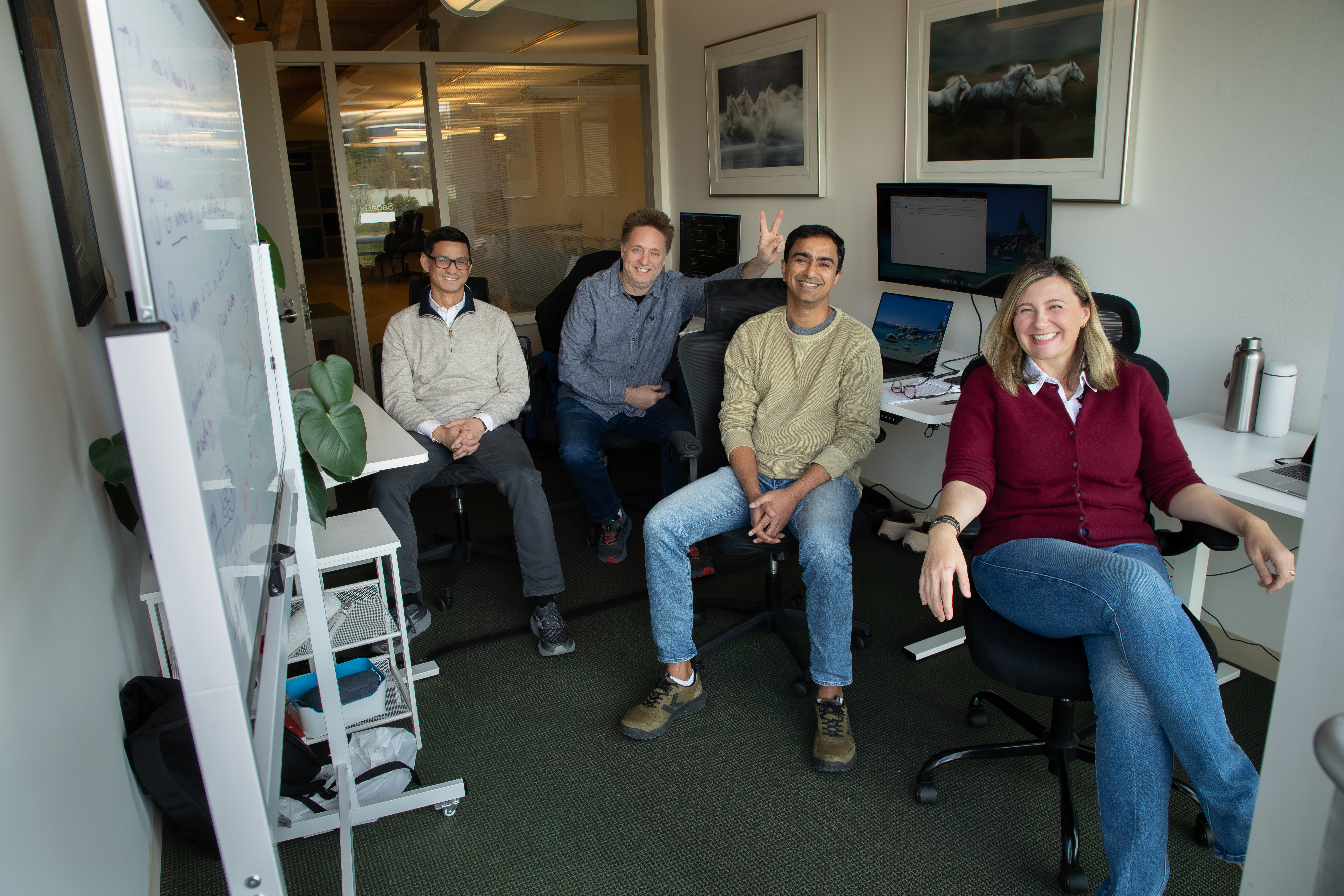
By capturing the underlying intent and rationale behind tasks—the “why” behind the “what”—which often resides in informal Slack threads, brainstorming sessions, and casual conversations, SageOx aims to create a “hivemind” that ensures AI agents remain focused and humans stay synchronized. Banerjee elaborated, comparing the required workflow to improvisational jazz rather than a rigid sequence, highlighting the dynamic nature of modern collaboration.
SageOx has announced its emergence from stealth with a $15 million seed funding round, led by Canaan, with participation from A.Capital, Pioneer Square Labs, and Founders’ Co-op.
The Architecture of Team Memory
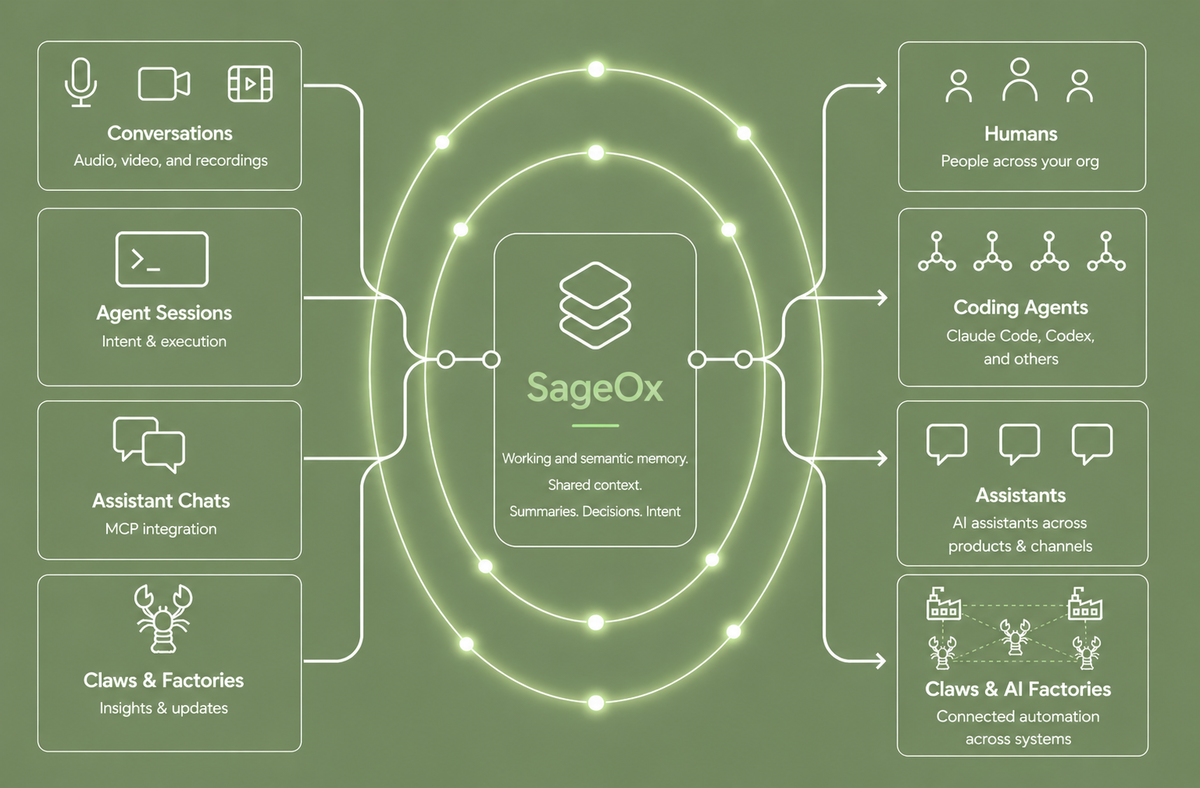
Current AI agents often operate in isolated sessions, lacking a shared understanding of prior decisions or architectural intentions. This forces developers to manually reiterate context for every new task, negating the efficiency gains that AI agents are designed to provide. SageOx tackles this issue with a suite of products engineered to capture context wherever it organically emerges.
Central to this ecosystem is the Ox Dot, a custom hardware device intended for shared office spaces. The Dot captures discussions during meetings, stand-ups, and design reviews with a simple activation. Its standout feature, “Auto Rewind,” acts as a safeguard for capturing spontaneous insights. If a critical idea arises during an unrecorded conversation, Auto Rewind allows the team to retroactively capture the discussion. This audio is then transcribed, speaker-identified, and integrated into the team’s collective memory, making it accessible to both human collaborators and AI agents.
For developers, the open-source, MIT-licensed Ox CLI serves as the crucial link. Commands such as `ox agent prime` enable coding assistants, including those powered by Claude Code and Codex, to access the team’s historical context before generating code. This ensures that an AI agent, for instance, would be aware of a team’s decision to adopt a specific authentication pattern from a meeting, without needing it explicitly restated in a prompt. Dr. Rupak Majumdar, Scientific Director at the Max Planck Institute for Software Systems, noted the team’s rapid development pace, suggesting they are effectively “treating code like assembler.”
Agentic Engineering: Moving Beyond “Clean” Code Practices
The transition to an agent-first workflow has prompted the SageOx team to re-evaluate established principles of modern software management. SageOX CTO Ryan Snodgrass, formerly of Amazon, points out that traditional methods like extensive branch management and comprehensive commit histories can be detrimental in an agentic environment. He argues that while large, readable pull requests were favored for human code reviews, they hinder an agent’s ability to understand intent, particularly with massive changes spread across a codebase.
SageOx advocates for a paradigm of smaller, high-frequency, and highly focused commits. This “agent-readable” history allows machines to trace the rationale behind specific changes. The team is even exploring alternative repository structures, considering a future beyond their current monorepo to a constellation of micro-repositories, as agents can struggle to maintain context within excessively large codebases.
This focus on “speed-over-stasis” enabled the SageOx team to develop the firmware for the Ox Dot in under two weeks, despite having limited prior hardware development experience. By feeding technical documentation into AI models, they bypassed months of traditional research. CEO Ajit Banerjee describes this as “unlearning” old habits, recognizing that the laborious aspects of knowledge work can now be delegated to a system capable of remembering the team’s collective knowledge.
Radical Transparency: Evolving Beyond Open Source to “Open Work”
Beyond its technological innovations, SageOx is pioneering a model of radical transparency termed “Open Work.” This approach extends traditional open-source principles by openly sharing internal prompts, planning sessions, and even unfiltered internal debates with the public. Users can access the SageOx console to observe the development of SageOx in real-time.
This “open kimono” strategy is a deliberate choice to lead by example. Banerjee contends that if they are asking teams to fundamentally alter their working methods, they must be transparent about the challenges and adjustments involved. He famously stated, “The revolution is not going to be televised. It’s going to be SageOxed.” This transparency aims to demonstrate how a lean, agile team can achieve superior velocity compared to larger organizations by effectively leveraging a shared context layer.
Regarding monetization, Banerjee indicated that SageOx’s revenue strategy mirrors the initial AWS EC2 playbook: securing early adopters, particularly AI-native startups, and subsequently expanding into larger enterprises as the value proposition becomes increasingly evident.
The Pedigree of Infrastructure Expertise
SageOx’s technical foundation is deeply rooted in the early development of cloud infrastructure. Banerjee was a foundational member of the AWS EC2 team, and Snodgrass was among Amazon’s inaugural engineers, spearheading the migration from monolithic systems to microservices. The company’s name reflects this heritage: “Ox” symbolizes the “Yeoman work” the company aims to perform—acting as a reliable force that handles the heavy lifting of data and context, thereby enabling teams to accelerate their progress.
The SageOx vision posits a future where humans are liberated from the manual assembly of context. Instead, they transition into directing a “parallel processing” engine. In a recent demonstration, a feature request was successfully implemented in under seven minutes, moving from a verbal discussion to a finished product. By providing coding agents with the recorded context of the original conversation, the team circumvented the need for formal specifications or traditional project management tickets.
The New Paradigm of Work
SageOx is currently concentrating its efforts on “AI-native” startups—teams that operate primarily through prompt engineering and heavily rely on AI collaborators. Their suite of tools, including the open-source Ox CLI and the hardware-based Ox Dot, is specifically designed to address the pervasive issue of alignment drift in AI-assisted workflows.
As AI evolves from a mere tool to an integral team member, the most valuable corporate asset shifts from raw source code to shared context. SageOx suggests that the path forward lies not in isolating information behind “private fences,” but in cultivating a collaborative environment where intent is transparent to every participant, whether human or machine. In this emerging era, success will favor teams that can match the speed of their execution with the speed of their collective memory.
Business Style Takeaway: SageOx’s focus on “agentic context infrastructure” addresses a critical bottleneck in enterprise AI adoption by capturing and operationalizing team knowledge. This innovation is vital for businesses looking to scale AI initiatives beyond simple task automation, enabling sophisticated AI-human collaboration and potentially unlocking new levels of operational efficiency and product development velocity.
Original article : venturebeat.com