Tech & AI

Transforming Enterprise: Tech & AI Innovation in 2026

In 2026, technology has moved beyond being a utility to become the core engine of corporate value and competitive differentiation. At Business Style News, our Tech & AI section provides a deep dive into the practical application of artificial intelligence within complex commercial environments. We shift the focus from speculative hype to measurable results, examining the ROI of generative AI integration and its impact on modern labor markets. As digital ecosystems become more intricate, understanding the synergy between emerging tech infrastructures and human capital is essential for any executive looking to future-proof their organization.

The Rise of Agentic Workflows and Corporate Automation

The current year marks the evolution from simple chatbots to autonomous AI agents capable of managing entire business processes with minimal oversight. We explore the 2026 shift toward agentic AI workflows—systems that can plan, execute, and optimize tasks across marketing, sales, and supply chain logistics. Our editorial team tracks the latest in low-code automation solutions that empower non-technical departments to innovate rapidly. By analyzing AI scalability for SMEs, we provide a roadmap for smaller enterprises to leverage high-end technology to outpace larger, less agile competitors.

Cybersecurity Resilience and Next-Gen Digital Infrastructure

As the corporate world becomes increasingly interconnected, enterprise cyber-resilience has emerged as a top-priority boardroom agenda. We provide expert perspectives on quantum-resistant encryption and the adoption of zero-trust architectures to protect sensitive corporate data. Our coverage extends to the impact of edge computing on real-time analytics, allowing businesses to process information faster than ever before. Stay ahead of the curve with our reports on blockchain-based supply chain transparency and the ethical frameworks guiding responsible AI development in a data-driven global economy.

AI Agents Need More Than Vector Databases: A Terminal is Key
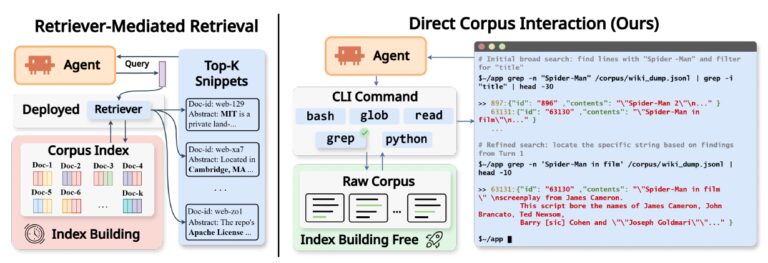
AI Agents Need More Than Vector Databases: A Terminal is Key 1

When AI agents encounter operational failures, the immediate assumption often defaults to shortcomings in the underlying model’s reasoning capabilities. However, a deeper analysis frequently reveals that the primary constraint lies in the limited information accessible through conventional retrieval interfaces. Researchers…

Vivaldi 8.0: A New Frontier in Browser Innovation

The Drop Vivaldi 8.0 After years of relying on other browsers, Vivaldi has become the new default across all devices. While previously appreciated for its speed, extensive customization, and organizational features, its aesthetic was a sticking point. The latest 8.0…

Google’s AI Search: The Peril of Irrelevant Results

Google's AI Search: The Peril of Irrelevant Results 15

Google AI Overviews Misinterpret Action-Related Queries Google’s AI Overviews feature is currently encountering an issue where it misinterprets certain action-related search terms, leading to unusual responses. When users searched for terms like “disregard,” “ignore,” or “skip,” the AI Overviews initially…

Tiny AI Add-on Unlocks Working Memory Beyond RAG

Tiny AI Add-on Unlocks Working Memory Beyond RAG 19

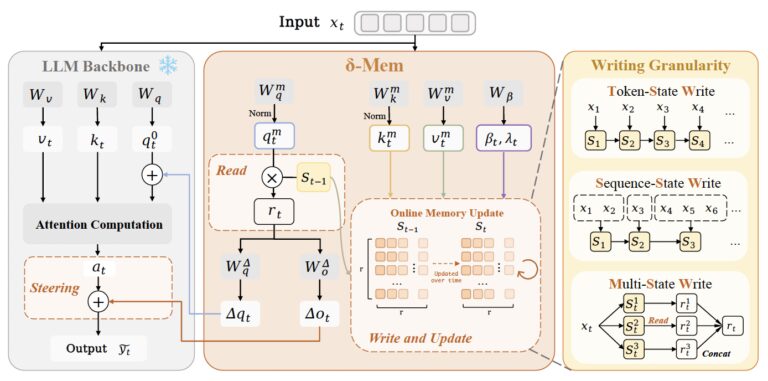
AI agents often struggle with memory limitations, leading to inefficiencies in workflows, increased token costs, and a degradation of performance in long-running tasks. Traditional solutions like expanding context windows or implementing Retrieval-Augmented Generation (RAG) are proving to be expensive and…

Enterprise AI Agents Fail Due to Memory Loss

Enterprise AI Agents Fail Due to Memory Loss 22

Retrieval-Augmented Generation (RAG) architectures excel at surfacing semantically relevant documents but fall short in providing actionable context for AI agents. Addressing this limitation, a novel framework known as a decision context graph empowers agents with structured memory, time-aware reasoning, and…