

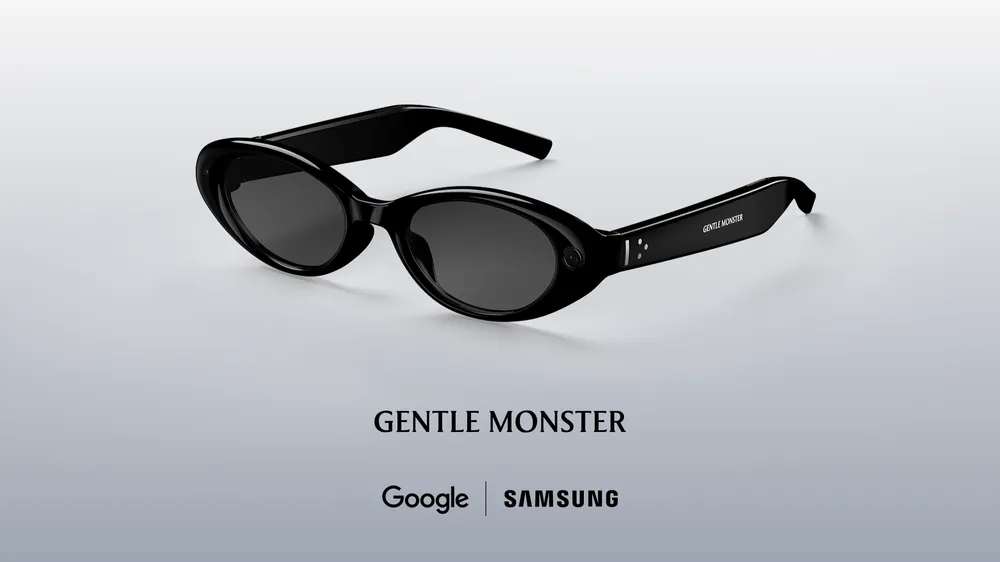
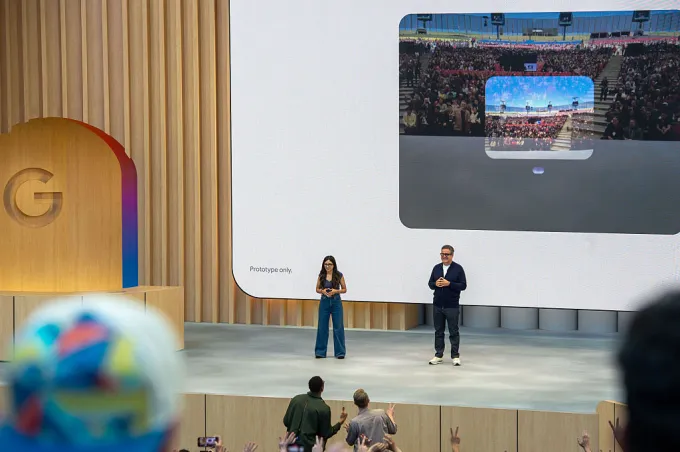
During Google’s recent developer conference, an early hands-on experience was provided for the company’s forthcoming AI-integrated smart glasses. This particular iteration offers a combined audio and visual experience, distinguishing it from the audio-only version slated for release later this year.
Integrated Visual Information
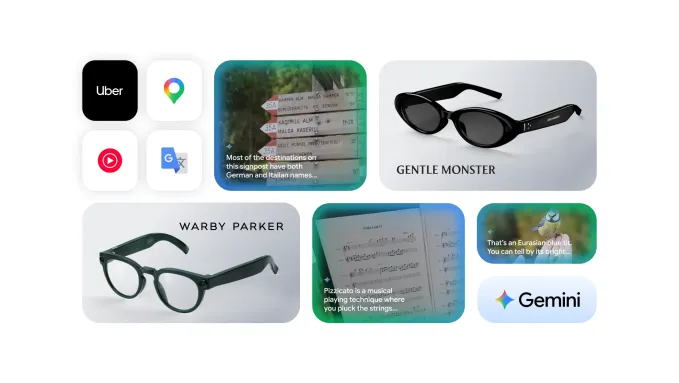
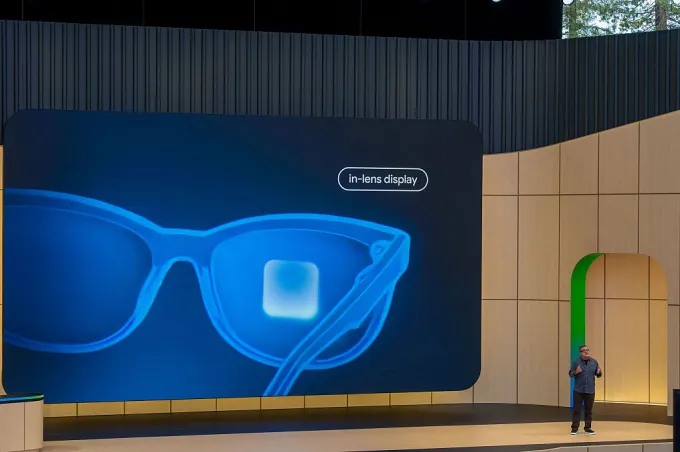
First unveiled at last year’s event, these Android XR glasses feature an in-lens display designed to present relevant information directly within the user’s field of vision, overlaid on the real world. This functionality extends to various widgets, capable of showing data such as weather forecasts, navigation prompts, ride-sharing details, and real-time language translation. Notably, users can also generate custom widgets using AI.
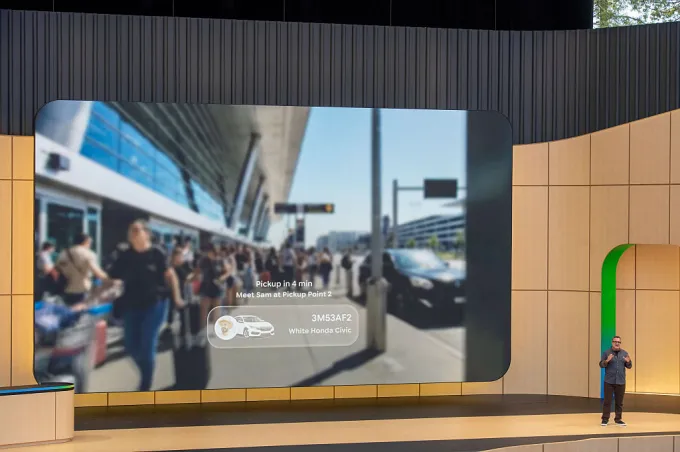
Compatibility with both iOS and Android devices is planned for the eyewear, encompassing both the audio-only and the upcoming display-equipped versions.
Design and Collaboration
The development of the display-enabled glasses represents a progression from the initial audio-only models. These are a result of collaborations with Warby Parker, Gentle Monster, and Samsung, integrating Google’s technological advancements with the distinct design philosophies of these partner brands.
Prototypical Development and Functionality
The hands-on experience was with a prototype, albeit one sufficiently advanced for external testing. Representatives indicated that this prototype prioritized the exploration of display technology and its impact on battery life, deferring detailed attention to aesthetic variations in style and form factor. Consequently, the prototype’s physical characteristics differ significantly from the anticipated final product in terms of fit, shape, dimensions, and overall refinement. The focus remained on the internal technological experimentation within a basic, comfortable frame.
A key feature intended for the commercially released glasses is the automatic detection of when they are worn or removed. This capability was not present in the prototype tested.
Gemini Integration and Interaction
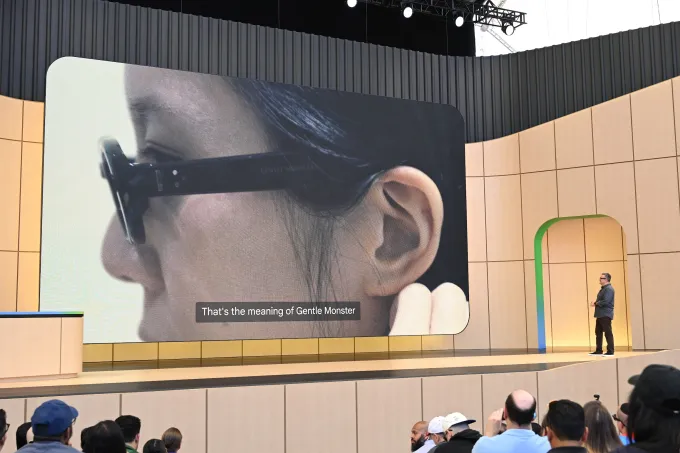
Activation of the integrated Gemini AI is initiated by a brief press on the right temple of the glasses, accompanied by an auditory cue indicating readiness. In the prototype, initiating Gemini also activated the camera simultaneously; however, the final product will offer user configuration for this behavior. This dual functionality allows for voice-activated commands, such as requesting music playback, with initial tests suggesting it may serve as a convenient audio source for casual use, offering the benefit of ambient awareness compared to traditional earbuds.
Audio playback is controlled by a single tap on the frame’s side, near the temple.
Imaging Capabilities and AI Enhancement
A dedicated button allows for still image capture, with the resulting photos transferred to a paired device. The prototype did not support video capture, but this functionality is expected in the final version, potentially offering a thumbnail preview. Users can also command Gemini to capture images, with options for AI-driven modifications, such as transforming a subject into an anime style. This process involves data transmission to cloud servers for editing, with demonstrated round-trip times of approximately 45 seconds under load.
User Interface and Visual Experience
With the display activated, a minimalist home screen becomes visible. Preloaded widgets in the demo version included weather information and event countdowns. The platform is designed to support quick app launchers for frequently used applications like Google Maps or Translate. The prototype featured a single display over the right eye, though the underlying technology supports both mono and stereo configurations, as well as audio-only devices. Initial observations noted a slight fuzziness in the projected image, which may be attributable to the wearer’s prescription eyewear or potential eye strain from prolonged use.
Key Applications: Translation and Navigation
A particularly compelling demonstration showcased the real-time language translation feature, powered by the Google Translate app. The glasses automatically detected spoken Spanish and displayed the text in English while Gemini provided an audio translation. This capability holds significant potential for international travelers.
While the text display is exclusive to the vision-enabled glasses, the translation functionality will also be available on the audio-only models, with transcriptions accessible on a paired phone.
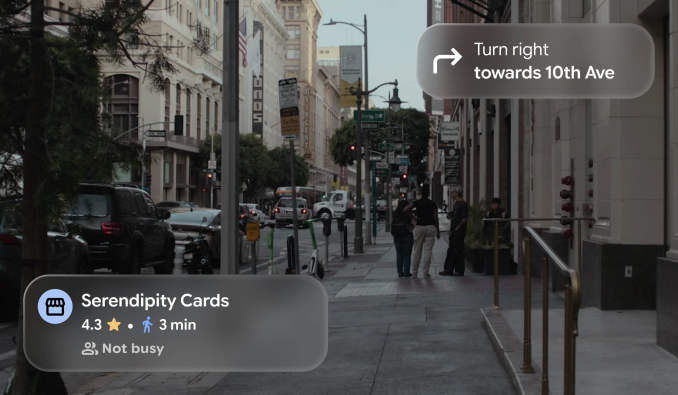
Navigation was another key demonstration. Users can initiate Google Maps directions by querying Gemini, even with vague requests like “nearest coffee shop.” The system interfaces with Google Maps on the phone to provide turn-by-turn visual cues within the glasses. Users can look down to view a map interface or orient themselves by rotating their head to align with the direction of travel. Saved locations such as “home” and “work” are seamlessly integrated.
Object Recognition and Information Retrieval
The glasses demonstrated the ability to identify objects within the wearer’s view and answer related queries. While initial attempts to identify a painting were less precise, likely due to camera activation protocols, subsequent tests with plants and books yielded more immediate and accurate results. This feature offers a hands-free alternative to using a smartphone for information gathering.
Google plans to provide further details on its Android XR display glasses later this year, coinciding with the expansion of its early adopter program.

Audio-Only Variant and Future Integration
Google acknowledges the potential utility of the audio-only glasses for users prioritizing core AI interactions without visual display, positioning this as a strategic response to competitive offerings. Similar to the display version, the audio glasses provide access to Gemini AI through integrated frame speakers. Functionality includes music playback, photo capture, call management, and interaction with phone applications.
The glasses are also designed to facilitate task management through Gemini, such as adding recipe ingredients to a shopping list. Advanced use cases demonstrated include the glasses analyzing a cooking meal and offering feedback on its doneness.
Business Style Takeaway: Google’s continued investment in integrated AI eyewear signals a move toward ambient computing, where digital information and assistance are seamlessly woven into daily life. Businesses should monitor this space for potential shifts in user interaction models, data capture opportunities, and the evolution of personal productivity tools.
Information compiled from materials : techcrunch.com