

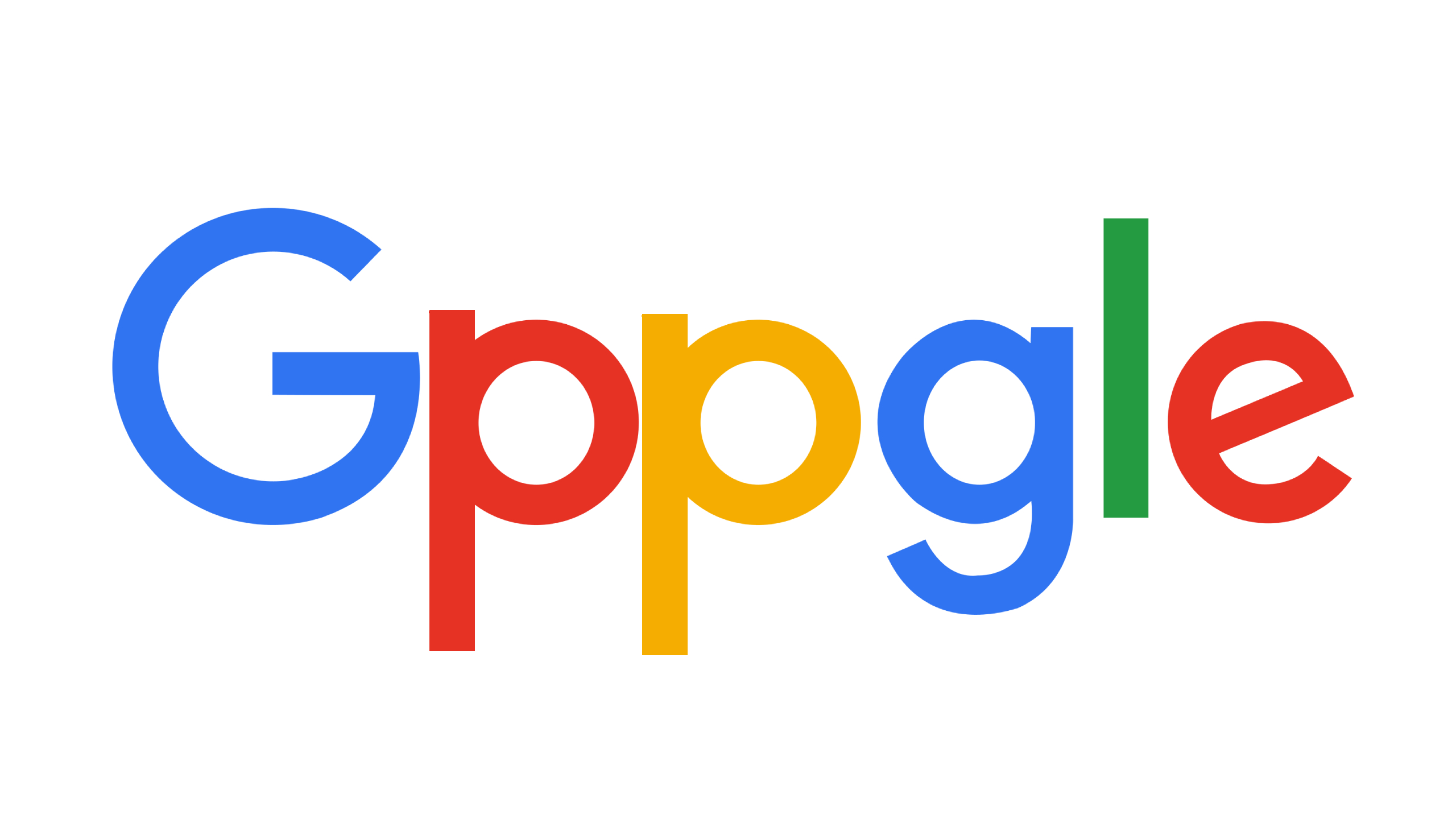
Google’s AI Overviews Grapple with Foundational Language Understanding
Google’s recent integration of AI Overviews into its search engine has encountered significant challenges, notably stemming from the AI’s fundamental inability to parse and count letters within words accurately. Reports indicate instances where the AI incorrectly stated there were two ‘P’s in “Google,” identified one ‘r’ in “poop,” and misspelled “journalism” as “j-o-u-r-n-a-d-i-s-m.” While it correctly noted one ‘P’ in the U.S. President’s last name, it misspelled this as “t-r-p-u-m.” These errors follow earlier issues where AI Overviews cited satirical content and offered nonsensical advice, such as consuming rocks or placing glue on pizza.
The Technical Underpinnings of AI’s Spelling Deficiencies
Google has acknowledged these specific issues, stating, “Counting within words has been a known challenge for LLMs, and we’re working to fix this particular issue.” The underlying problem lies in the architecture of Large Language Models (LLMs) themselves. Unlike human readers who perceive words as sequential units of letters, many LLMs, particularly those based on transformer architectures, process text by breaking it down into “tokens.” These tokens can represent entire words, syllables, or even individual letters, depending on the model’s design. The AI then converts these tokens into numerical representations, which are contextualized to generate responses. This tokenization process means the AI does not inherently “understand” the spelling or internal structure of a word in the same way a human does.
Matthew Guzdial, an AI researcher at the University of Alberta, explains that models like Google’s AI Overview do not “read” text in a human sense. “What happens when you input a prompt is that it’s translated into an encoding,” Guzdial stated. “When it sees the word ‘the,’ it has this one encoding of what ‘the’ means, but it does not know about ‘T,’ ‘H,’ ‘E.’” This approach, while powerful for generating coherent and contextually relevant text, struggles with tasks requiring granular letter-level analysis.
Sheridan Feucht, a PhD student specializing in LLM interpretability at Northeastern University, notes that defining a “word” for a language model is inherently complex. “It’s kind of hard to get around the question of what exactly a ‘word’ should be for a language model,” Feucht commented. “My guess would be that there’s no such thing as a perfect tokenizer due to this kind of fuzziness.” This inherent ambiguity makes resolving basic spelling and letter-counting errors a persistent challenge for LLM development.
Broader Implications for AI Integration in Search
While spelling accuracy might not be the primary objective of LLM research—their strength lies in comprehension, summarization, and generation—these recurrent errors highlight the limitations of current AI. The incidents serve as a critical reminder that AI outputs, even when seemingly authoritative, require human verification. As generative AI becomes more deeply embedded in core products like search engines, the stakes for accuracy and reliability increase significantly. The ability to produce creative content or complex code does not automatically translate to mastery of basic linguistic facts, underscoring the need for ongoing refinement and robust fact-checking mechanisms in AI-driven systems.
Business Style Takeaway: Google’s struggles with basic linguistic tasks in its AI Overviews reveal a critical gap between advanced generative capabilities and foundational language understanding. This underscores the necessity for businesses integrating AI to implement rigorous validation processes, ensuring that AI-powered outputs are accurate and reliable, rather than blindly trusting the technology’s seemingly advanced nature.
Details can be found on the website : techcrunch.com