

Google Introduces “Googlebooks” Laptop Platform, Merging Android and ChromeOS
Google is embarking on a new chapter in the laptop market with the upcoming launch of “Googlebooks” this fall. This initiative signals a significant evolution from Chromebooks, promising a more capable platform driven by a novel operating system that merges the strengths of Android and ChromeOS.
The New Operating System: Beyond “Aluminium”
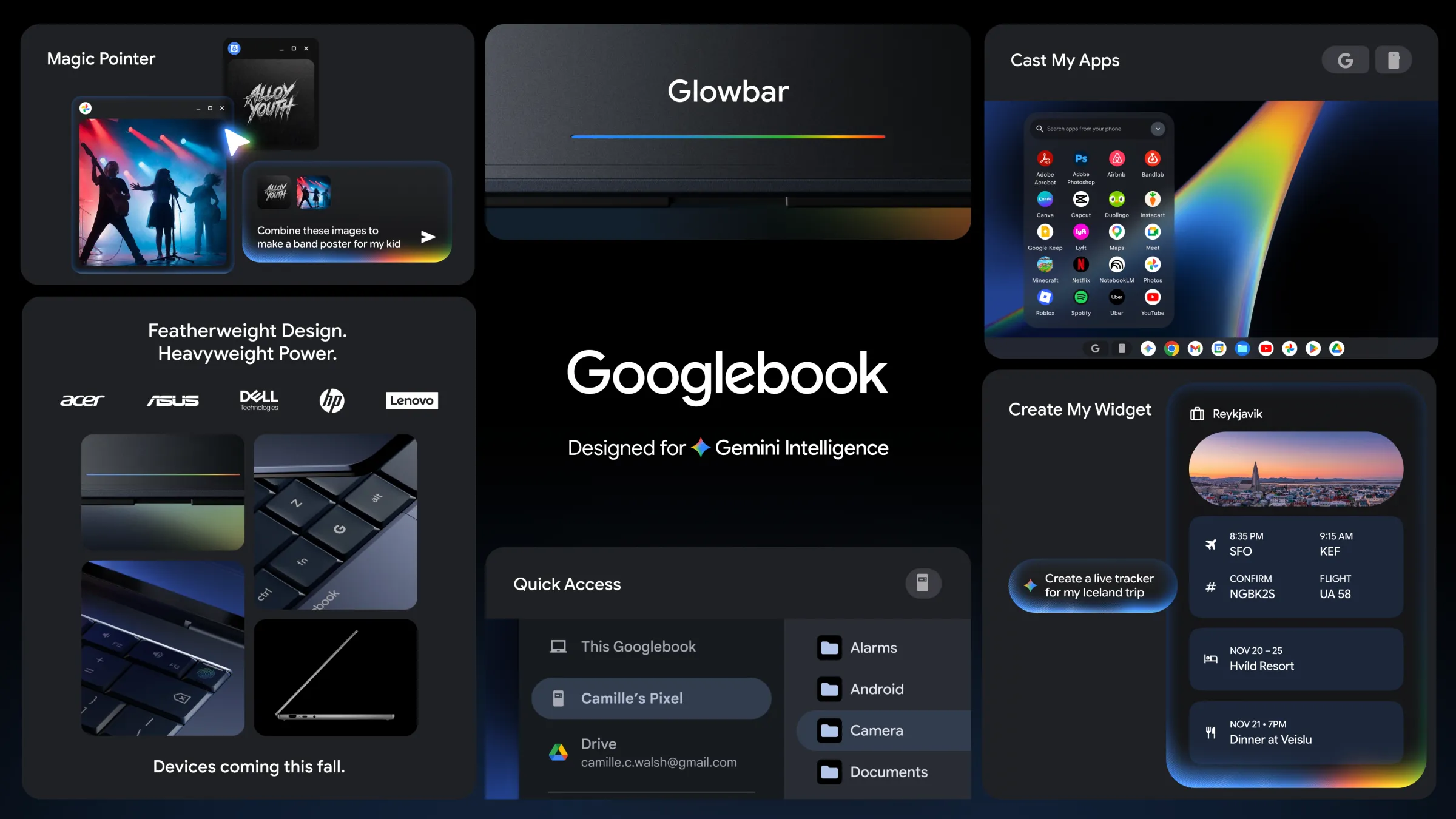
While details are currently sparse, this new operating system, previously codenamed “Aluminium OS,” is a key component of the Googlebooks platform. Google has confirmed that “Aluminium” is merely a codename and the official branding will be revealed later this year. This new OS is designed to leverage the extensive Android technology stack, enabling Googlebooks to run Android applications alongside web browsing through Chrome. A notable feature is the seamless integration with Android phones, allowing for direct file access and the ability to run phone apps directly on the Googlebook without needing to transfer them.
AI Integration and Smart Features
A significant focus for Googlebooks is the integration of Gemini AI. The “Magic Pointer” feature will offer contextual suggestions by shaking the cursor and pointing it at screen elements, enabling actions like scheduling meetings or visualizing product arrangements. Googlebooks will also feature custom AI-generated widgets, providing dynamic organization for travel plans, reservations, or countdowns, mirroring similar innovations for Android phones and Wear OS devices.
Hardware and Availability
Specific hardware details, including processor types and pricing, remain undisclosed. Google has partnered with major manufacturers such as Acer, Asus, Dell, HP, and Lenovo to produce the initial Googlebook models. While initial renders show a distinctive glowing light bar, a signature feature for all Googlebooks, the exact design and specifications of the first devices are yet to be revealed.
The Future of Chromebooks
Google has assured that Chromebooks and ChromeOS will continue to be supported, with existing devices receiving security updates for their committed lifespans. However, the introduction of Googlebooks raises questions about Google’s future focus and development priorities within the laptop ecosystem, particularly concerning the evolution of ChromeOS.
Business Style Takeaway: Google’s entry into the laptop space with “Googlebooks” represents a strategic move to consolidate its operating system efforts and enhance productivity for professionals. The integration of AI features and seamless Android connectivity promises a more intuitive and efficient user experience, potentially reshaping the competitive landscape for business-centric portable computing.
Based on materials from : www.theverge.com