


Enterprise organizations are not resisting artificial intelligence; they are resisting operational disruption. This fundamental shift, often overlooked by emerging AI startups, is becoming a critical determinant separating those poised for significant scale from those whose early promise falters.
For years, the AI startup landscape thrived on a market driven by exploration and novelty. A compelling demonstration, a sophisticated model, and an ambitious vision were frequently sufficient to capture enterprise interest, secure pilot programs, and attract investor capital. However, the enterprise AI sector is now entering a more mature phase, where the primary evaluation criteria have moved beyond mere technological excitement to assessing the practical safety and feasibility of broad deployment.
The Evolving Enterprise AI Landscape
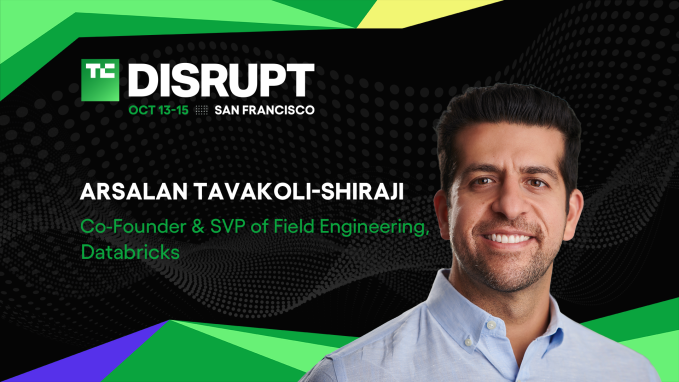
Arsalan Tavakoli-Shiraji, co-founder and SVP of field engineering at Databricks, is slated to articulate this evolving market dynamic during his session, “The Enterprise Isn’t Broken. Your Assumptions About It Are,” at an upcoming industry event. His perspective underscores a key reality: enterprise AI adoption hinges less on the AI’s inherent capabilities and more on its integration into existing operational frameworks.
The Pilot Paradox in Enterprise AI
Many enterprise AI initiatives stall not due to technological shortcomings but because the organization is unable to absorb the operational consequences of integrating the new technology. This means that AI startup deals are increasingly failing not because the underlying model is inadequate, but because the enterprise loses confidence in the projected operational overhaul required for implementation.
Tavakoli-Shiraji’s discussion aims to illuminate this critical gap, highlighting that enterprises are rigorously evaluating several key factors beyond mere functional performance:
- Implementation Risk: The potential challenges and complexities associated with integrating the AI solution into existing IT infrastructure and workflows.
- Governance Complexity: The burden of establishing and maintaining control, oversight, and compliance frameworks for the AI system.
- Workflow Disruption: The degree to which the AI solution will alter established business processes and employee roles.
- Infrastructure Strain: The additional computational, storage, and network resources required to support the AI deployment.
- Compliance Exposure: The potential regulatory or legal risks associated with the AI’s operation and data handling.
- Organizational Trust: The level of confidence employees and stakeholders have in the AI’s reliability, fairness, and security.
A product exhibiting exceptional performance in a controlled setting may falter commercially if its deployment introduces significant instability into the enterprise’s operations. This distinction is crucial for AI founders, as many are still optimizing for initial validation rather than sustained operational integration. Enterprises, in turn, are becoming increasingly adept at discerning between the two.
Operational Trust as a Differentiator
AI startups that achieve significant traction within large organizations now share a common trait: they demonstrably reduce uncertainty. These solutions integrate more seamlessly with existing systems, minimize friction in user workflows, and are more amenable to governance and internal explanation. This focus on operational reliability, while perhaps less glamorous than groundbreaking model capabilities, is rapidly becoming the primary driver of enduring revenue streams.
As the market matures, enterprise buyers are shifting their focus from abstract potential to tangible operational realities. Key questions now revolve around post-deployment realities: the extent of required organizational change, impacts on governance structures, the scalability of adoption for end-user teams, and contingency plans for model failures. These concerns are no longer peripheral; they are central to the procurement decision.
A Holistic Perspective on Enterprise AI
Tavakoli-Shiraji’s background, encompassing both enterprise strategy and deep technical systems architecture, offers a valuable perspective. His prior experience advising organizations on cloud computing and IT transformation, coupled with his academic research in networking and distributed systems, provides a unique lens on the multifaceted challenges of enterprise AI adoption.
This holistic view is indispensable for startups, as success in the enterprise AI domain increasingly depends on understanding the interplay between technical systems and organizational dynamics, infrastructure constraints, procurement processes, and risk management. The leading AI companies of the future may not necessarily be those with the most advanced algorithms, but rather those that most effectively navigate how enterprises absorb and integrate technological change.
The discussion around operational trust, rather than solely technical performance, is central to the evolving narrative of enterprise AI. Startups are learning that demonstrating a clear path to seamless deployment, robust governance, and scalable adoption is paramount to securing long-term enterprise partnerships.

Business Style Takeaway: The enterprise adoption of AI is shifting from a focus on technical potential to operational viability. Businesses and investors should prioritize AI solutions that demonstrate clear pathways to seamless integration, robust governance, and minimal operational disruption, as these factors are increasingly becoming the ultimate determinants of successful, scalable AI deployment.
Learn more at : techcrunch.com