


The Paradox of Tech Layoffs Amidst AI Boom
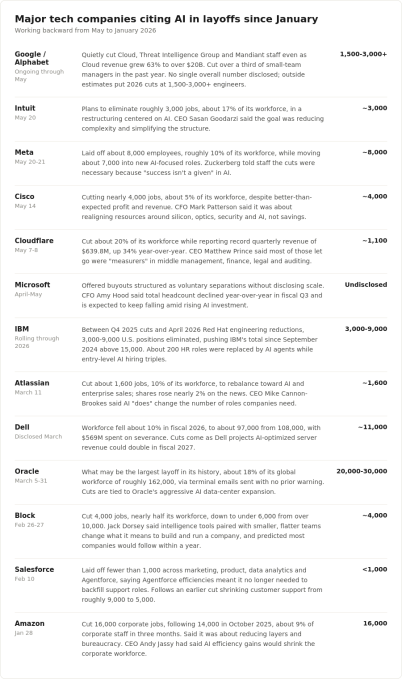
A peculiar trend is emerging within the technology sector: record profits and revenue figures are coinciding with widespread workforce reductions affecting tens of thousands of employees. The stated justification for these layoffs increasingly points to the integration of artificial intelligence. Data indicates a significant acceleration in this pattern; this year alone, an estimated 150,000 individuals have been displaced from tech roles, representing a daily average of 974 layoffs—a rate 44% higher than the previous year, according to job market analytics from TrueUp.
The intensity of these separations appears to be escalating. Last month saw the highest number of monthly tech layoffs in two years, with nearly 40,000 positions eliminated. For the third consecutive month across all industries, AI has been cited as the primary driver for these workforce adjustments, as reported by the outplacement firm Challenger, Gray & Christmas.
Growing Skepticism Around AI as the Sole Culprit
However, a growing contingent of industry observers is questioning the definitive role of AI in these widespread redundancies, suggesting it may serve as a convenient, albeit facile, explanation rather than the root cause. The situation at the payments company Block offers a notable example. Following significant criticism for reducing its workforce by nearly half, CEO Jack Dorsey initially framed the layoffs not as a sign of distress, but as a consequence of AI-driven operational efficiencies that redefine company building. Yet, under pressure from public discourse, Dorsey later conceded that the company had, in fact, engaged in excessive hiring during the preceding period.
Prominent figures in venture capital have also voiced similar sentiments. Marc Andreessen, a well-known investor, recently characterized AI as a “silver bullet excuse” for layoffs that may, in reality, stem from managerial shortcomings. In a discussion, Andreessen posited that many large corporations are substantially overstaffed, estimating overstaffing levels of 25% to 75%. He observed that these companies are now leveraging the “AI excuse” to rationalize workforce adjustments.
AI’s Dual Impact: Wealth Creation and Workforce Displacement
This dichotomy is starkly illustrated by the simultaneous emergence of immense wealth among a select group of AI insiders while a large segment of the workforce faces job insecurity. Early last month, AI chip designer Cerebras Systems experienced a highly successful debut on the Nasdaq, closing its first trading day with a 68% gain over its IPO price, valuing the company at approximately $67 billion—the largest US tech IPO since Snowflake’s 2020 listing. This event propelled its co-founders into billionaire status, although the company’s valuation has since seen a notable decline.
Similarly, SpaceX’s recent market valuation has reportedly created paper billionaires and a substantial number of millionaires, assuming sustained stock performance. Leading AI entities like Anthropic and OpenAI are also nearing potential public market entries, with valuations reportedly approaching or exceeding $1 trillion.
The ripple effects of this AI-driven economic surge are visible in real estate markets, particularly in San Francisco, a hub for AI development. Luxury properties are commanding prices significantly above asking. Concurrently, high-profile tech executives are making substantial real estate acquisitions, such as Mark Zuckerberg’s record-breaking purchase of a $170 million mansion in Miami. These high-value transactions occur at a time when many American households are experiencing significant financial pressures, including rising healthcare costs, increased private insurance premiums, and escalating housing prices, coupled with near-doubled mortgage rates.
Public sentiment reflects this economic strain, with a significant majority of Americans perceiving a middle-class lifestyle as increasingly unattainable and identifying the cost of living as their paramount economic concern. This situation is compounded by the tens of thousands of displaced workers facing a challenging economic climate, while simultaneously witnessing the rapid accumulation of wealth by AI industry insiders, who are often cited as the reason for their job losses.
Historical Parallels and Societal Implications
The disconnect between corporate profitability, AI-fueled wealth generation, and workforce reductions bears historical parallels. The 2008 financial crisis, initiated by lax lending practices and excessive risk-taking, resulted in bank bailouts while millions lost their homes and jobs, ultimately fueling movements like Occupy Wall Street. The current scenario, however, lacks a clear economic crash. Instead, companies are posting strong financial results, AI is creating new fortunes, and layoffs are proceeding with AI cited as the rationale.
The public perception is shifting from “bailouts for the architects of economic failure” to a narrative of “unprecedented enrichment through technology that displaces workers.” This messaging strategy, where citing AI as a reason for layoffs has demonstrably boosted stock prices for companies like Block and Atlassian, raises critical questions about the long-term communication and societal impact for corporations navigating this complex technological and economic transition.
Business Style Takeaway: The current tech landscape presents a complex narrative where AI integration serves as both a catalyst for unprecedented wealth creation and a justification for significant workforce reductions. Businesses and investors must critically assess the underlying strategic decisions driving these trends, distinguishing between genuine AI-driven efficiency gains and potential overreliance on AI as a cover for other operational or financial challenges, to avoid negative brand perception and potential societal backlash.
Based on materials from : techcrunch.com