
Twenty years on, and with a glossy sequel adding to its legacy, *The Devil Wears Prada* stands as a bona fide fashion franchise. The original film, however, perfectly encapsulated a pivotal moment just as menswear was beginning its significant ascent.

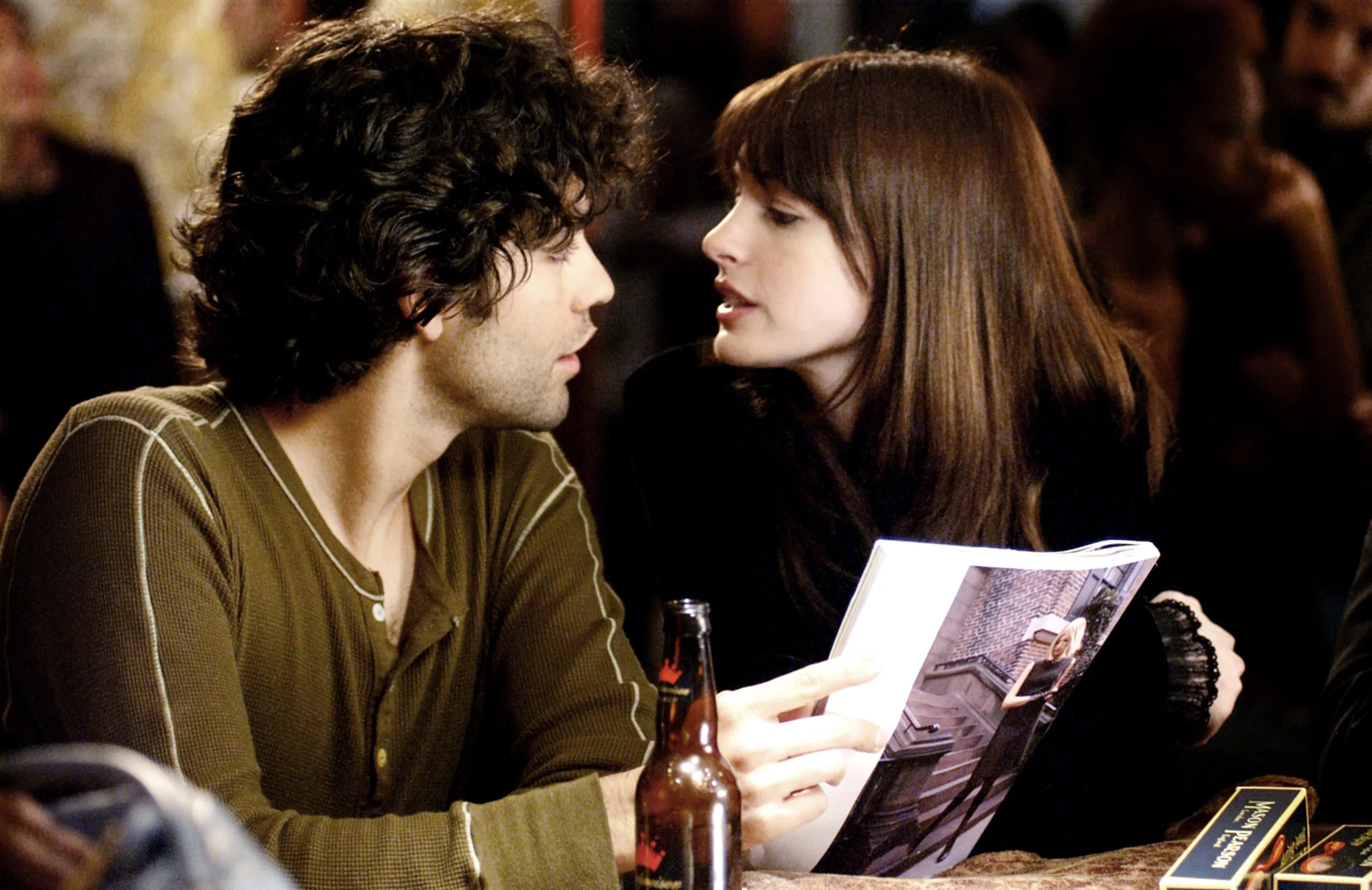 Nate (Adrian Grenier) and Andy (Anne Hathaway) in 2006’s The Devil Wears Prada.©20thCentFox / Courtesy of Everett Collection
The film, a cinematic deep dive into the haute couture world, masterfully captures a distinct mid-2000s perspective on sartorial excellence. While celebrated for its focus on women’s fashion, Patricia Field’s Oscar-nominated costume design also provides an incisive glimpse into the prevailing men’s style of the era in urban settings.
The Duality of Mid-2000s Menswear
In 2006, the landscape of American men’s fashion was bifurcated. On one hand, the “metrosexual” movement had cultivated a discerning gentleman who prioritized tailored ensembles and refined grooming, viewing dressing as an act of self-elevation. Conversely, a vast majority of men adhered to a more casual archetype: graphic tees, relaxed flannels, utilitarian cargo shorts, and ill-fitting denim dominated. This film serves as a critical juncture, documenting the period just before the internet’s influence and the broader democratization of taste profoundly reshaped menswear.
Nigel Kipling: The Epitome of Classic Style
Stanley Tucci’s portrayal of Nigel Kipling, the unwavering Runway editor, embodies the true sartorial connoisseur. Nigel’s devotion to the three-piece suit and its accouterments is unwavering. His suiting exudes a European flair, characterized by sophisticated layering and a sharp understanding of corporate American aesthetics. The fit is impeccably tailored in key areas, yet eschews the ultra-slim cuts that would soon become prevalent, and is far from the relaxed silhouettes favored today. His ties are bold statements—wide, patterned, and knotted with confidence. Nigel expertly blends textures and patterns with a practiced eye, demonstrating that even in a simple black turtleneck, as seen in the iconic “Gird your loins” scene, there’s an inherent sense of considered style and an appreciation for refined excess.
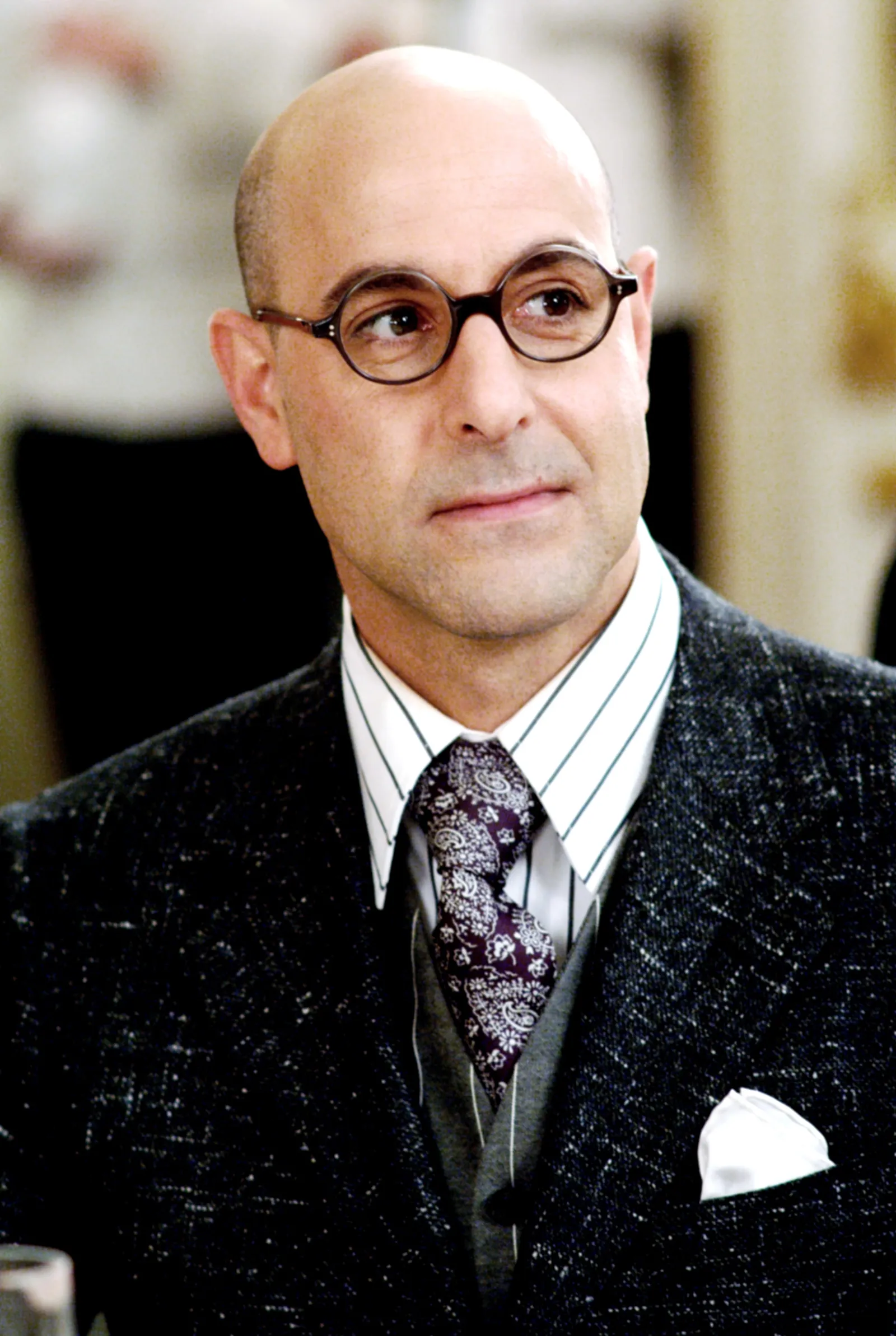
Stanley Tucci as Nigel Kipling, the old-school menswear aficionado.
©20thCentFox/Courtesy Everett CollectionNate and the Everyman Aesthetic
Outside the fashion elite, the film presents a spectrum of male style. Nate (Adrian Grenier), Andy Sachs’s chef boyfriend, represents the era’s casual cool, characterized by bootcut jeans, flannels, zip-up hoodies, and ringer tees. His look is effortless and unstudied, embodying the archetype of the handsome everyman for whom fashion is secondary. Nate’s indifference to the fashion world, famously highlighted by his bewildered question about why women need multiple handbags, underscores the disconnect between industry trends and everyday life.

Andy’s chef boyfriend Nate (Adrian Grenier) positioned himself as the anti-fashion everyman.
©20thCentFox/Courtesy Everett CollectionThe Style Spectrum: Christian Thompson and Doug
Christian Thompson (Simon Baker), the journalist, occupies a middle ground, his tailoring relaxed with soft blazers and unbuttoned shirts, complemented by the distinctive skinny scarf—a look that suggests an artistic, perhaps bohemian, sensibility. Doug (Rich Sommer), Andy’s seemingly conventional friend, presents a subtle study in understated style. His dark suits, dark shirts, and narrow ties hint at a corporate facade, yet his appreciation for designers like John Galliano and Nicolas Ghesquière suggests a deeper, more considered approach to fashion.
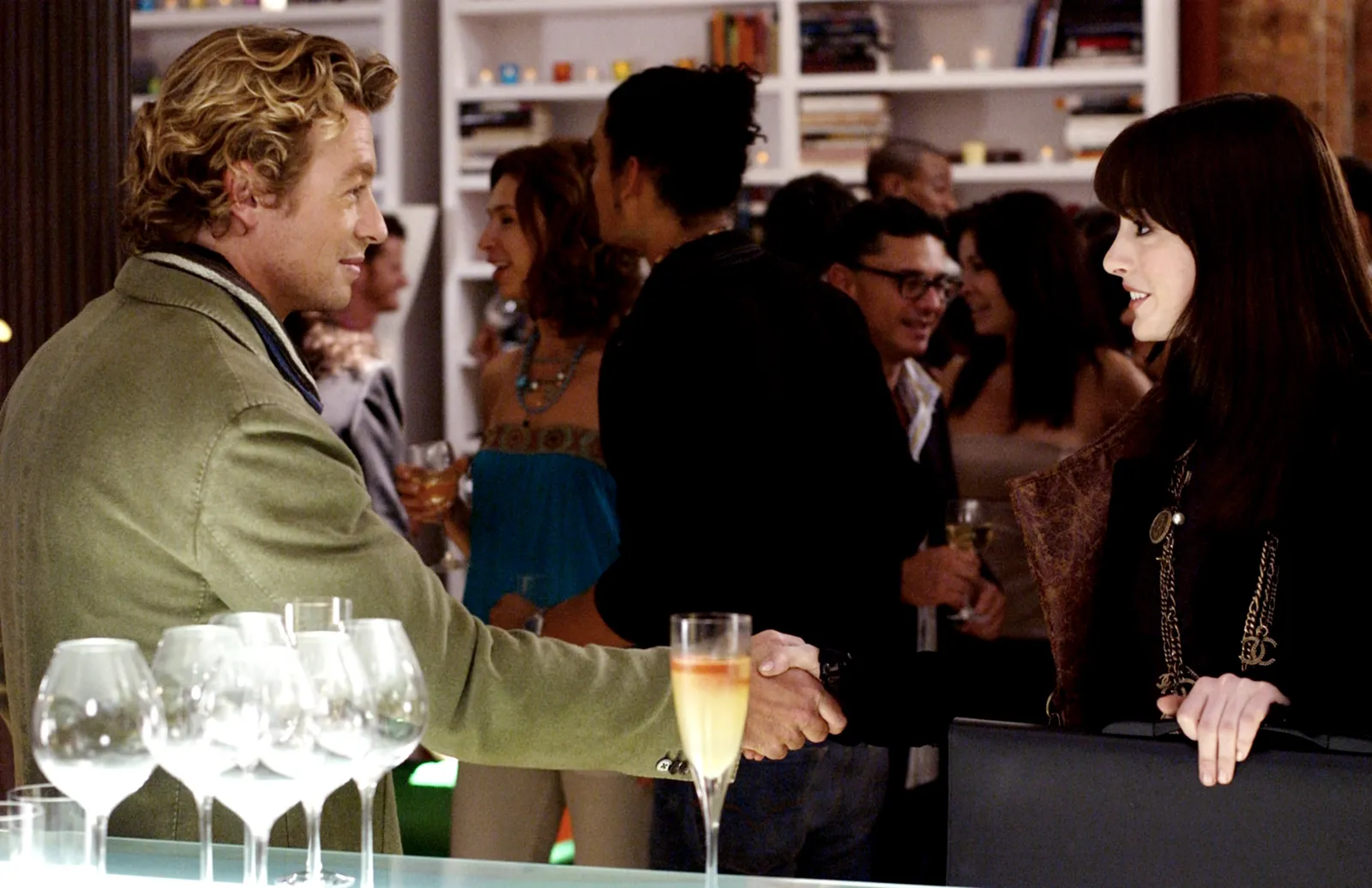
Smooth-talking journalist Christian Thompson (Simon Baker) meets Andy at a fashion party.
©20thCentFox/Courtesy Everett CollectionA Moment in Time: Menswear’s Evolution
The film’s enduring appeal lies in its portrayal of a transitional period for menswear. It predates the widespread adoption of styles like J.Crew’s Ludlow suit and Thom Browne’s avant-garde tailoring, and arrived before the digital age fully democratized fashion discourse through blogs and influential style essays. In 2006, men’s fashion was still largely a niche interest. *The Devil Wears Prada* perfectly captured this nascent stage, preserving it as a sartorial time capsule, complete with its characteristic three-piece suits and statement skinny scarves.
Business Style Takeaway: The film’s depiction of Nigel’s meticulous approach to suiting and accessory selection underscores the enduring power of classic, well-executed style in projecting authority and confidence. This attention to detail in personal presentation remains a cornerstone for high-achieving executives seeking to command respect and refine their professional image.
За даними порталу: www.gq.com