

For film producer Cornelia Popp and her husband, design studio Holzrausch conceived a Munich residence that began not with blueprints, but with evocative imagery—a curated collection of scenes and sketches that captured the couple’s vision. Popp explains, “Given our professions, that was perhaps the most direct route for us to articulate our desires. The initial scene evokes a 1970s film aesthetic, rich with wood and a palpable warmth, set against a backdrop overlooking city lights one evening in South America.”
An Atmosphere of Intimate Sophistication
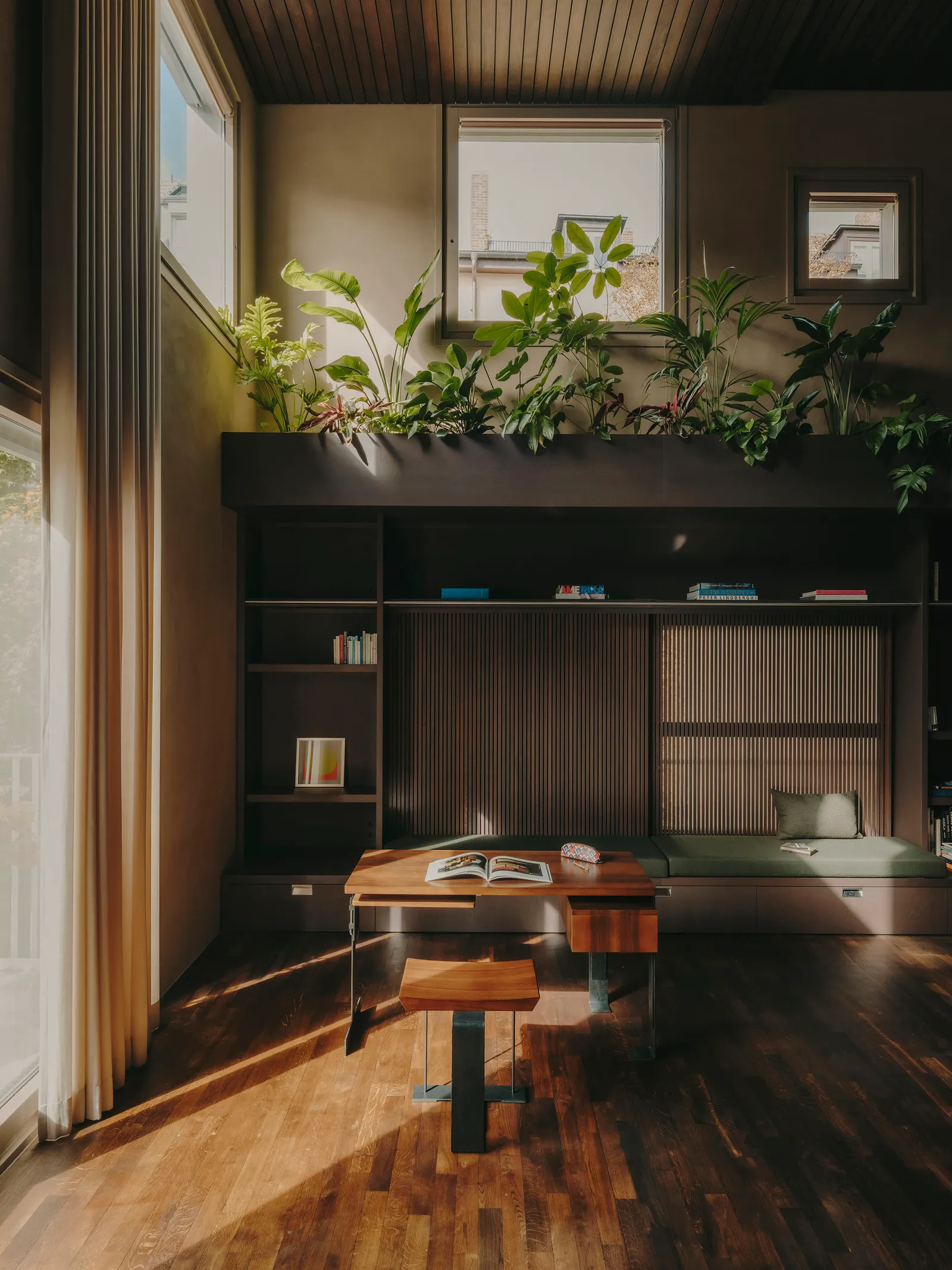
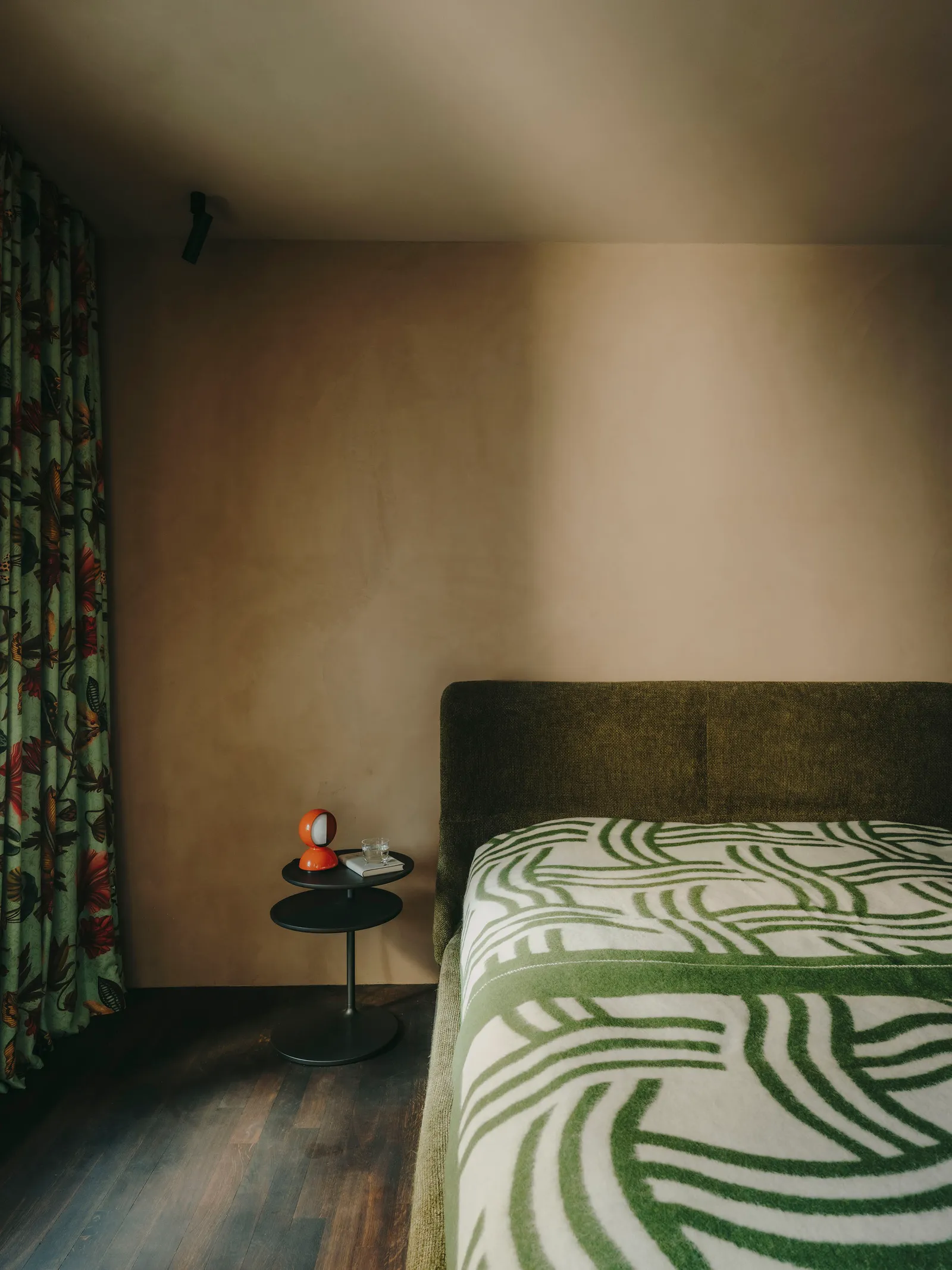
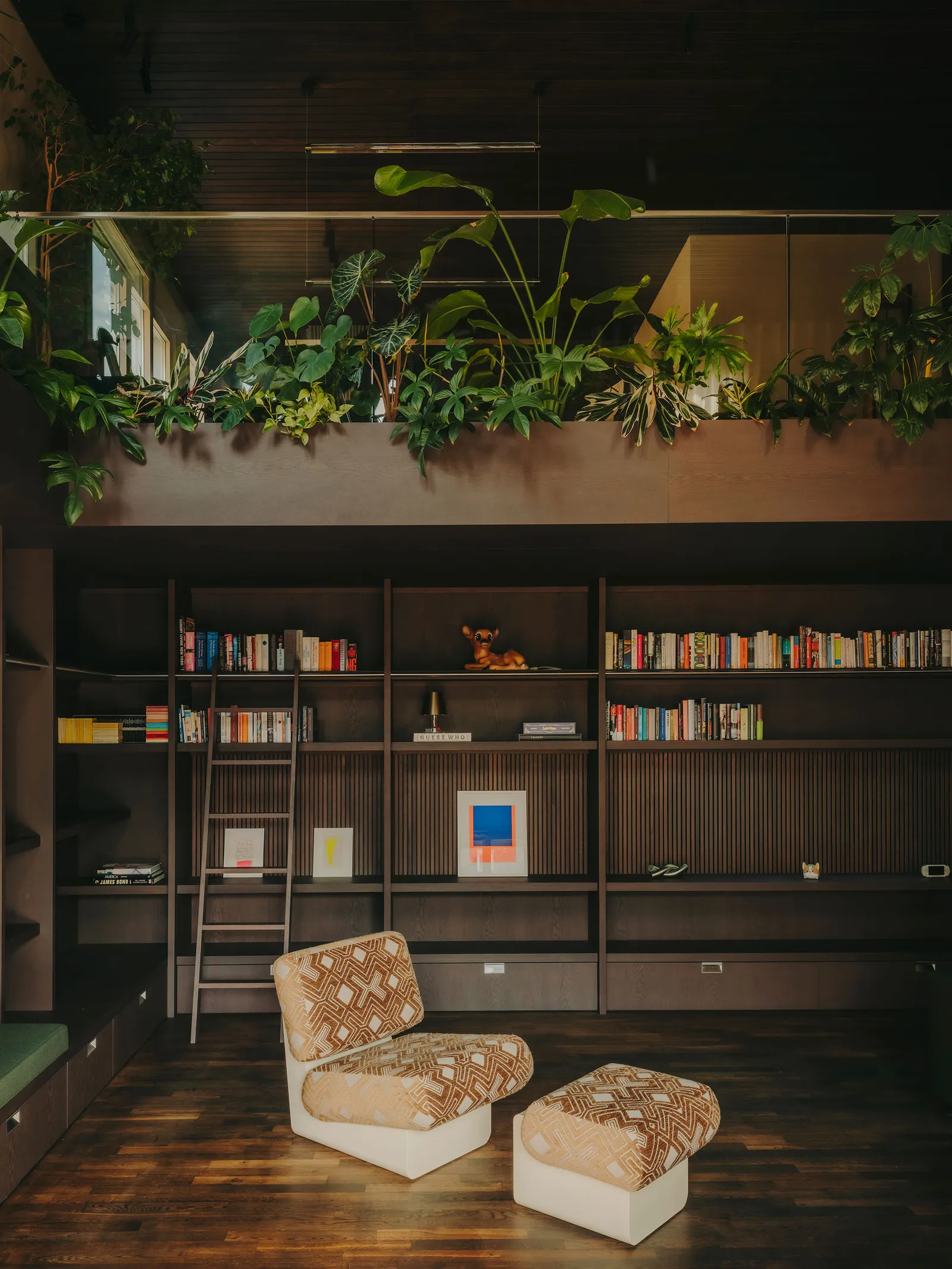
The interior design embraces an atmosphere of intimate seclusion, a departure from conventional perceptions of a typical German dwelling. Rich, dark wood finishes, artfully diffused lighting, and strategic placement of verdant plants coalesce to manifest the 1970s South American ambiance the creative couple envisioned. The urban context of Munich subtly emerges through details like the courtyard view, offering a counterpoint to the immersive interior narrative. Sven Petzold of Holzrausch notes, “We deliberately sought to minimize the integration of the existing architecture, instead prioritizing the creation of a distinct internal environment.” The pronounced, square white windows characteristic of 1990s German urban design stand in contrast to the immersive experience within, effectively transporting one far from Munich.
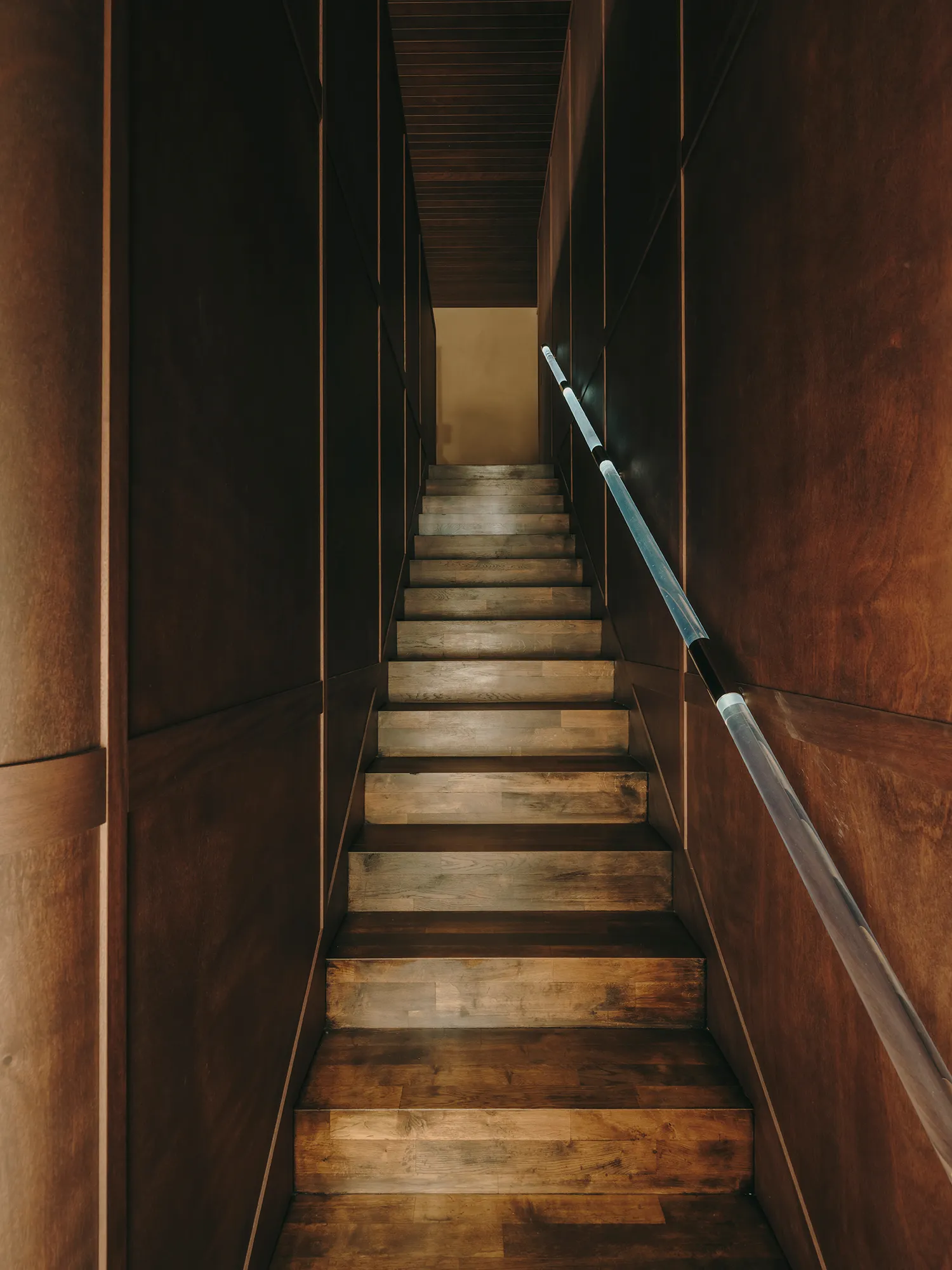
Upon entering, one is immediately greeted by a compact vestibule. Popp describes the experience: “The moment the door closes behind you, you are transported to another world.” The narrow, dimly lit staircase that descends into the residence creates a dramatic prelude. “The journey downwards, culminating in the sight of light at the end of the passage, remains an exciting moment every time,” she adds.
The Art of Controlled Illumination
The staircase serves as an architectural metaphor, conceived by Petzold as a “gorge” that powerfully shapes the spatial experience from its inception. This design element amplifies the dramatic transition from the descent to the unfolding space below, akin to a reveal on a cinematic set.
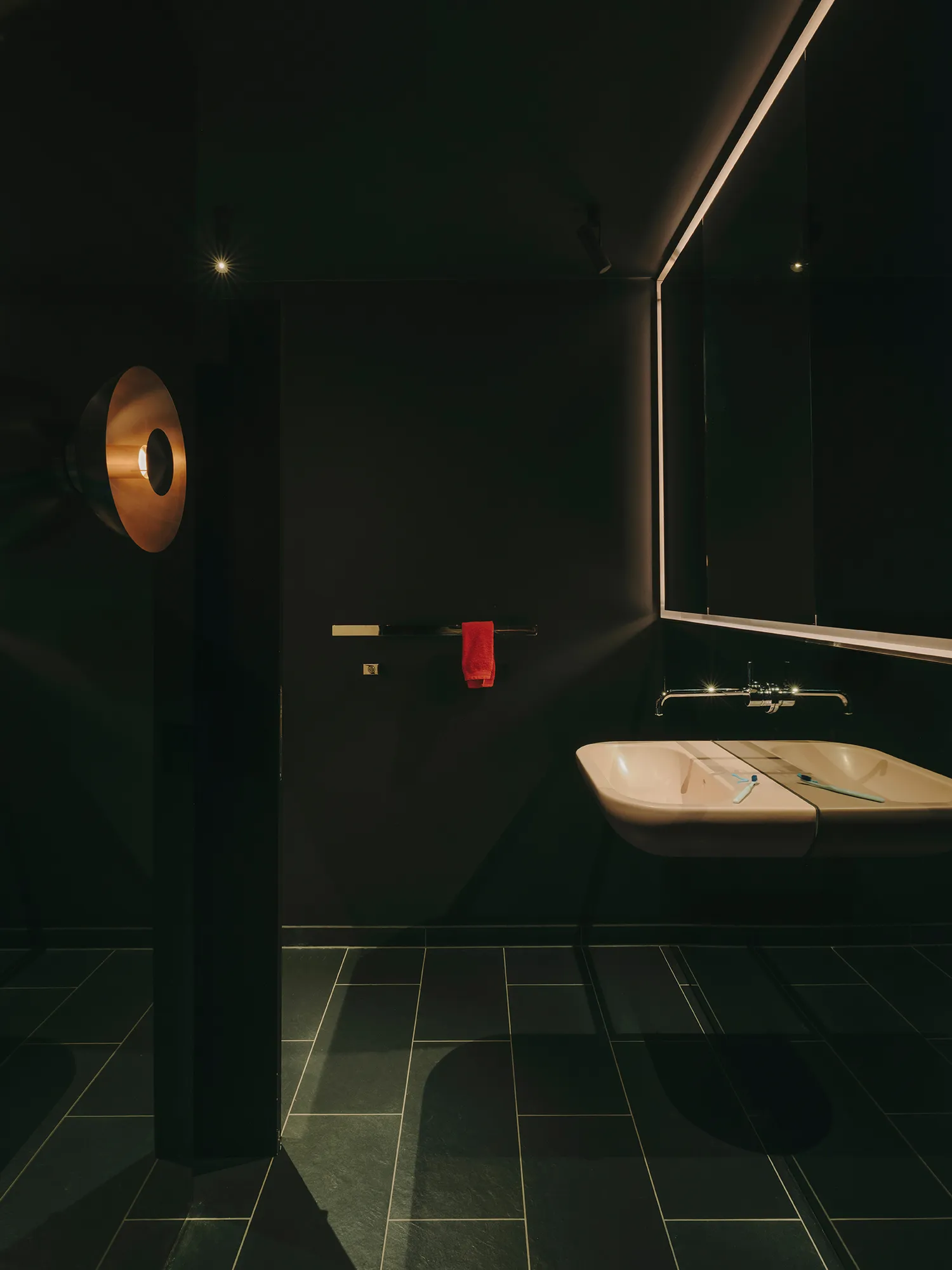
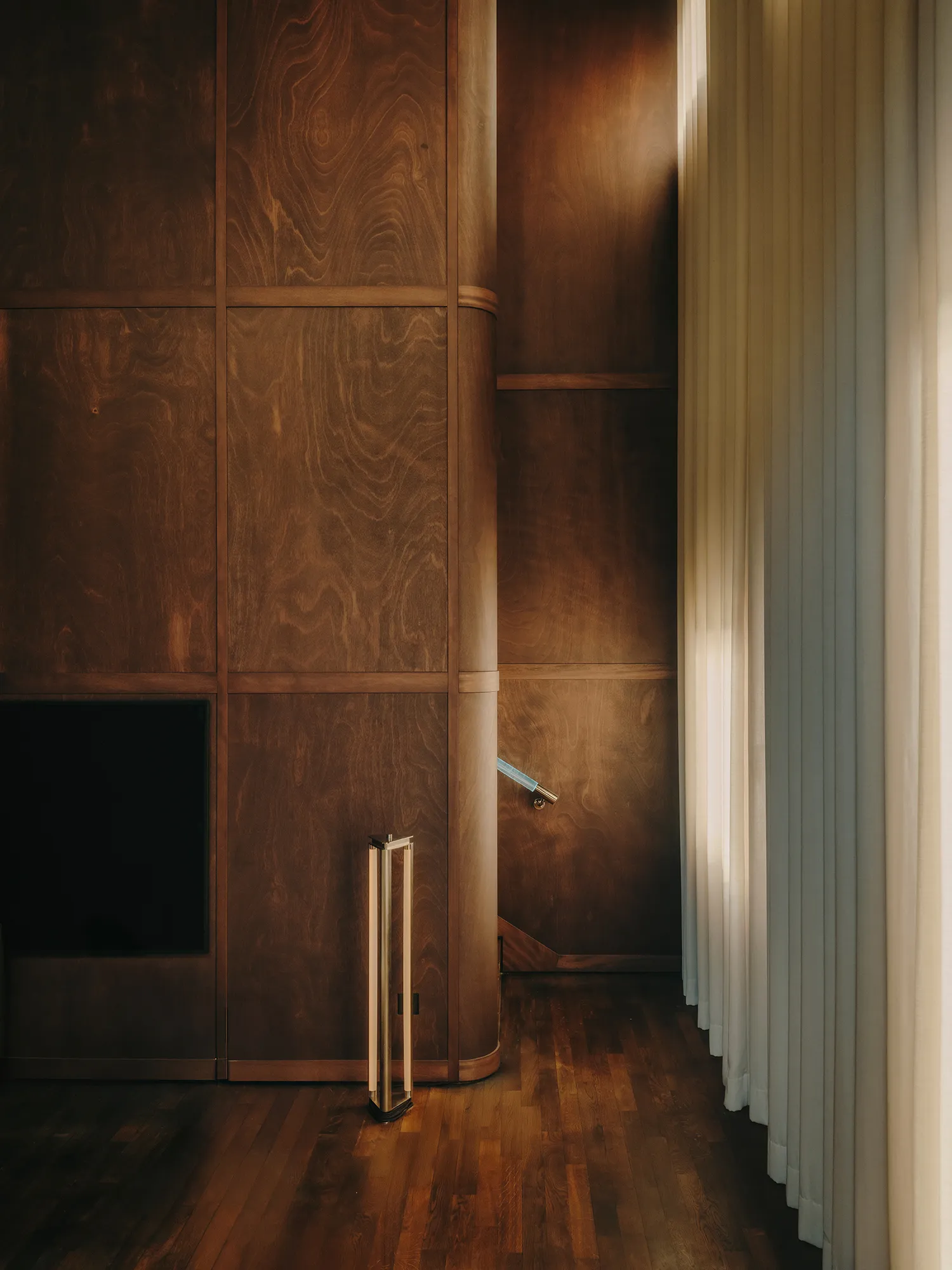
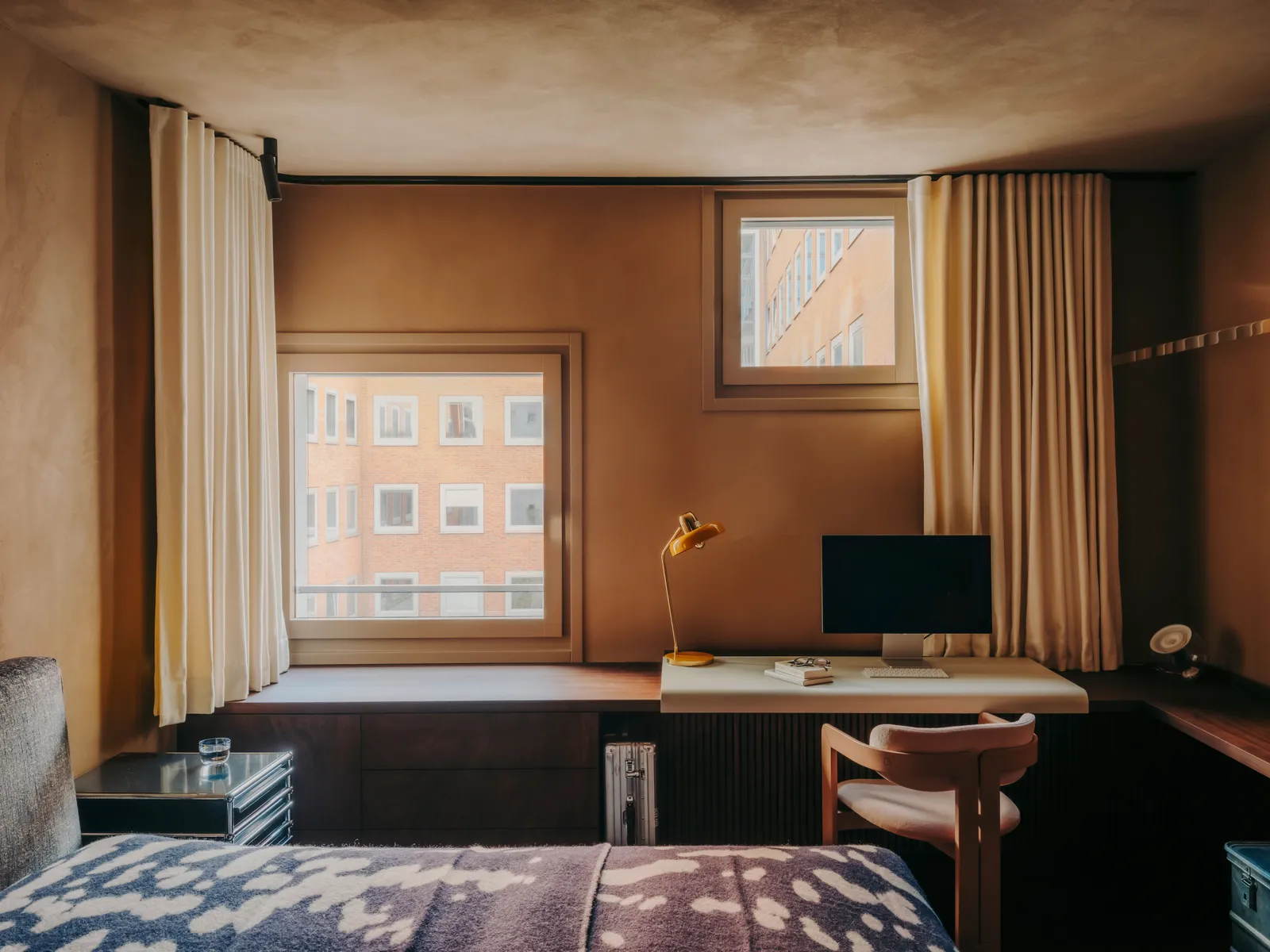
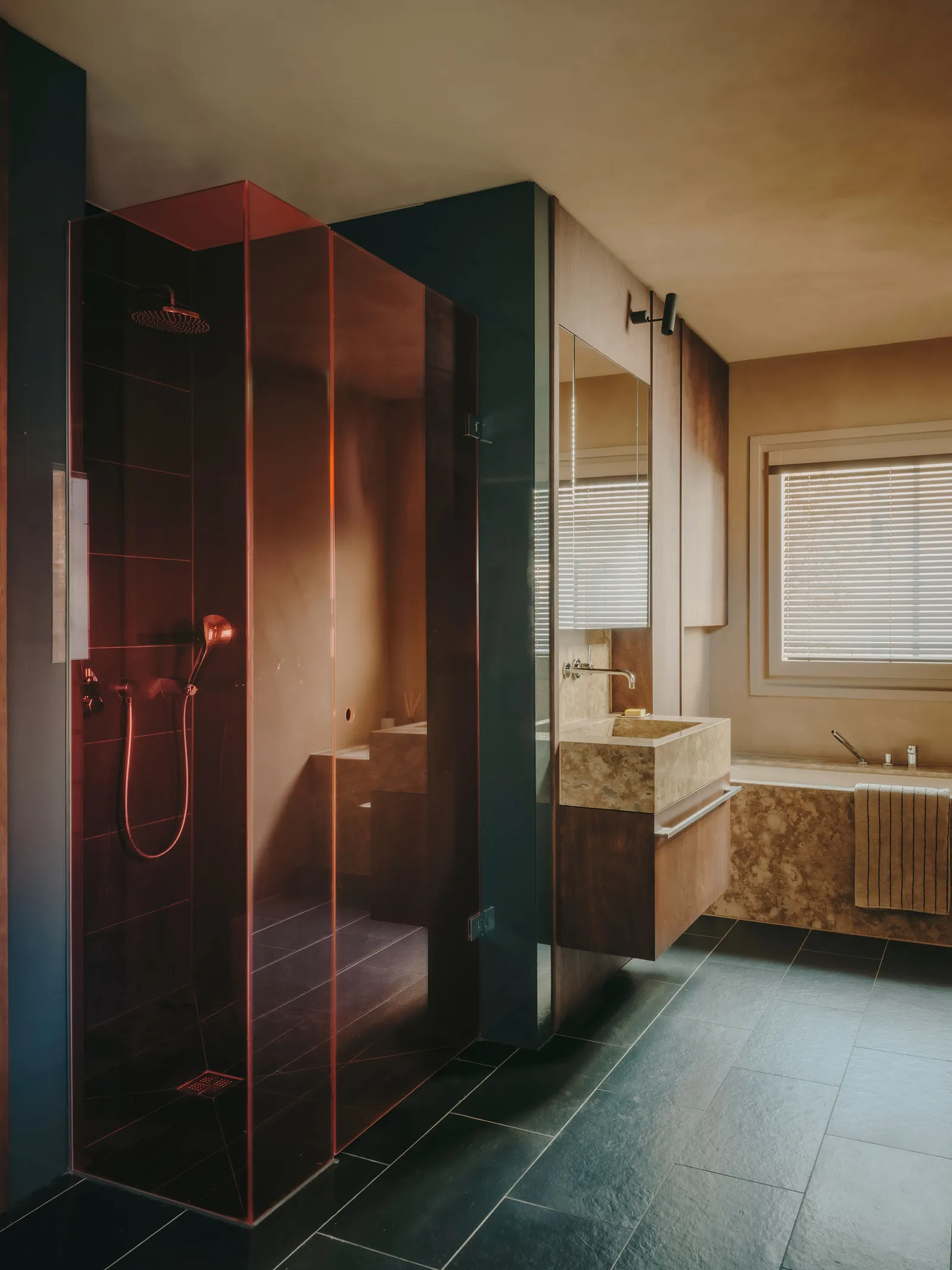
This intentional avoidance of abundant natural light is a defining characteristic of the residence. Surfaces are rendered in deep, absorbing tones, while light sources are meticulously positioned to sculpt the atmosphere rather than merely illuminate. Petzold elaborates on the design philosophy: “Our objective was not to maximize brightness, but to cultivate a specific, enveloping ambiance.” Such a design approach necessitates exacting precision in material selection, lighting, and proportion to prevent the interiors from feeling heavy. The clients acknowledge moments of introspection regarding the bold design choices, with Popp remarking on their initial consideration of the paneled ceiling, now recognized as an essential element.
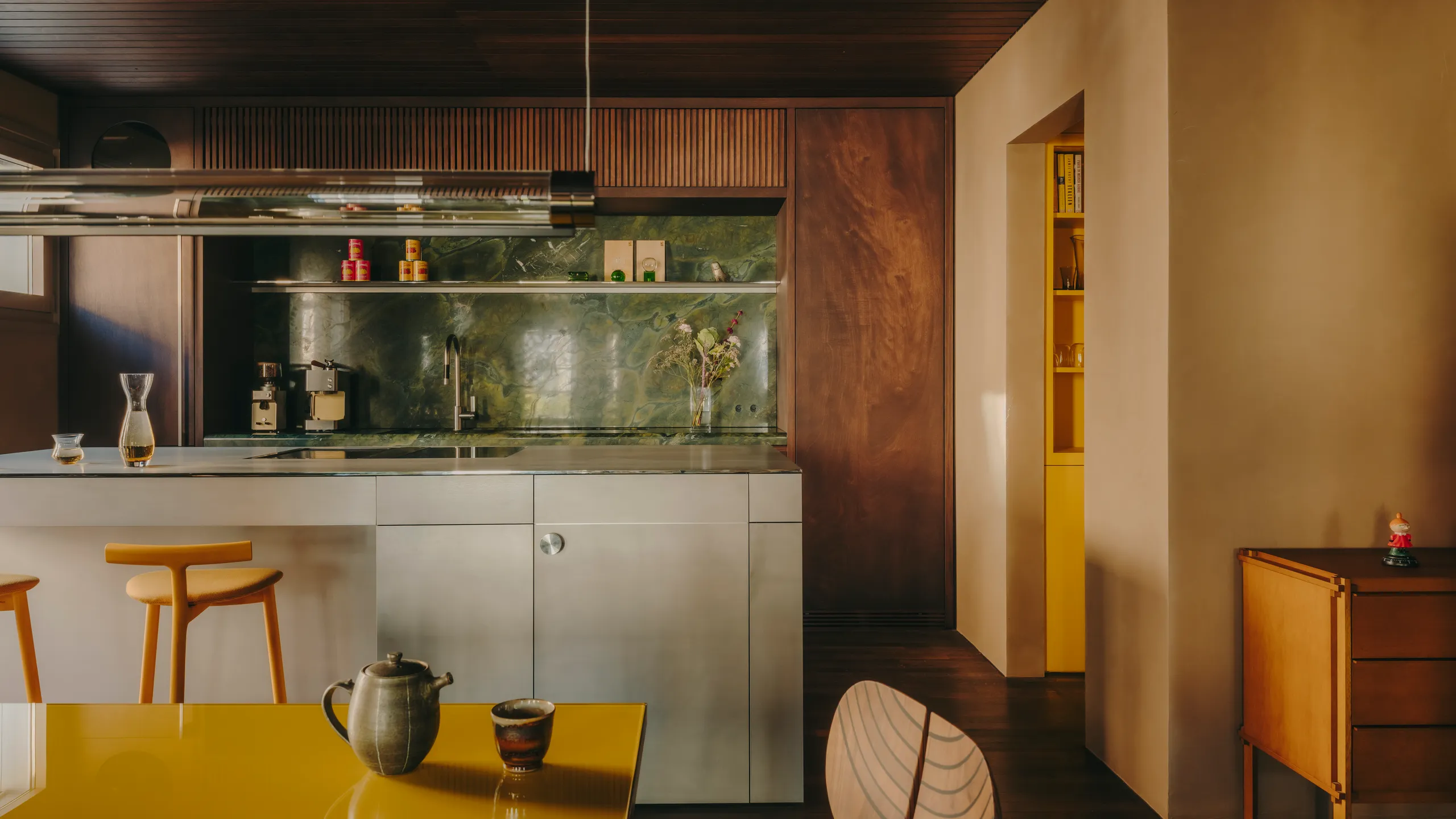
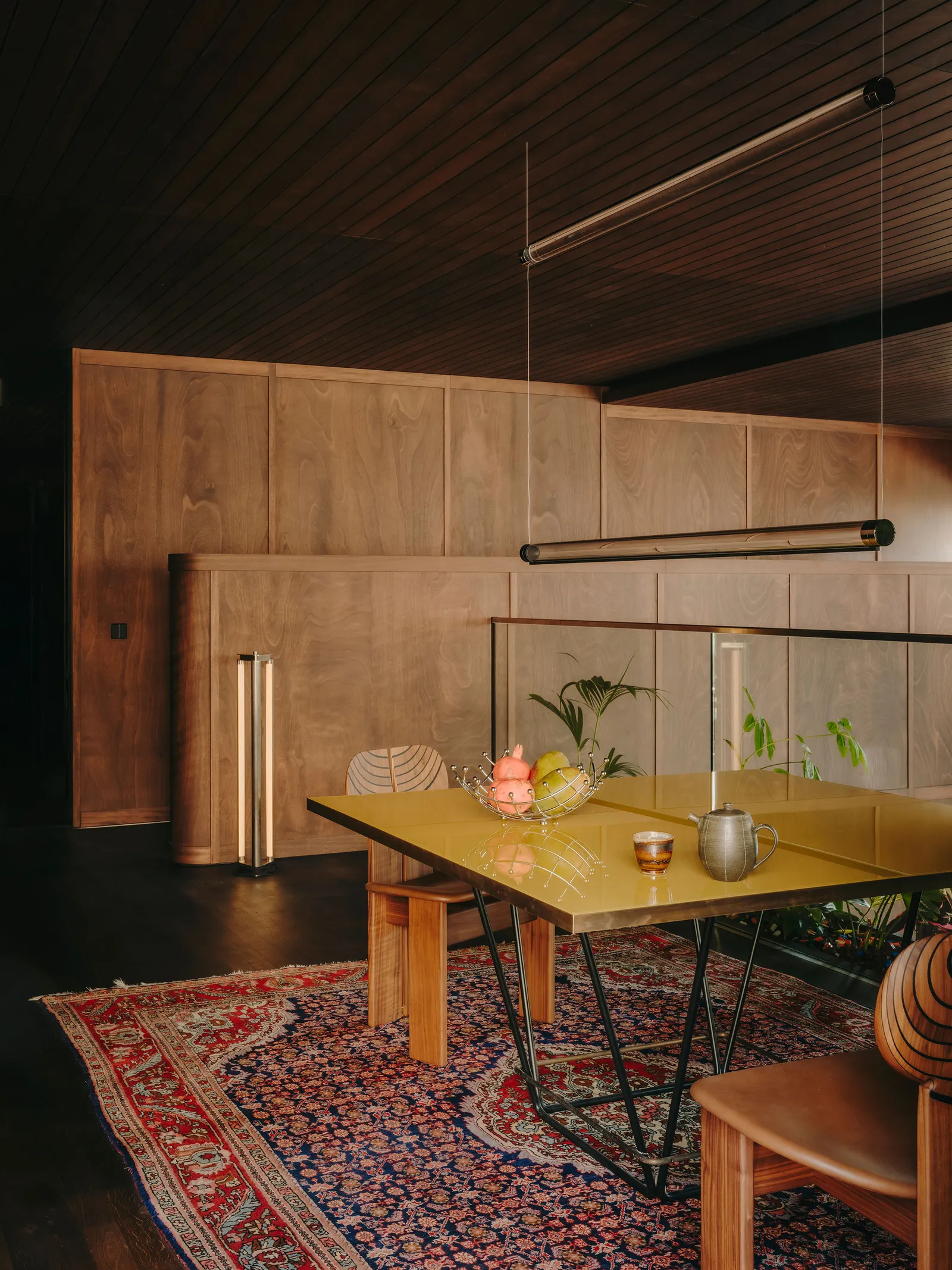
The carefully curated darkness serves to focus the visual field and direct the viewer’s attention. This effect is intrinsically linked to the material palette, where okoumé and smoked oak form the dominant textures, complemented by cooler, smoother surfaces of Vitoria Regia quartzite, Wachenzeller limestone, stainless steel, and colored glass. “Materiality possesses a profoundly physical presence,” notes Petzold. Various surfaces absorb light, while others create deliberate contrasts through reflection and refraction, thereby imbuing the space with depth and dimensionality.
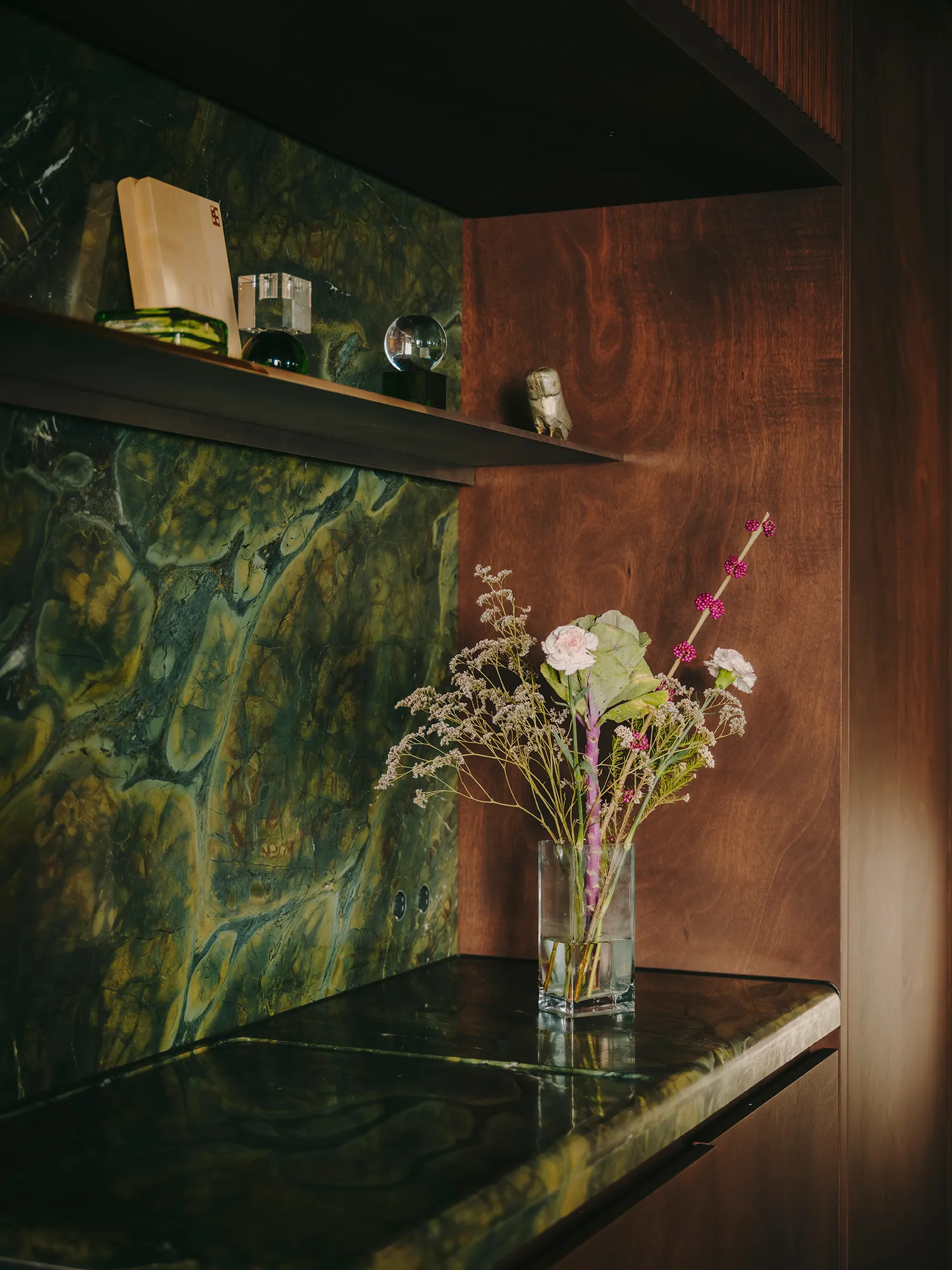
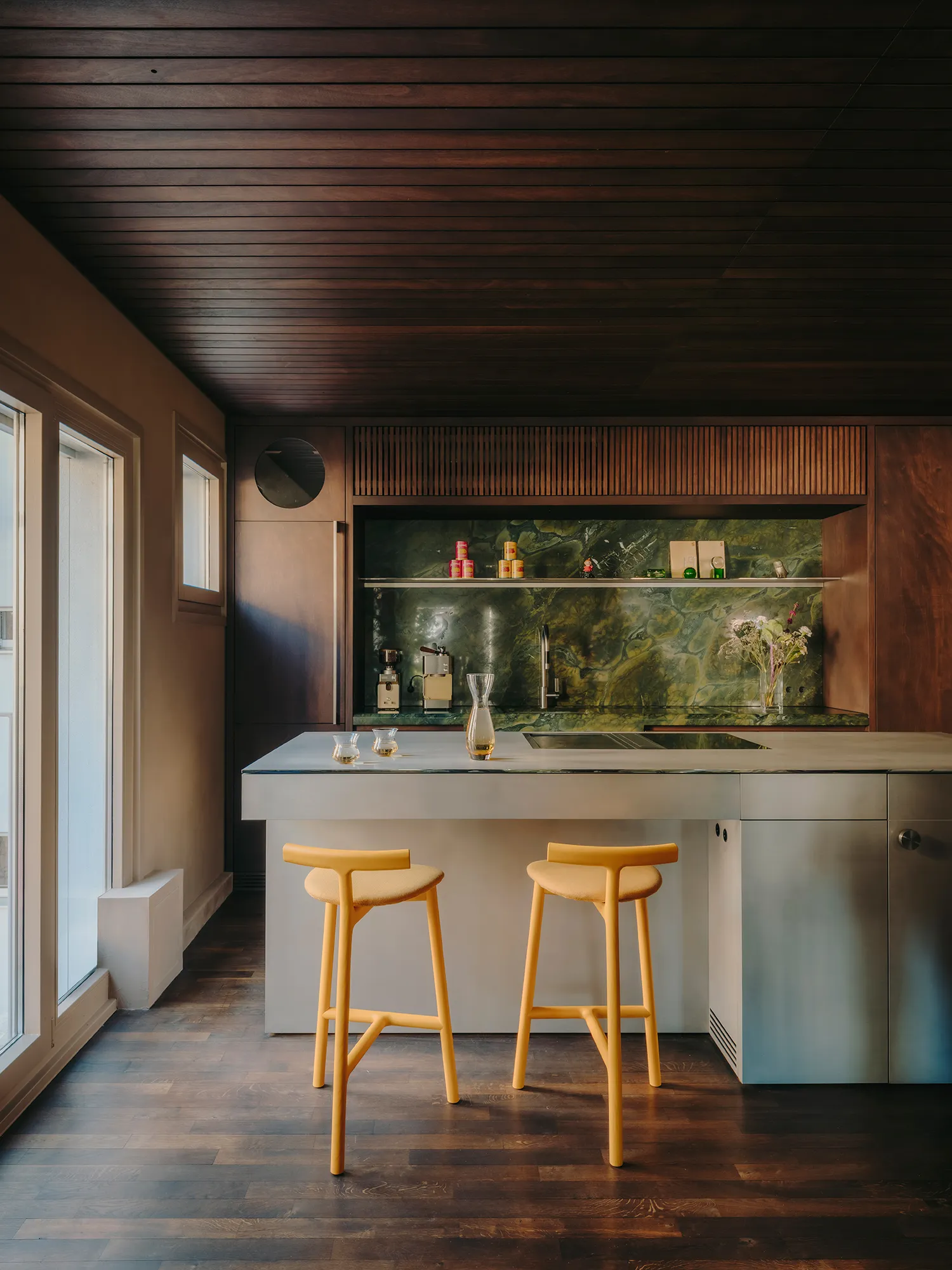
“My husband favored a stainless steel kitchen unit, while I always envisioned green marble,” Popp recalls. The stainless steel ultimately prevailed, resulting in a kitchen that commands attention. The island presents a sleek, luminous, and cool surface that reflects the ambient light. The yellow accents within the built-in cabinetry, the backsplash, and a niche serving as a pantry, further enhance the space’s transformative quality, casting a warm, dense light that appears as if filtered.
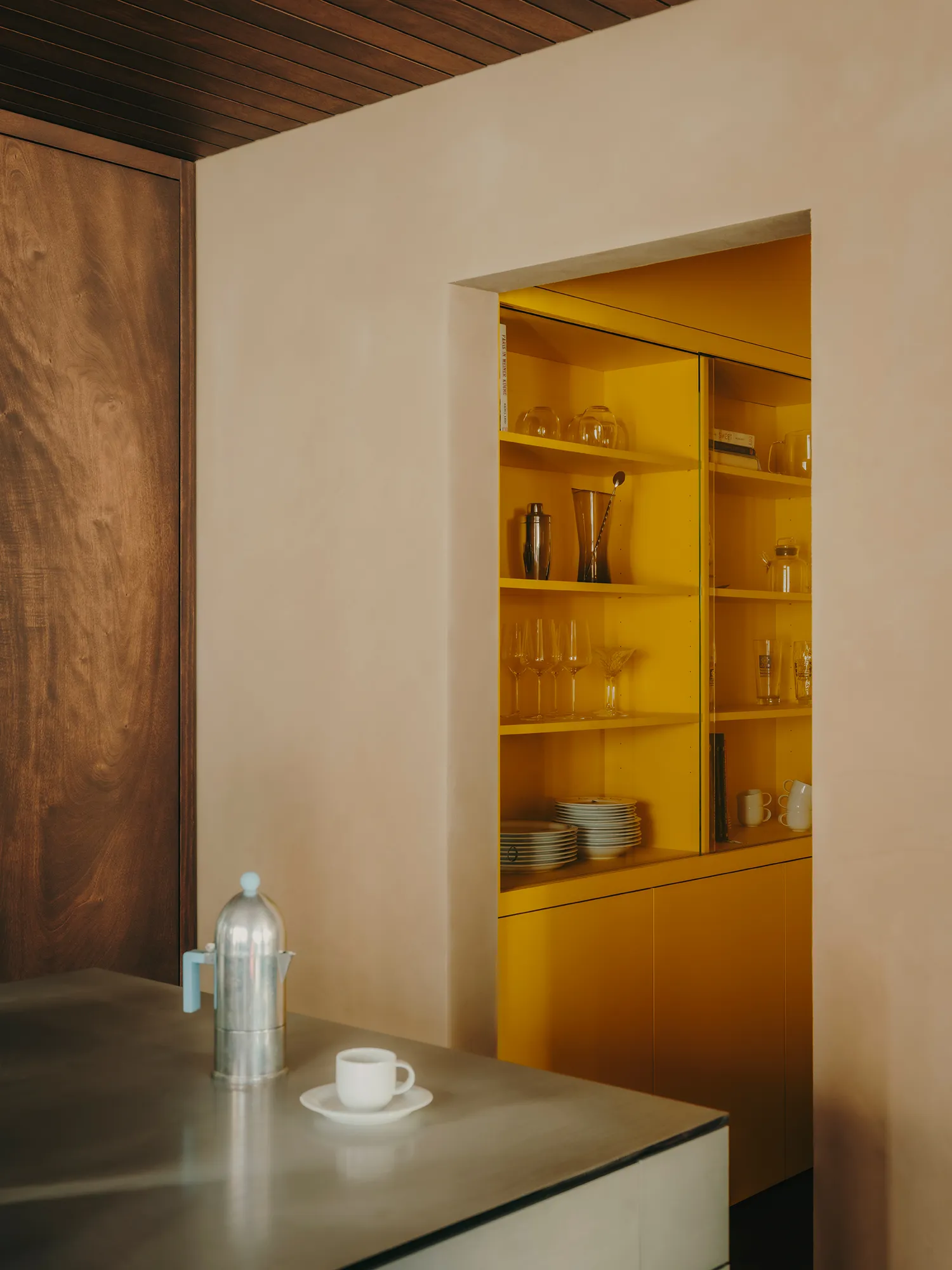
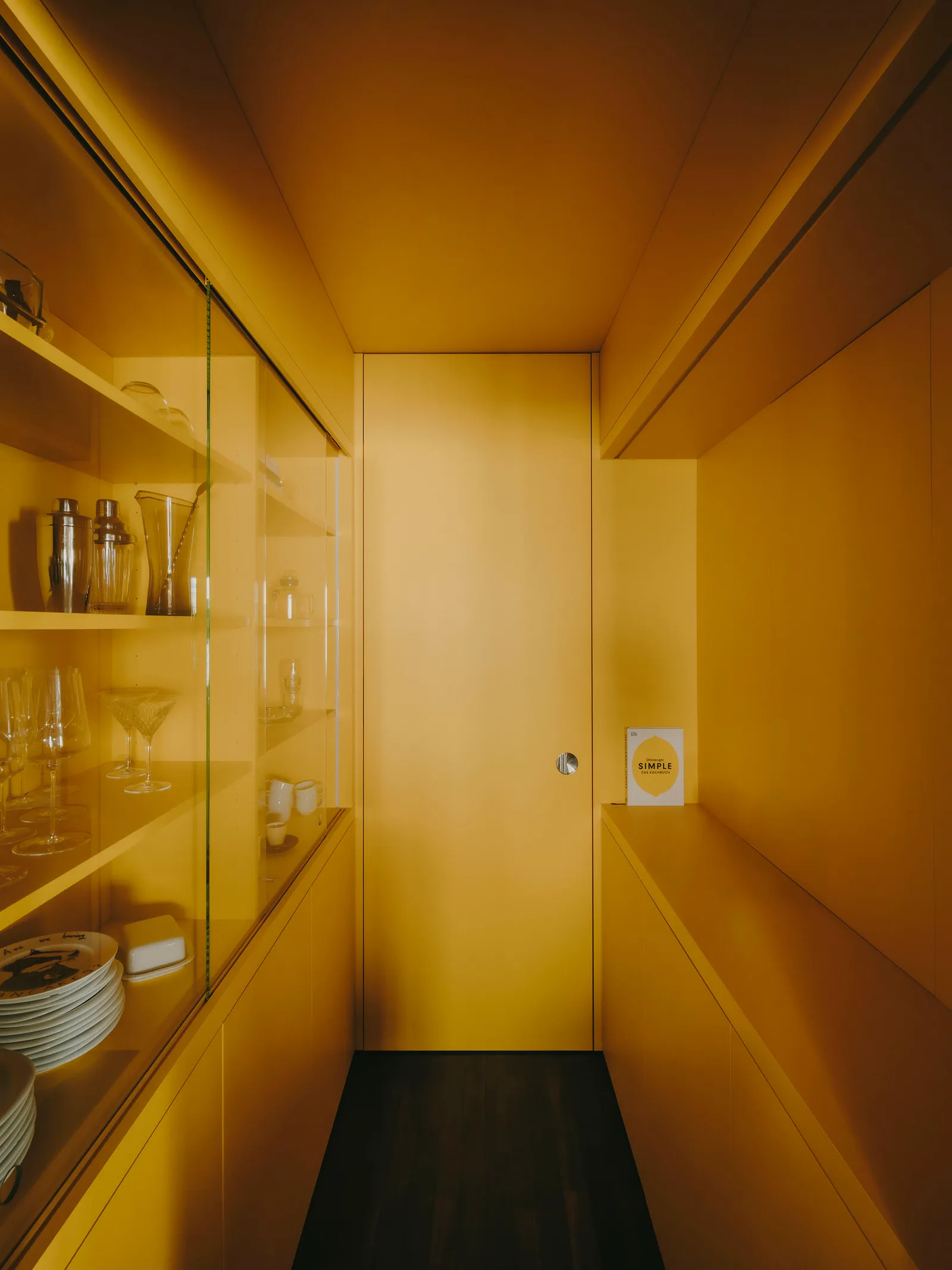
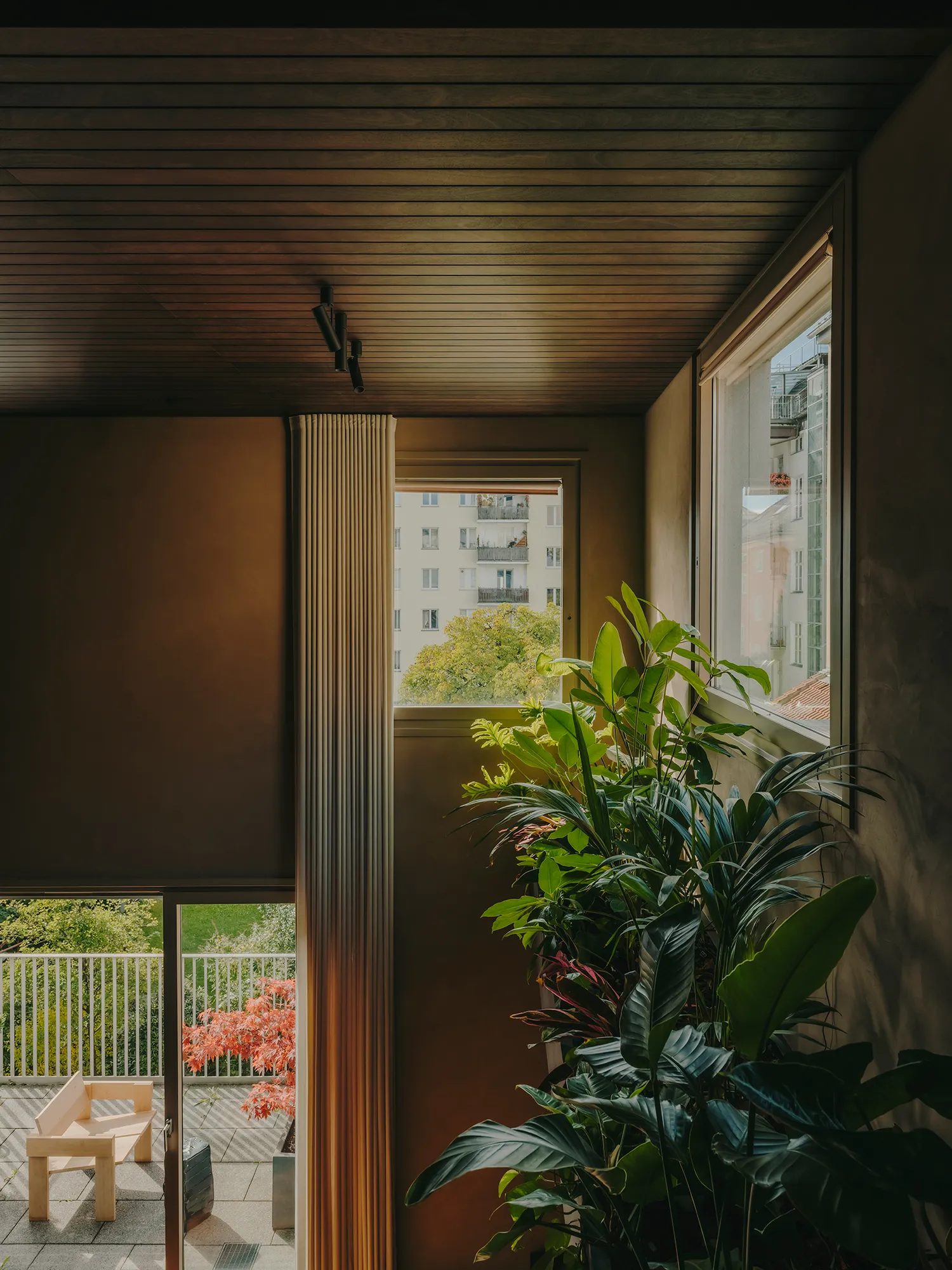
Petzold describes the residence as possessing a “club atmosphere,” a term he uses to denote a specific intensity—characterized by subdued lighting, refined lines, and spaces that unfold with a sense of discovery—rather than a literal location. Popp offers a slightly different interpretation: “To be candid, I perceived it more as a tranquil sanctuary, free from external distractions. However, I do concur that the living room does possess a club-like ambiance; the only element absent is the scent of cigar smoke.”
This Munich town house was originally published in AD Germany.
Business Style Takeaway: This residence masterfully employs a dramatic and immersive design strategy to create a personal sanctuary that fosters concentration and introspection. By rejecting conventional brightness for carefully orchestrated mood lighting and rich textures, it cultivates an environment that reflects a sophisticated and discerning personal brand, ideal for creative professionals seeking a distinct spatial experience.
Based on materials from : www.architecturaldigest.com