

While the term “unique” is often overused, Antoni Gaudí’s unfinished masterpiece, La Sagrada Familia in Barcelona, stands as a true testament to its singular nature.
This extraordinary basilica, a structure variously described as a fantasy from another world or “spirit symbolized in stone,” has been a source of fascination, inspiration, and indeed, contemplation for visitors for over a century. Famously in a state of perpetual construction since 1882, this monumental undertaking, the culmination of generations of architects, sculptors, and artisans, is nearing its completion.
The anticipated visit of Pope Leo XIV on June 10, 2026, the centenary of Gaudí’s passing, will mark a significant milestone with an evening Mass and the consecration of the Tower of Jesus Christ. This central spire, finalized in February 2026, signifies the completion of the church’s primary external framework.
We engaged with two architects to explore the profound significance of Gaudí’s magnum opus, its transformative impact on architectural principles, and essential observations for those planning an in-person experience in Barcelona.
The Genesis of La Sagrada Familia
Though inextricably linked with Antoni Gaudí, the project’s inception predates his involvement, initiated by Catalan bookseller José María Bocabella. His initial vision aspired to replicate the Gothic Basilica della Santa Casa of Loreto, Italy, in Barcelona. Funded by public donations, the first architect, Francisco de Paula del Villar, envisioned a neo-Gothic design commencing with the crypt. Construction commenced in 1882, but Villar withdrew the following year due to disagreements, leaving only the crypt substantially built.
Antoni Gaudí, a Catalan nationalist and a protégé of industrialist Eusebi Güell, assumed stewardship. Having already garnered acclaim for his modernist interpretations, Gaudí departed from Villar’s original concepts. He proposed a radically innovative structure that, while acknowledging its neo-Gothic roots, aimed to transcend and elevate them, ingeniously integrating the existing crypt.
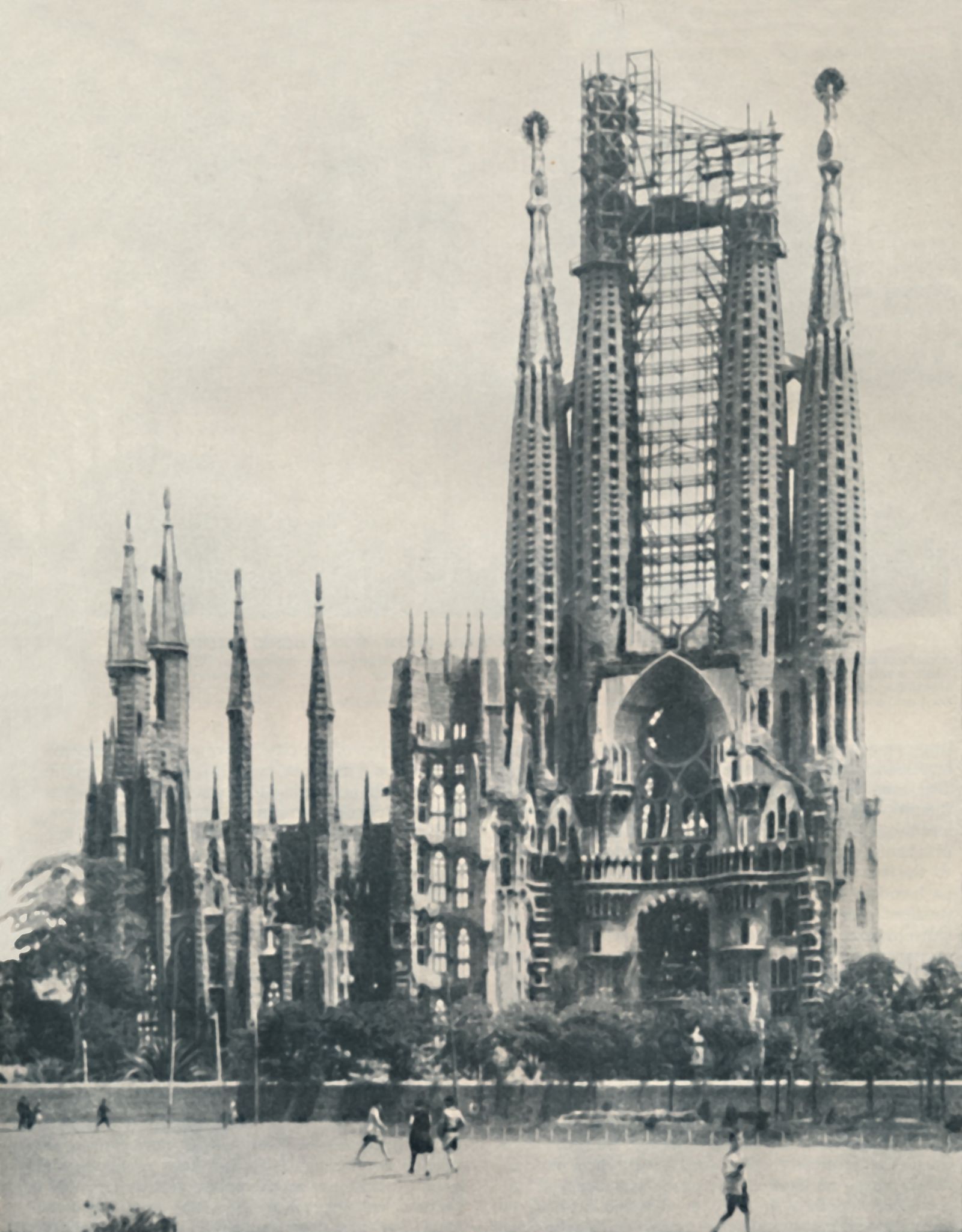
“He would have preferred to start anew, but that was not feasible,” notes Jordan Rogove, co-founder and partner at New York City’s DXA Studio and an affiliate professor of architecture at Virginia Tech. “He moved away from strict adherence to Gothic conventions, initiating the design with the apse, a semi-circular area crowned by a semi-dome, and dispensed with buttresses in favor of rounded windows. As work on the three principal façades began, he abandoned all traces of the preceding design, embarking on an entirely distinct trajectory.”
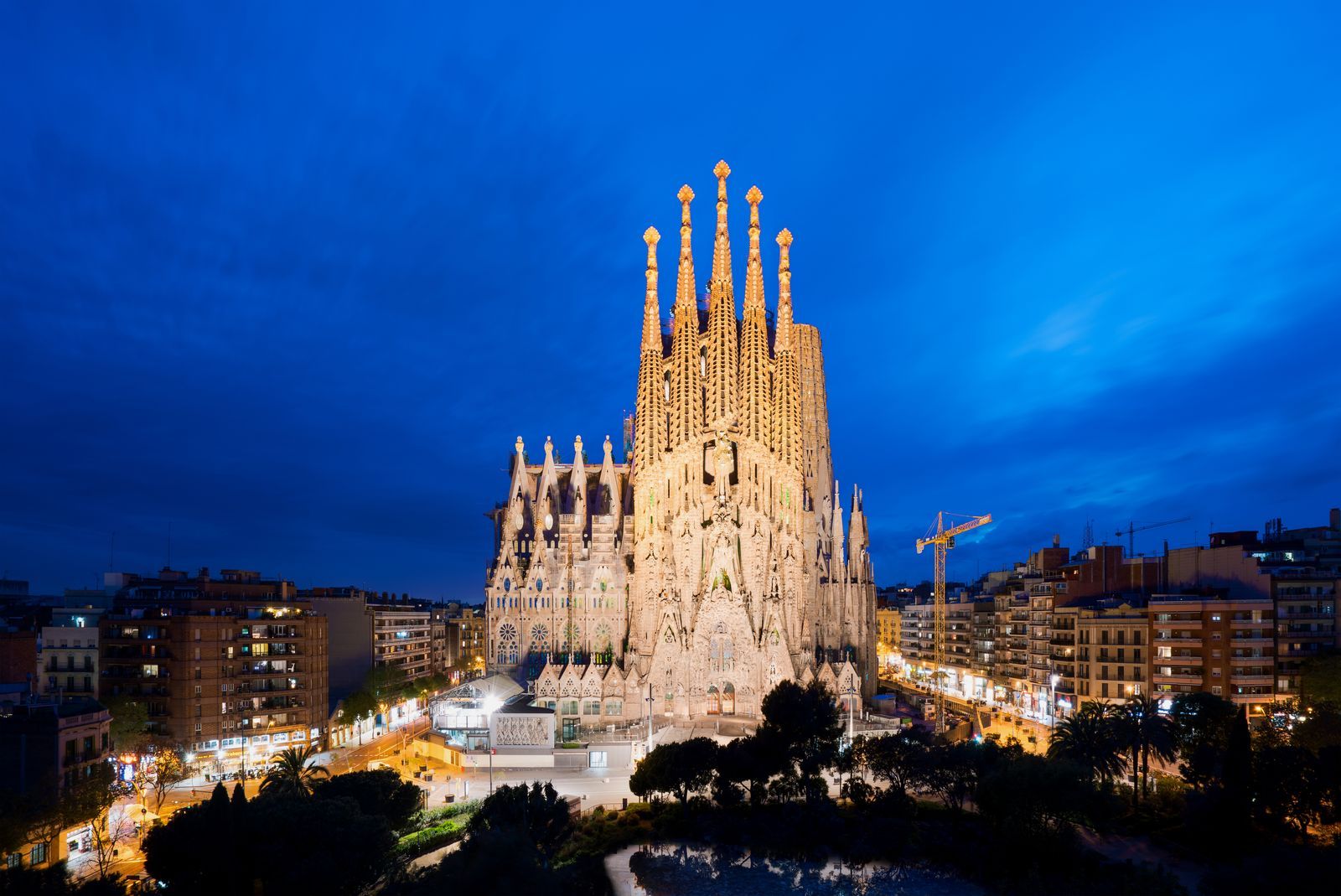
Gaudí envisioned a fusion of a fundamental neo-Gothic floor plan with his profound fascination for nature and geometry. His design conceived 18 spires, each symbolizing a significant figure in Christianity, including the twelve apostles, the four evangelists, and the Virgin Mary, reaching skyward.
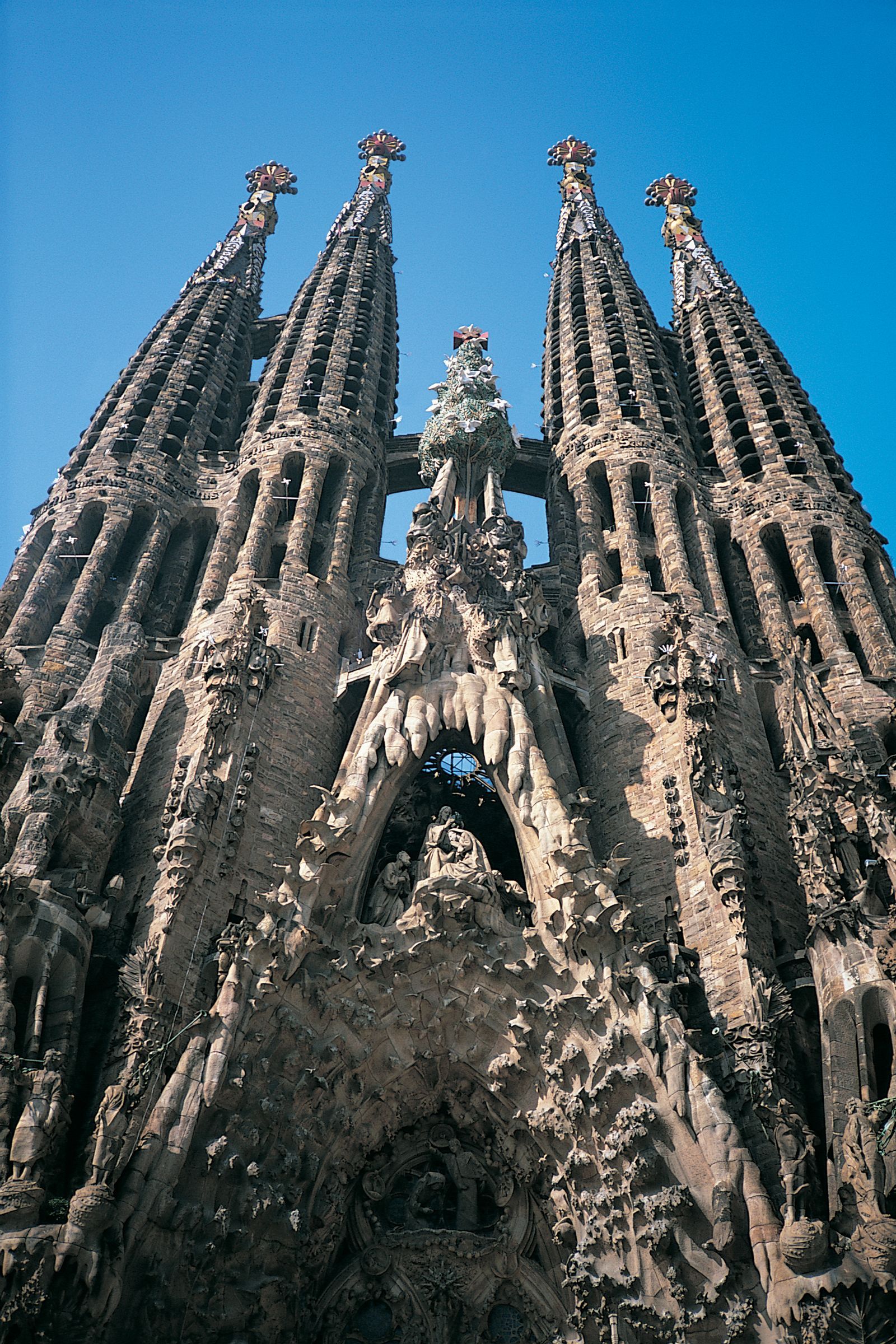
The crowning spire, symbolizing Jesus Christ and completed in February 2026, has elevated La Sagrada Familia to the status of the world’s tallest church. Yet, Gaudí’s humility is evident, as he stipulated that it should not surpass the height of the natural landscape, specifically Montjuïc hill, as a deference to divine creation.
Although La Sagrada Familia occupied Gaudí’s primary focus and life’s work, he also contributed to other significant architectural projects, including the design of Casa Milà and the notable redesign of Casa Batlló, both now iconic landmarks within Barcelona.
Throughout the extended construction period, Gaudí consistently refined and evolved his architectural vision.
“Gaudí’s personal faith developed alongside the project, influencing his design philosophy,” Rogove observes. “He believed that God was the ultimate artist and that Mother Nature served as the preeminent source of inspiration.”
A striking characteristic of La Sagrada Familia is the deliberate absence of 90-degree angles, both internally and externally, with very few straight lines employed, a direct homage to the organic forms found in nature.
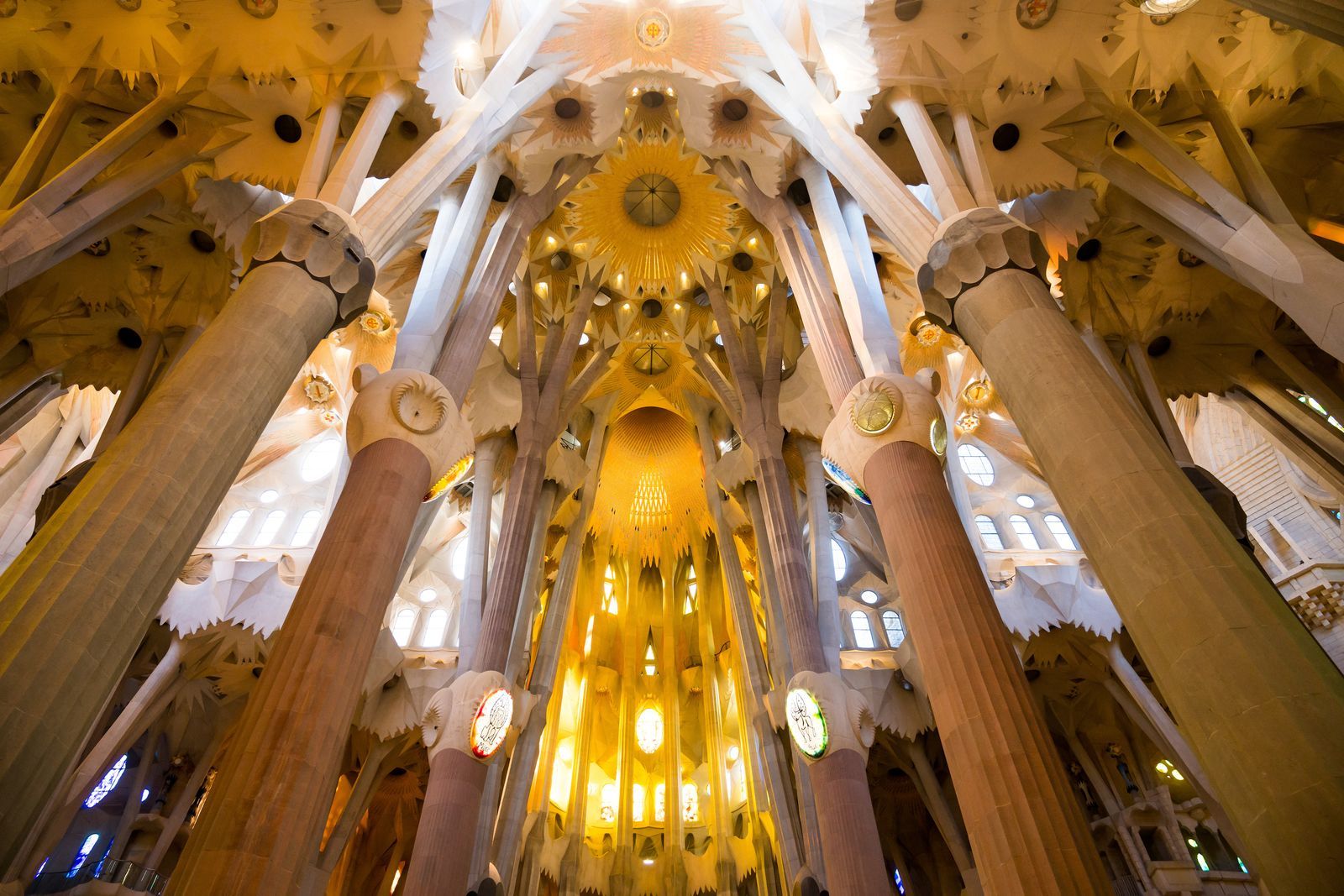
“There are no flat surfaces; he avoids any sense of monotony,” remarks Olga Whitmoyer, an architect based in New York City. “Its intricate detailing and architectural diversity evoke a sense of grandeur, reminiscent of Moscow’s Saint Basil’s Cathedral.”
Furthermore, Gaudí had envisioned the extensive use of vibrant colors to reflect the dynamism of the natural world, a detail that has not been fully realized in the completed sections of the church.
“Gaudí’s intention was for the façades to feature striking color accents, perhaps through glazed mosaic inserts or painted elements on the towers,” Whitmoyer adds.
Gaudí understood the monumental scale of the project and that he would not witness its completion. His active involvement concluded prematurely in 1926 at the age of 73, following a tragic accident involving a streetcar. He was interred within La Sagrada Familia, in the chapel of the Virgen del Carmen. Posthumously, one of his disciples assumed leadership of the project, committed to realizing Gaudí’s original vision.
In recent times, sophisticated computer modeling has significantly expedited the project’s progress. Consequently, the main structural exterior was finalized earlier this year. However, decorative elements and a notably controversial grand staircase, which would necessitate the demolition of three city blocks and the displacement of thousands of residents, are projected for completion by 2034.
While La Sagrada Familia and Gaudí’s oeuvre were not universally lauded in the decades following his death, a resurgence of appreciation began in the mid-20th century, championed by Catalan artists like Salvador Dalí. Today, contemporary architects recognize La Sagrada Familia as a paramount example of modernism, and Gaudí as an unparalleled visionary, solidifying its status as Barcelona’s most iconic emblem.
“He continuously reinterpreted architectural precedents, particularly Gothic and Moorish styles,” Rogove remarks. “He disavowed stylistic purity or mere imitation, instead drawing inspiration from historical forms. His profound interest in nature and an exceptional grasp of structural engineering propelled his approach into an entirely novel realm.”
Architectural Brilliance of La Sagrada Familia
Exterior Design
The edifice is defined by three grand stone façades, each imbued with profound symbolism and rich with references to pivotal Christian narratives and events.
Nativity Façade
Gaudí oversaw a significant portion of the construction of the Nativity Façade, which faces east and is considered the most faithful representation of his original design. This façade narrates the birth of Christ, distinguished by its vibrant, intricate details and the incorporation of natural motifs, such as the Tree of Life and various animals symbolizing concepts of eternity and transformation.
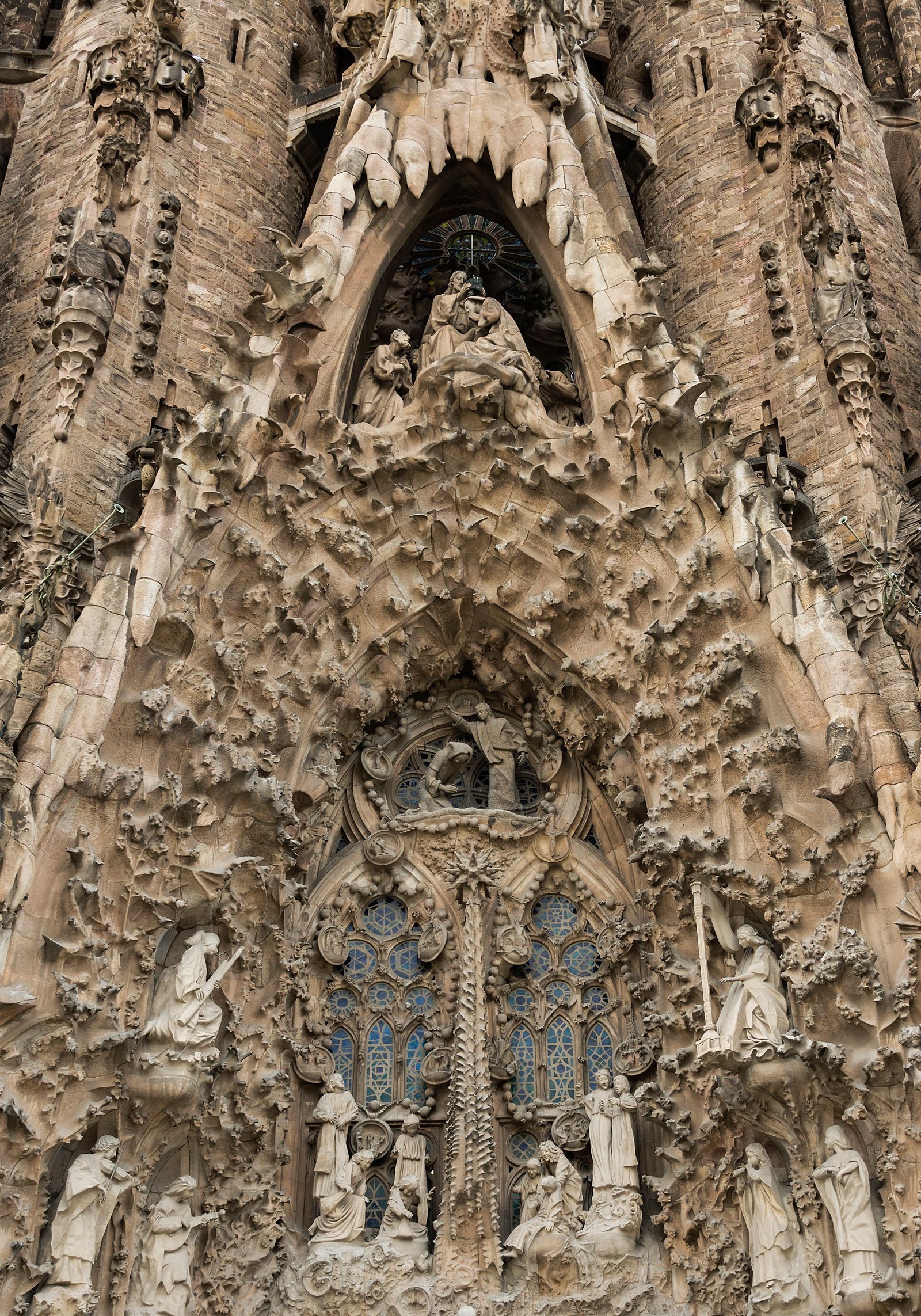
“Positioned to face east, the Nativity Façade is bathed in the first light of day, symbolizing hope,” Rogove explains. “The entire structure possesses a delightful, organic quality, akin to a sandcastle, where the boundaries between individual sculptures blur seamlessly.”
Passion Façade
The west-facing Passion Façade presents a starkly contrasting, more somber depiction of Christ’s crucifixion. Its angular, bone-like motifs and dramatic use of chiaroscuro create a severe, austere scene, intentionally set against the opulence and life-affirming details of the Nativity Façade.
Catalan sculptor Josep Maria Subirachs was entrusted with this section, interpreting Gaudí’s original concepts. His contributions began in 1987 and were completed in 2018, a year prior to his passing.
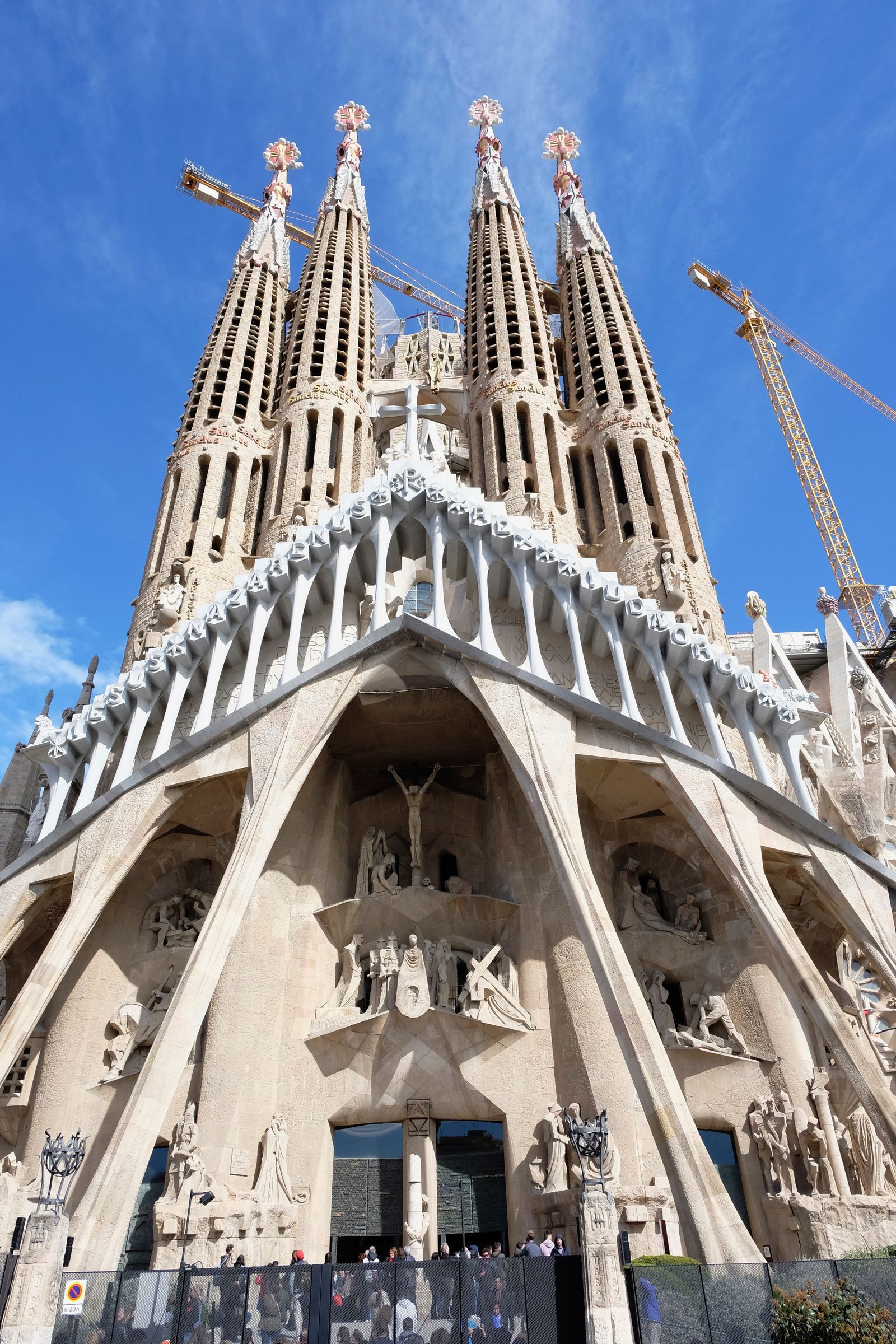
“A particularly striking element is the parabolic colonnade,” Rogove notes. “It conveys a raw emotional power and exemplifies Gaudí’s innovative approach to structure, a fundamental aspect of the church’s design. Legend has it that Gaudí designed the Passion Façade during a period of personal melancholy, which the imagery seems to echo. He even depicted himself amongst the brutal soldiers. It is worth seeking out his likeness when you visit.”
Glory Façade
The Glory Façade, situated on the south, commenced construction in 2002 and will serve as the main entrance. Gaudí envisioned this section to honor the life of Jesus Christ. Its completion is anticipated by 2034. The doors of the Glory Façade, also designed by Subirachs, were installed in 2008 and feature the Lord’s Prayer in Catalan, with the door handles subtly shaped into the initials ‘A’ and ‘G’ for Antoni Gaudí.
The Towers
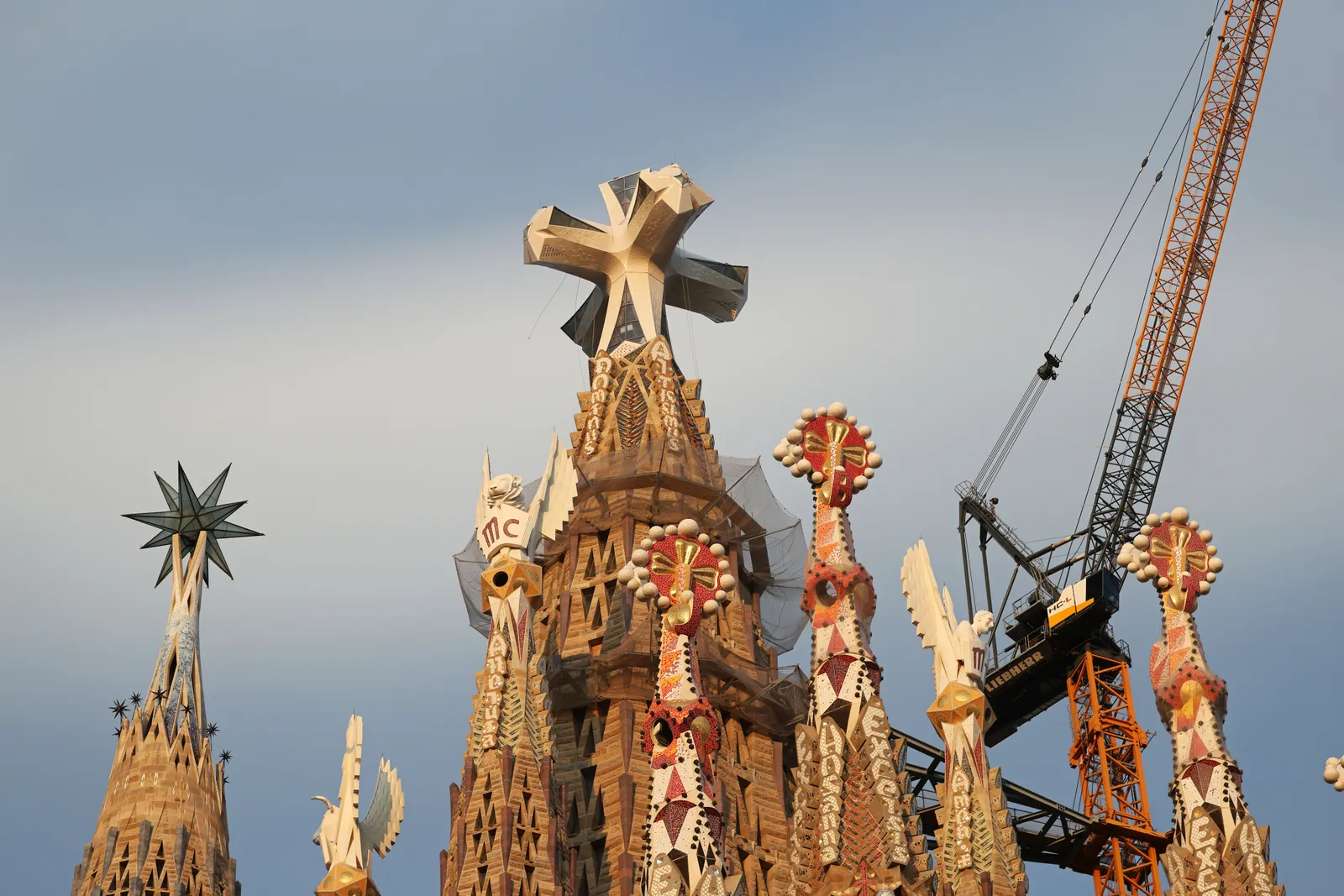
La Sagrada Familia features twelve towers, each representing a distinct figure from Christian scripture.
- The Twelve Apostles: Ranging in height from approximately 323 to 394 feet, these towers symbolize Jesus’ closest followers and are strategically positioned around the three façades.
- The Evangelists: Standing at 443 feet, these towers honor Matthew, Mark, Luke, and John, the authors of the Gospels. They encircle the central tower and are adorned with symbolic representations of a man, lion, ox, and eagle, respectively.
- The Virgin Mary: Located above the apse, this 453-foot tower, distinguished by a twelve-pointed star, represents the mother of Jesus.
- Jesus Christ: Topped with a cross and reaching a height of 566 feet, this is the tallest and most central spire, symbolizing Jesus Christ himself.
Interior Design
Consistent with most Roman Catholic and Western European churches, La Sagrada Familia’s floor plan is based on a Latin cross, with a prominent nave intersected by a transept, establishing its cruciform shape. However, this structural similarity is where the convention ends.
Majestic, soaring columns define the interior of La Sagrada Familia. Gaudí employed fractal geometric forms and branching supports, directly inspired by the structure of trees. These elements were not merely aesthetic but represented groundbreaking structural innovations, liberating the church from the need for the buttresses Gaudí so famously eschewed.
“He drew inspiration from the eucalyptus tree, designing columns with a fractal composition that bear immense loads while maintaining an elegant slant, reminiscent of the imperfect, natural trees they emulate, giving an illusion of effortless support,” Rogove explains. “Collectively, these columns evoke the sensation of standing within an expansive forest.”
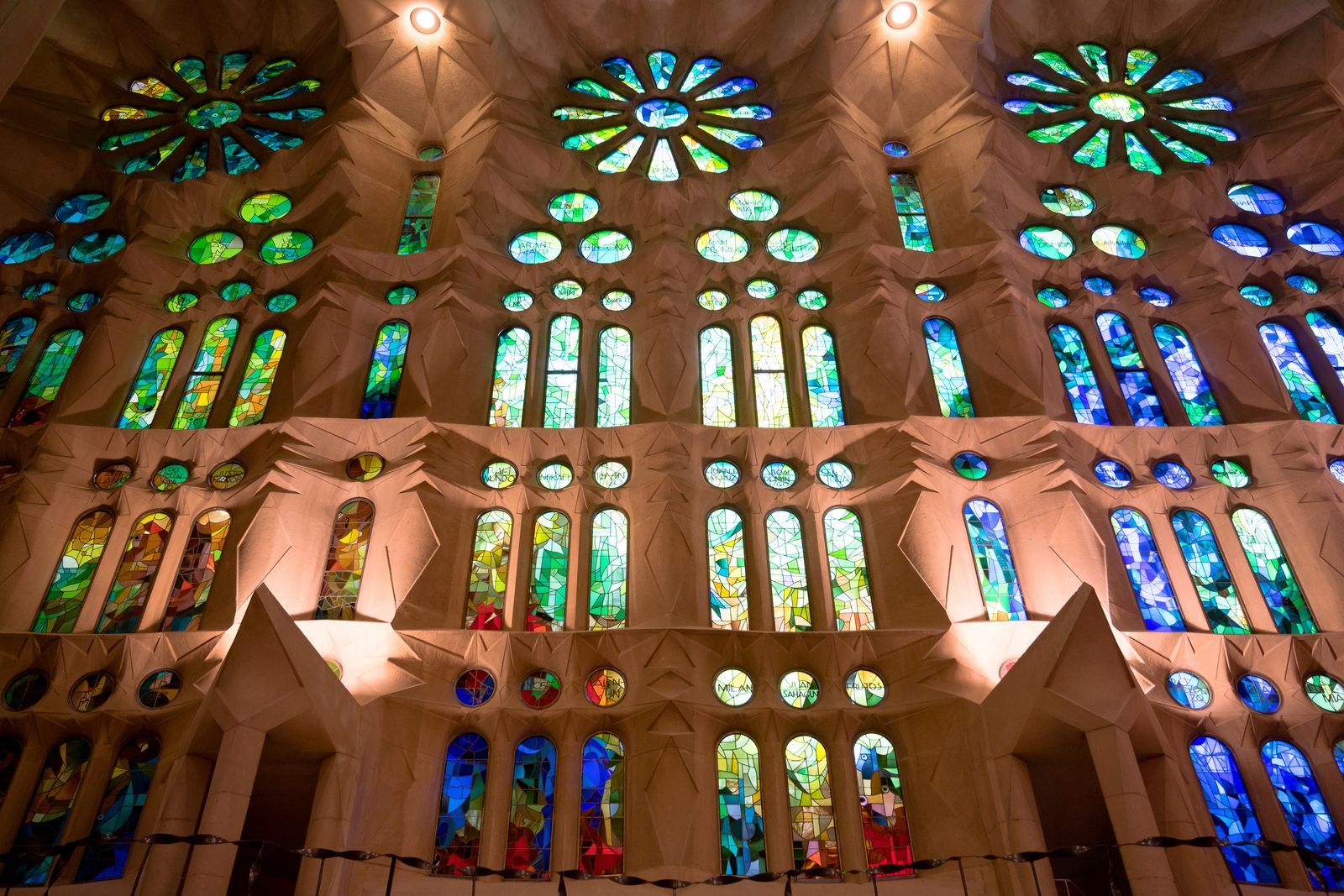
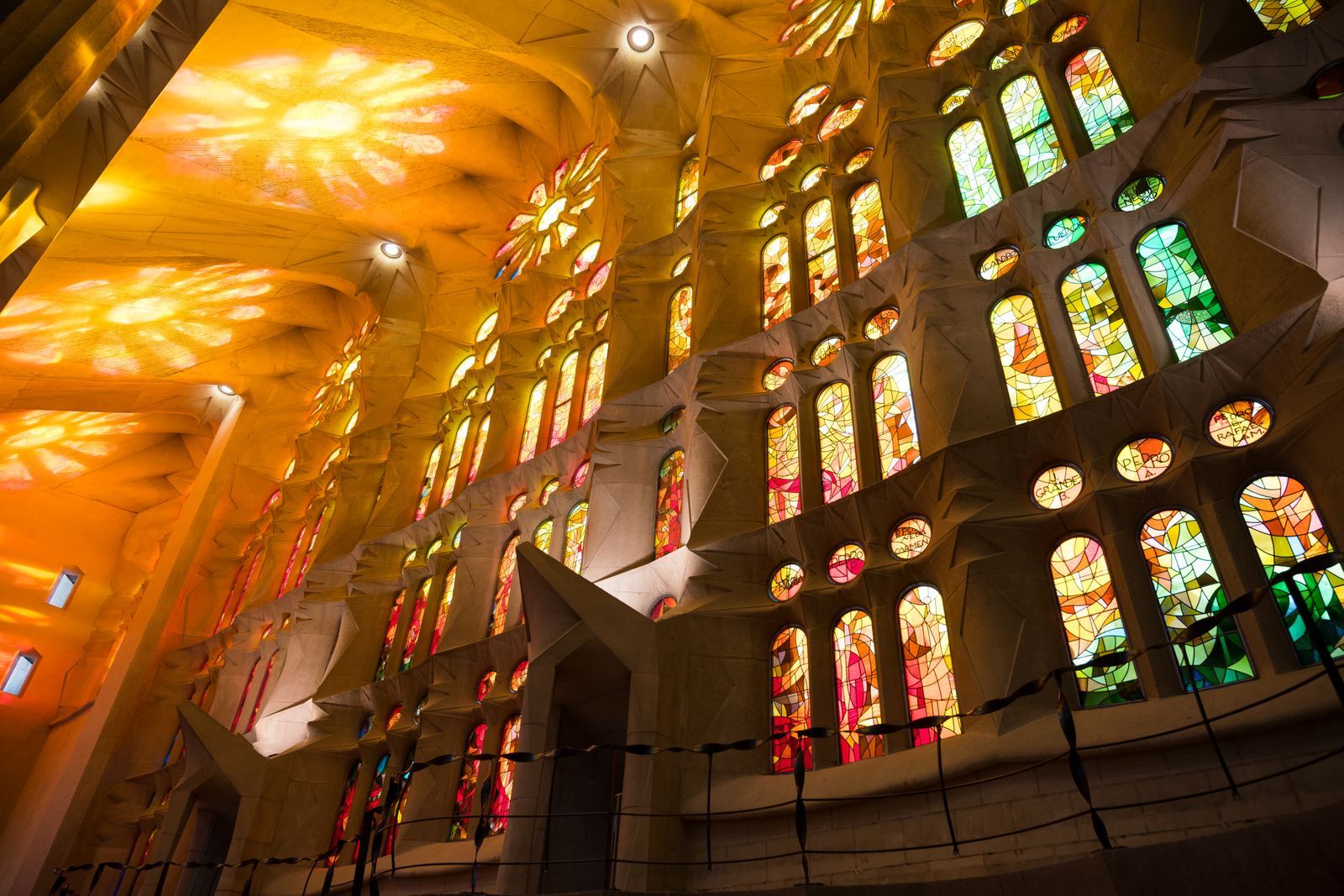
The apse ceiling soars to a height of 246 feet. The church’s walls are adorned with expansive stained-glass windows, casting a kaleidoscope of colored light throughout the nave.
“Experiencing the space illuminated by the vibrant spectrum of the stained glass possesses an unparalleled beauty,” Rogove conveys.
La Sagrada Familia: A Chronicle of Construction
Beyond its architectural grandeur, La Sagrada Familia is perhaps most renowned for its extraordinarily protracted construction timeline, spanning nearly a century and a half for the principal structure. Key milestones are outlined below.
- 1882: Architect Francisco de Paula del Villar initiates a neo-Gothic design and commences construction. The crypt of the apse is completed according to his plans.
- 1883: Following disputes regarding construction expenses, Villar is succeeded by the emerging architect Antoni Gaudí, who abandons the original designs for a visionary and ambitious new concept. Construction continues.
- 1885: The first Mass is celebrated within La Sagrada Familia.
- 1891: Construction begins on the Nativity Façade.
- 1925: The Saint Barnabas bell tower, situated above the Nativity Façade, is completed.
- 1926: Gaudí tragically passes away three days after being struck by a streetcar. Due to his disheveled appearance, he received delayed and inadequate medical attention. His disciple, Domènec Sugranyes i Gras, assumes leadership of the church’s construction.
- 1936: During the Spanish Civil War, the church becomes a target for anarchists who set fire to the crypt and vandalize Gaudí’s workshop, destroying many of the original plans and models.
- 1952: The Nativity Façade is illuminated, and its staircase is completed.
- 1954: The foundation for the Passion Façade is laid.
- 1976: The bell towers of the Passion Façade are completed.
- 1978: Construction commences on the side façades.
- 1986: Josep Maria Subirachs begins his work on the sculptures for the Passion Façade.
- 2002: Construction commences on the Glory Façade.
- 2005: The Nativity Façade and crypt are designated as a UNESCO World Heritage Site.
- 2010: The naves, columns, vaults, and façades of the main nave, transepts, crossing, and apse are completed.
- 2021: A star is installed atop the Tower of the Virgin Mary, marking the tower’s completion and adding a new distinctive element to the Barcelona skyline.
- 2022: Two of the four Evangelist towers are completed.
- 2023: The remaining two Evangelist towers are finalized.
- 2025: La Sagrada Familia overtakes Ulm Minster as the world’s tallest church upon the installation of a section of its central tower, reaching a height of 534.5 feet.
- 2026: In February, the final component of the Tower of Jesus Christ is put in place, signifying the completion of the main exterior structure and achieving the church’s full height of 172.5 meters (566 feet). In June, Pope Leo XIV is scheduled to consecrate the central tower.
- 2034 to 2036: The anticipated completion dates for the stairway to the Glory Façade and its accompanying sculptural details.
Visiting La Sagrada Familia
La Sagrada Familia functions as a place of worship, yet it remains accessible to visitors. A significant portion of the funding for its ongoing construction is derived from admission fees.
To secure entry, tickets must be purchased online via SagradaFamilia.org. For groups exceeding 30 individuals, the church provides guided tours. It is essential to reserve a time slot for your visit, with availability typically opening two months in advance.
The standard admission fee for La Sagrada Familia, which includes an audio guide accessible via an app, is 26 euros (approximately $29 USD). A premium option, priced at 36 euros (approximately $40 USD), grants access to the church’s towers. Kindly note that ascending the towers involves navigating narrow, winding staircases, rendering them inaccessible to individuals with mobility challenges.
Guided tour packages are priced at 30 and 40 euros, respectively. Concessions are available for seniors, individuals under 30, and students. Children under 11 years of age and visitors with disabilities are admitted free of charge.
Visitors are required to adhere to a dress code appropriate for a place of worship, which includes covering shoulders and avoiding see-through attire, as well as wearing shorts or trousers that extend no higher than mid-thigh.
The church welcomes worshippers every Sunday at 9 a.m. and on holy days through the Nativity Façade entrance (eastern side of the building). Entry for worship is complimentary but subject to availability.
Furthermore, La Sagrada Familia hosts an international Mass in various languages every Saturday at 8 p.m. Admission is free but contingent upon capacity.
Frequently Asked Questions
Why is Sagrada Familia still under construction?
A confluence of factors has contributed to the century-long construction of La Sagrada Familia, including design modifications, Gaudí’s untimely demise, the Spanish Civil War, the destruction of numerous original plans, funding challenges (relying on ticket sales and private donations), and the impact of the COVID-19 pandemic. From its inception under Gaudí, it was conceived as an ambitious and monumental project, with the architect fully aware that he would not witness its completion.
Where is La Sagrada Familia located?
La Sagrada Familia is situated in the Eixample district of Barcelona, the capital of the autonomous region of Catalonia, Spain.
When will La Sagrada Familia be completed?
While decorative elements and the primary staircase are slated for completion by 2034, the central Tower of Jesus Christ, reaching 566 feet, attained its final height in February 2026. On June 10, marking the centenary of Gaudí’s death, Pope Leo XIV is scheduled to consecrate the central tower and officiate an evening Mass, amidst growing momentum for Gaudí’s canonization.
What does La Sagrada Familia mean in English?
The name translates to “The Holy Family,” referring to Jesus, Mary, and Joseph. The full official name of the basilica is Basílica i Temple Expiatori de la Sagrada Família, meaning Basilica and Expiatory Temple of the Holy Family.
What are the visiting hours for La Sagrada Familia?
From November to February, the church is open Monday to Saturday from 9 a.m. to 6 p.m., and on Sundays from 10:30 a.m. to 6 p.m.
From April to September, hours are Monday to Saturday from 9 a.m. to 8 p.m., and Sundays from 10:30 a.m. to 7 p.m.
During March and October, the church operates Monday to Friday from 9 a.m. to 7 p.m., Saturdays from 9 a.m. to 6 p.m., and Sundays from 10:30 a.m. to 6 p.m.
On December 25, December 26, January 1, and January 6, La Sagrada Familia is open from 9 a.m. to 2 p.m. Please note that hours are subject to change for special events.
Business Style Takeaway: Antoni Gaudí’s La Sagrada Familia is a profound exploration of architectural innovation and artistic expression, demonstrating how visionary design can transcend function to create an enduring cultural and spiritual icon. The dedication to its completion over generations underscores a commitment to legacy and a powerful statement about artistic perseverance, influencing the very perception of built environments as living heritage.
According to the portal: www.architecturaldigest.com