

The landscape of adolescent substance use has undergone a significant transformation. While traditional cigarette smoking has seen a dramatic decline, a parallel shift towards alternative nicotine delivery systems and evolving perceptions of cannabis have created a new, often less visible, challenge: the concurrent use of nicotine and THC.
The Shifting Landscape of Nicotine and Cannabis Use
The historic success in reducing cigarette smoking among American youth has inadvertently masked a broader trend: the continued, and in some ways amplified, exposure to nicotine through modern products. E-cigarettes, disposable vapes, and nicotine pouches have become increasingly popular, offering a discreet and often palatable alternative to combustible tobacco. While these may mitigate some harms associated with traditional cigarettes, they remain potent conduits for nicotine dependence.
Simultaneously, attitudes towards cannabis have shifted, with a notable decline in perceived risk among adolescents. This normalization, coupled with the increasing availability of high-potency THC products, particularly in concentrated vape forms, has created a fertile ground for concurrent substance use. Studies now indicate a substantial overlap, with a significant percentage of adolescent e-cigarette users also reporting the use of cannabis or THC vapes. This cannabis–nicotine co-use, once primarily associated with combustible products like cigarettes and marijuana joints, is now increasingly occurring through noncombustible means, largely unseen in daily life.
Understanding the Synergistic Risks of Co-Use
The convergence of nicotine and THC use is not merely a statistical anomaly; it represents a growing public health and psychiatric concern. Emerging evidence highlights that the combined use of these substances may confer amplified risks compared to the use of either alone. Both nicotine and THC can independently induce acute cardiovascular effects, including increased heart rate and blood pressure. Their concurrent administration raises concerns about potentially exacerbating these cardiovascular strains. Furthermore, the potency of modern THC products, with concentrations frequently exceeding 70-90% in vape concentrates, introduces a level of exposure far beyond what previous generations experienced.
Prevalence and Facilitators of Concurrent Use
While more than 16 million Americans report concurrent cannabis and tobacco use, the intersection among regular cannabis users, with nicotine being the most common co-occurring substance, is particularly pronounced among adolescents and young adults. This demographic is also at a developmental stage characterized by peak vulnerability to addiction, the onset of psychosis, and long-term neuropsychiatric consequences. The transition to discreet delivery systems like vaping devices and nicotine pouches is a key facilitator. These products allow for near-continuous nicotine exposure in environments like schools, workplaces, and social settings, creating ample opportunity to pair with cannabis use, particularly given the near-identical delivery devices used for both substances.
Pharmacologically, nicotine and THC, while acting on distinct receptor systems, converge on shared reward pathways within the brain. This interaction appears to be bidirectional and mutually reinforcing. Research suggests that cannabis use increases the likelihood of initiating nicotine use, and conversely, nicotine users may be more prone to developing regular cannabis consumption patterns. Experimental evidence indicates that each substance can enhance the reinforcing effects of the other, potentially explaining the observed higher rates of dependence, more intensive use patterns, and greater difficulties with sustained abstinence among co-users.
Psychiatric Implications and Evolving Perceptions
The psychiatric consequences of this co-use are a significant area of concern. Cannabis itself has been linked to an increased risk of psychosis, especially in adolescents and individuals with genetic predispositions or those using high-potency THC products. Emerging data suggests that the addition of nicotine may further elevate these risks, with concurrent use associated with higher rates of transition to psychotic disorders in vulnerable individuals. Studies have indicated that even light tobacco use combined with heavy cannabis use can nearly triple the likelihood of developing psychosis among at-risk populations. Beyond psychosis, co-use has also been correlated with increased rates of depressive and anxiety symptoms, addiction, and suicidality, though establishing direct causality remains an ongoing area of research.
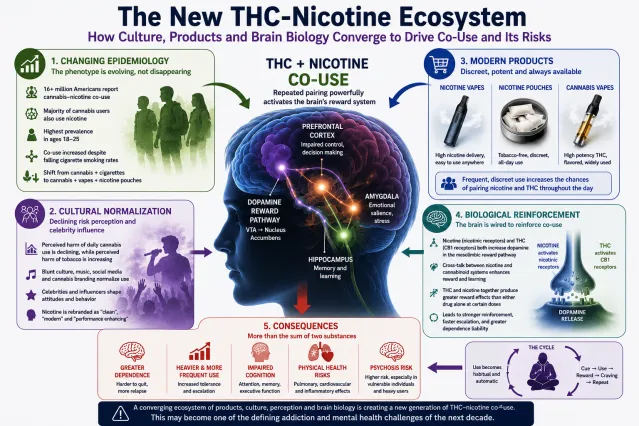
The cultural narrative surrounding cannabis has become increasingly benign. Over the past two decades, its use has become normalized among adolescents, many of whom perceive it as relatively harmless. This perception shift encourages experimentation, increased frequency of use, and a greater willingness to combine it with other substances like nicotine. Concurrently, nicotine has undergone a cultural rebranding. Once almost exclusively associated with cigarettes and their known health detriments, it is now increasingly presented through sleek vaping devices and discreet nicotine pouches. In some online spheres, nicotine is framed not as a tobacco product but as a tool for performance enhancement or productivity, aligning with themes of entrepreneurship, gaming, and self-optimization.
Celebrity culture and media have also played a role. The popularization of “blunts” by hip-hop artists, for instance, normalized the co-use of cannabis and tobacco, often without users fully recognizing the tobacco content. While direct promotion of cigarettes is socially unacceptable, the indirect normalization of cannabis–nicotine co-use persists through music videos, social media, and cannabis-centric branding. Nicotine Replacement Therapy (NRT) and vaping products are recognized as harm reduction tools for existing smokers, but for young people who have never smoked, these products present only risks, offering no harm to reduce.
Challenges in Identification and Intervention
This confluence of evolving perceptions—cannabis viewed as benign, nicotine as modern and functional, and their combination as socially acceptable—creates a complex environment for identification and intervention. The transition from combustible cigarettes to vaping devices and nicotine pouches significantly complicates clinical recognition of co-use. Routine biological testing for THC metabolites or cotinine (a nicotine biomarker) is not standard practice in most clinical settings. Consequently, reliance on self-report, which often fails to capture the nuances of contemporary polysubstance use, can lead to underestimation of prevalence.
Accurate screening requires a more comprehensive approach than simply asking about marijuana use. Young people may not identify vaping THC, using concentrates, or consuming edibles as “marijuana use.” Similarly, individuals who once identified as smokers might now describe themselves as vapers or nicotine pouch users, failing to report nicotine use unless specifically prompted about these alternative products. Without accurate identification, critical opportunities for early intervention, treatment, and evaluation for associated psychiatric morbidities are missed.
Clinical screening protocols for nicotine use must now encompass e-cigarettes, disposable vapes, refillable vaping devices, and nicotine pouches, particularly among adolescent cannabis users. Furthermore, assessing withdrawal symptoms can be complicated, as overlapping symptoms such as anxiety, irritability, sleep disturbances, and impaired concentration are common to both nicotine and cannabis withdrawal syndromes, potentially masking or confounding diagnosis.
The Evolving Profile of the Co-User
The archetypal cannabis–tobacco co-user has shifted from a young person smoking cigarettes and marijuana to an individual who may be discreetly using nicotine pouches, vaping nicotine throughout the day, and intermittently consuming high-potency THC products. While the specific substances and delivery methods have evolved, the fundamental pharmacologic and behavioral interactions between nicotine and THC remain. The addiction risks and potential psychiatric consequences, though perhaps less visible than those associated with traditional smoking, persist and may be more easily underestimated in this new ecosystem of use.
Business Style Takeaway: Understanding the nuanced interplay between evolving substance use patterns and their perception is critical for leadership. Recognizing how discreet and normalized behaviors like vaping nicotine alongside THC can impact cognitive function, productivity, and team dynamics allows for more informed policies and supportive interventions in the workplace.
According to the portal: www.psychologytoday.com