

Red light therapy devices have become ubiquitous, appearing as panels, masks, wraps, and even blankets. While marketing often highlights benefits such as reduced inflammation, accelerated recovery, and enhanced energy, a critical distinction often goes unmentioned: the technology within these devices varies significantly, directly impacting the light’s ability to reach targeted tissues.
For individuals experiencing joint pain, chronic inflammation, or slow post-exercise recovery, understanding the difference between red light Light Emitting Diodes (LEDs) and infrared lasers is paramount. This distinction can mean the difference between superficial relief and genuine, deep-tissue therapeutic effects.
While a general overview of red light therapy mechanisms is beneficial, delving into the specific differences between LEDs and lasers is crucial for understanding their impact on inflammation and achieving desired outcomes.
What Red Light Therapy Achieves
Red light therapy falls under the umbrella of photobiomodulation (PBM), a therapeutic modality utilizing red and near-infrared light to promote cellular healing, alleviate pain, and decrease inflammation.
The scientific foundation for PBM is robust. Its primary target is cytochrome c oxidase, a critical enzyme within the mitochondria responsible for cellular energy production. Exposure to light triggers a series of beneficial cellular responses, including increased Adenosine Triphosphate (ATP) synthesis, a transient surge in reactive oxygen species, elevated nitric oxide levels, and modulation of intracellular calcium.
Crucially for inflammatory conditions, these subsequent cellular signals activate transcription factors that enhance cell survival, mitigate oxidative stress, and notably, downregulate inflammatory markers.
Research indicates that PBM can effectively modulate NF-kB pathways in healthy cells while concurrently diminishing inflammatory markers in activated inflammatory cells. This suggests a regulatory, rather than purely stimulatory, effect.
The Functionality of LEDs
LEDs represent the most prevalent technology in consumer-grade red light therapy devices. They emit light over a broad spectrum, making them highly effective for addressing surface-level concerns such as skin health, wound healing, and general circulatory support.
A standard red light LED panel emitting at 660nm can typically penetrate a few millimeters into the skin, reaching the epidermis and upper dermis effectively.
For dermatological applications and superficial healing, LEDs are demonstrably effective. Their relative affordability in manufacturing also contributes to their widespread presence across a range of products. However, the diffuse nature of LED light limits its penetration depth, which is a significant consideration for conditions affecting deeper tissues like joints or muscles.
The Mechanics of Infrared Lasers
Lasers operate on a fundamentally different principle. Instead of scattering light, lasers emit a coherent, focused beam where photons travel in the same direction and at the same wavelength, maintaining phase alignment. This coherence is key to their superior ability to penetrate deeper tissues compared to LEDs operating at identical wavelengths.
Near-infrared lasers, particularly those at 808nm, have been extensively studied for their interaction with mitochondria. Research has shown that 808nm near-infrared light directly enhances Complex IV activity in isolated mitochondria, which is the precise chromophore initiating PBM’s anti-inflammatory cascade. This means laser light not only reaches deeper tissues but also triggers the specific biological mechanisms essential for cellular-level inflammation reduction.
Furthermore, studies have demonstrated that photobiomodulation therapy can effectively reverse various inflammatory parameters in both vascular and cellular models, underscoring the impact of targeted, appropriately dosed light delivery on achieving significant anti-inflammatory outcomes.
The Critical Distinction: Penetration Depth and Cellular Reach
The practical implication is clear: LEDs offer broad coverage with limited depth, while lasers provide focused, deep penetration. For inflammation affecting joints, tendons, or deep muscle tissue, the target area lies centimeters beneath the skin’s surface, often beyond the reach of typical LED devices.
Comprehensive reviews confirm that PBM, utilizing near-infrared light, effectively reduces joint inflammation in conditions such as rheumatoid arthritis and osteoarthritis. These reviews also highlight the critical influence of specific parameters—including wavelength, power density, and treatment duration—on therapeutic outcomes. Consequently, device specifications are not merely marketing points but are integral to the efficacy of light therapy for specific goals.
Synergistic Benefits of Combined Technologies
The intersection of LED and laser technologies presents a compelling area of innovation. These modalities are not mutually exclusive but rather complementary. LEDs provide extensive surface coverage, supporting improved circulation and superficial tissue repair across a wider area. Lasers, conversely, deliver concentrated energy to deep-seated tissues like joints and connective structures, addressing the core of many inflammatory processes.
A meta-analysis of nine randomized controlled trials indicated that low-level laser therapy significantly reduces pain and stiffness compared to placebo. Notably, the trial that incorporated both low-level laser therapy and LED phototherapy observed substantial improvements across multiple outcome measures, suggesting potential additive benefits that may not be achievable with either technology in isolation.
Relying solely on LEDs may leave deeper inflammatory sources untreated, while exclusive use of lasers might overlook the broader tissue environment surrounding a joint. A combined approach offers comprehensive coverage of light therapy’s potential benefits.
Selecting a Dual-Technology Device
The effectiveness of “combination” devices varies. Key specifications to consider include:
- Wavelength: 660nm is optimal for red light LEDs targeting surface tissues, while 808nm is the most researched near-infrared wavelength for deep tissue penetration and mitochondrial activation.
- Power Density: Optimal dosing is crucial, as PBM exhibits a biphasic response curve; excessive power can be inhibitory.
- Skin Contact: Maintaining direct skin contact ensures consistent, therapeutically relevant light delivery, mitigating the rapid intensity drop-off with distance.
- Laser Classification: Medical-grade lasers (Class 1 or Class 3B) signify operation at clinically effective power levels.
The Kineon MOVE+ Approach
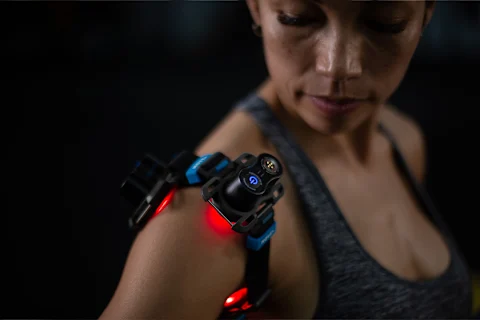
The Kineon MOVE+ device is engineered on the principle of dual-technology integration. Each module integrates deep red 660nm LEDs with 808nm infrared lasers, combining the two wavelengths with the strongest evidence for surface coverage and deep-tissue anti-inflammatory effects.
The device features Class 1 medical-grade infrared lasers operating at 5mW per diode and 50mW per module. Its modular, wearable design ensures continuous skin contact, thereby optimizing the delivery of therapeutic light precisely to areas such as knees, shoulders, elbows, or ankles.
This configuration provides a consistent and targeted dose, ensuring that the light energy reaches the intended tissues for maximum therapeutic benefit.
Red light therapy offers genuine therapeutic potential, but its efficacy is contingent on employing the correct technology to reach the appropriate tissue depths at an optimal dosage. While LEDs are suitable for superficial applications, addressing deep-seated inflammation and promoting joint recovery necessitates a device that combines broad LED coverage with the profound penetration capabilities of near-infrared lasers.
Scientific evidence strongly supports the mechanism by which 808nm laser light activates mitochondrial pathways crucial for cellular inflammation reduction. The synergistic effect of combining LED and laser phototherapy may offer benefits exceeding those of either modality alone. When investing in light therapy for tangible results, the underlying technology is the decisive factor.
Business Style Takeaway: Integrating advanced red light therapy devices that combine LED and laser technology can significantly enhance executive focus by reducing inflammation and pain, thereby improving physical comfort and mental clarity. This proactive approach to wellness can lead to more resilient stress management and sustained high-level productivity throughout demanding work schedules.
Source: : www.mindbodygreen.com