

The conventional method of blood pressure measurement, utilizing an inflatable cuff, provides only a static snapshot and can be an uncomfortable, inconvenient experience. For the substantial number of individuals managing hypertension, this single data point often fails to capture the dynamic nature of their cardiovascular health.
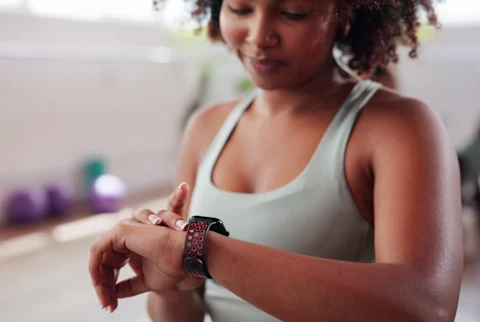
Emerging research introduces a significant advancement: a smartwatch capable of continuous, cuffless blood pressure monitoring. This innovative technology, detailed in a recent study published in Nature Communications, integrates electrical sensing with an AI model informed by physical principles, delivering real-time readings directly from the wrist, overcoming limitations of previous wearable attempts.
The Significance of Continuous Monitoring
Blood pressure is a fluid metric, fluctuating throughout the day due to factors such as stress, physical activity, and sleep. Traditional cuff-based monitors, whether in a clinical setting or at home, necessitate stillness and controlled conditions, potentially missing critical hypertensive spikes or patterns that manifest during daily life and physical exertion.
Existing ambulatory and at-home monitoring devices are often described as “obtrusive and impractical for preventive and long-term use due to discomfort.” Their requirement for near-rest conditions means vital blood pressure data during dynamic states, such as exercise or acute physiological stress, can be entirely overlooked.
While wearable devices have sought to address this gap, many previous approaches have lacked robust scientific underpinnings and were susceptible to interference from the body’s natural signals. This new smartwatch represents a fundamentally different and more scientifically grounded approach.
Mechanism of the Smartwatch Technology
At its core, the device utilizes electrical bioimpedance (BioZ) technology, a method already employed in various wearables and smart scales. Embedded electrodes within the watchband emit a minimal, safe electrical current through the wrist. The device then measures the subtle alterations in this current as blood pulses with each heartbeat.
This principle relies on blood’s conductivity, which varies based on blood volume, flow rate, and the orientation of red blood cells within vessels. By continuously tracking minute changes in electrical resistance at the wrist, the smartwatch can accurately detect shifts in blood volume and conductivity that directly correlate with blood pressure fluctuations.
The research team developed a sophisticated physical model of the human arm to precisely map these electrical signals to blood pressure. This model accounts for complex physiological factors, including blood flow dynamics in branching arteries, the elastic properties of arterial walls, and the behavior of red blood cells under pressure. This rigorous physical foundation distinguishes this smartwatch from earlier wearable blood pressure monitoring technologies.
The Role of Advanced AI in Data Interpretation
Accurately interpreting the raw electrical signals is a complex challenge. The breakthrough lies in the researchers’ development of a “signal-tagged physics-informed neural network,” or sPINN. Unlike traditional AI models that rely solely on data-driven learning, the sPINN is guided by fundamental physical laws governing fluid dynamics. By embedding these physiological principles directly into the AI architecture, the model generates predictions that are both highly accurate and physiologically sound.
This integration minimizes the likelihood of generating biologically implausible readings. Comparative analyses showed the sPINN achieved superior accuracy, with a smaller discrepancy between predicted and actual blood pressure readings compared to conventional AI models. Furthermore, the sPINN produced smoother and more stable blood pressure predictions, a critical factor for clinical utility, as erratic readings are not conducive to effective health monitoring.
Experimental Validation and Findings
The system underwent rigorous testing across three distinct participant groups. The first comprised 75 healthy individuals who wore the device during rest, as well as after periods of walking, running, and cycling, and during cardiovascular stress challenges.
The second group included 85 patients from outpatient settings, featuring cohorts with hypertension (both controlled and uncontrolled), cardiovascular disease, and other relevant conditions. A third, smaller group of three patients was monitored in an intensive care unit environment.
For the broad population model, the sPINN demonstrated strong accuracy in predicting both systolic and diastolic blood pressure readings against continuous reference measurements. Notably, performance was even more pronounced within patient groups that stand to benefit most from this technology. Patients with hypertension and cardiovascular disease exhibited higher accuracy scores than the general population model. Individualized fine-tuning of the sPINN model further enhanced performance across all patient cohorts.
Future Development and Challenges
Despite the promising outcomes, this technology remains in its nascent stages, and several significant challenges must be addressed before widespread consumer adoption.
Firstly, a formal, large-scale clinical study adhering to established validation protocols is essential to rigorously assess the smartwatch’s real-world performance in clinical and home environments. Secondly, extensive testing across larger and more diverse populations is required, including individuals with conditions such as uncontrolled, intermittent, or positional hypertension. For perspective, Apple’s Hypertension Notification Feature required data from over 86,000 participants for its development.
Thirdly, the long-term stability and adaptability of the AI model warrant further investigation. In its current iteration, the sPINN necessitated daily recalibration to maintain accuracy, indicating the need for the model to learn to account for transient physiological shifts, such as hydration levels, ambient temperature, weight fluctuations, and changes in vascular structure.
Concluding Perspective
Cardiovascular diseases remain the leading global cause of mortality, with poorly managed or undetected hypertension playing a substantial role. A smartwatch that offers continuous, accurate blood pressure monitoring during daily activities, including periods of stress and exercise, without the need for a cuff, could revolutionize proactive cardiovascular health management.
This research lays a critical scientific groundwork for such a device. While not yet available for consumer purchase, the underlying technology represents a significant leap forward in sophistication and scientific rigor compared to previous wearable efforts. For individuals prioritizing cardiovascular health or managing hypertension, this development holds considerable future promise.
Business Style Takeaway: The continuous, cuffless blood pressure monitoring proposed by this new smartwatch technology could significantly enhance executive health management by providing real-time, actionable data beyond periodic checks. This allows for proactive identification of stress-induced blood pressure spikes, informing lifestyle adjustments that can bolster resilience, improve focus, and support sustained high performance in demanding professional environments.
Learn more at : www.mindbodygreen.com