

A decade-long investigation into genetic predispositions and lifestyle factors has illuminated a critical connection between the APOE e4 gene variant, physical activity, and cognitive trajectory in aging populations. While APOE e4 carriers face a statistically higher risk of accelerated cognitive decline compared to those with APOE e2 and e3 variants, this research offers compelling insights into potential mitigating strategies.
Understanding the APOE Gene Variants
The apolipoprotein (APOE) gene exists in three primary forms: e2, e3, and e4. Each individual inherits one copy from each parent, creating unique combinations. The e3 allele is the most prevalent, carrying no significant increased or decreased risk for Alzheimer’s disease. The e2 allele is associated with a reduced risk, while the e4 allele is linked to a greater likelihood of experiencing a faster decline in cognitive function and developing Alzheimer’s later in life.

It is crucial to note that carrying the APOE e4 gene does not guarantee the onset of Alzheimer’s disease. A comprehensive review of longitudinal studies confirms that the majority of e4 carriers do not develop the condition. Cognitive health is a multifaceted outcome, influenced by a constellation of factors beyond genetics, including gender and physical activity levels.
Research indicates that among APOE e4 carriers, women may face a higher risk of developing Alzheimer’s compared to men. Furthermore, physical activity has shown potential benefits for cognitive function, particularly in APOE e4 carriers.
A recent study published in *Biology of Sex Differences* by Burma and colleagues (2026) delved deeper into these intricate relationships, examining the interplay between genetics, sex, physical activity, and cognitive health.
Study Demographics and Methodology
This extensive longitudinal study involved 3,000 older adults from diverse backgrounds in Pittsburgh and Memphis. The inclusion of both Black and White participants across a broad spectrum of educational attainment enhances the generalizability of the findings, suggesting their relevance to a wider population.

Participants underwent repeated assessments of general cognitive function, attention, and processing speed over a 10-year period. Annually, they also reported their weekly walking duration. This data allowed researchers to analyze the association between walking habits and cognitive performance across different APOE genotypes and sexes.
Key Research Findings
- Over the decade of the study, individuals with the APOE e4 variant exhibited a more rapid decline in cognitive test scores compared to APOE e3 carriers. Importantly, even with this accelerated decline, the average scores for e4 carriers remained above thresholds indicative of significant impairment, meaning they did not typically receive diagnoses of Alzheimer’s or dementia. This underscores the distinction between cognitive decline and a formal diagnosis.
- For females carrying APOE e2 and e3, a greater initial amount of walking was linked to superior cognitive performance. However, this correlation was not observed in APOE e4-carrying females. In males, initial walking time showed no association with cognitive outcomes for e2 and e3 carriers, but interestingly, higher walking volume was associated with lower overall cognition in APOE e4 carriers.
- The study also tracked changes in walking habits over the 10 years. Both male and female APOE e4 carriers who maintained or increased their walking duration experienced less pronounced cognitive decline. This beneficial effect was not evident among APOE e3 or e2 carriers, though it does not imply that physical activity is unimportant for these groups.
Implications for APOE e4 Carriers
The findings strongly suggest that maintaining or increasing walking activity may be a crucial lifestyle choice for individuals at higher genetic risk for cognitive decline and Alzheimer’s disease. While it does not eliminate risk entirely, it presents a tangible method for potentially slowing cognitive deterioration and preserving cognitive function.
The study did not necessitate extreme physical exertion; rather, it highlighted that APOE e4 carriers who maintained approximately 94 percent of their previous year’s walking time showed a slower rate of cognitive decline. This emphasizes the value of consistent engagement in walking as a protective habit throughout aging.
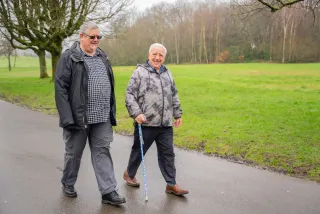
On average, participants walked about 90 minutes per week, translating to roughly 12 minutes daily. This figure serves as an indicator of the feasibility of integrating walking into a routine, suggesting that even short, frequent bouts of walking throughout the day could be beneficial.
The Significance of Lifestyle Interventions
The impact of walking on cognitive health is particularly significant given the current limitations in effective pharmacological treatments for cognitive decline. Emerging therapies for Alzheimer’s disease have demonstrated modest benefits, and some carry specific risks, potentially posing barriers for individuals with genetic predispositions like the APOE e4 variant.
The observation that changes in walking habits did not correlate with slower cognitive decline in APOE e2 and e3 carriers warrants further investigation. This does not negate the general health benefits of physical activity for these groups. It might suggest that a higher “dosage” or different types of physical activity are required to elicit noticeable cognitive benefits in these genotypes, or that the protective effects of walking are more pronounced for those with the APOE e4 variant.
Concluding Thoughts
For individuals identified as APOE e4 carriers, facing an elevated genetic risk for Alzheimer’s disease can be daunting, especially with limited therapeutic options. It is vital to recognize that genetic predisposition does not equate to an inevitable diagnosis. This research powerfully advocates for the proactive management of modifiable lifestyle factors, such as consistent walking, as a pragmatic and accessible approach to mitigate cognitive decline and enhance brain health during the aging process.
Business Style Takeaway: Understanding the nuanced interplay between genetic predispositions like APOE e4 and lifestyle choices, such as physical activity, offers critical insights for executive health and talent management. Prioritizing and encouraging accessible health behaviors like walking among employees, particularly those potentially at higher risk, can be a strategic investment in sustained cognitive performance, long-term productivity, and overall organizational resilience.
Details can be found on the website : www.psychologytoday.com