

For decades, our understanding of consciousness has hinged on a seemingly clear dichotomy: wakefulness and sleep. We perceive these as fundamentally separate states, with wakefulness representing full awareness and sleep an absence of it. This traditional view, reinforced by distinct patterns of brain activity observed in electroencephalograms (EEGs), has long guided psychological and neurobiological research.
However, emerging research is challenging this rigid separation, suggesting that the mental landscape of our minds may be far more continuous than we previously assumed. The sharp line between being awake and being asleep appears to be blurring, with significant overlap in the types of thoughts that occur in both states.
The Shifting Definition of Consciousness
Psychologically, consciousness is often defined by its role in receiving, processing, and retaining information from our environment through sensory input and cognitive reasoning. Neurobiologically, it’s viewed as a spectrum of states, influenced by factors ranging from natural cycles to external agents like medication or meditative practices.
Wakeful consciousness allows us to engage with the external world, process sensory data, and selectively retain what is deemed relevant. Sleep, once considered mere unconsciousness, is now understood as an altered state of consciousness. During sleep, certain cognitive systems operate at a reduced capacity, which can lead to phenomena like hallucinations, delusions, and memory distortions – characteristics often associated with dreaming and other altered mental states.

Understanding the Sleep Cycle
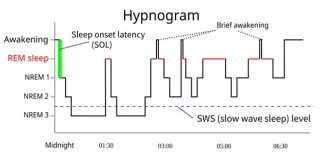
The traditional model of sleep delineates two primary phases: Non-Rapid Eye Movement (NREM) sleep and Rapid Eye Movement (REM) sleep. NREM sleep progresses through stages of increasing depth (N1 to N3), where individuals become progressively harder to rouse. Upon waking from NREM sleep, people typically report not having experienced vivid dreams, or at most, fleeting, low-intensity mental imagery. In contrast, REM sleep is characterized by vivid, elaborate, emotional, and often narrative-driven dreams.
The Blurring Boundaries of Thought
Recent investigations are revealing that the mental content experienced during wakefulness can closely resemble that of early sleep stages. A study by Decat and colleagues (2026) explored the transitional period between wakefulness and sleep (specifically N3) by monitoring participants’ brain activity and periodically inquiring about their recent thoughts. Participants were asked to report what was on their minds in the moments leading up to an interruption, rating their thoughts on spontaneity, bizarreness, fluidity, and perceived level of wakefulness.
Using advanced statistical analysis, researchers identified four distinct categories of mental experiences: fragmented thoughts (e.g., a fleeting image), alert thoughts (awareness of the surroundings), bizarre thoughts (e.g., fantastical imagery), and deliberate thoughts (e.g., planning for the future). Crucially, the study found that these categories of thought were not confined to specific states of consciousness. Fragmented, alert, bizarre, and deliberate thoughts all occurred during wakefulness, as well as during the initial stages of sleep (N1 and N2).
Remarkably, individuals reported experiencing highly unusual, dream-like thoughts while fully awake, and conversely, mundane thoughts about daily life while in light sleep. This suggests that the cognitive processes underlying these different thought types are not exclusive to either state, indicating a more fluid continuum of mental activity.
Interestingly, the method used in the study—the “bottle-dropping” technique—was famously employed by inventor Thomas Edison to access creative insights during the hypnagogic state, the transitional phase between wakefulness and sleep. This historical anecdote further supports the notion that valuable cognitive activity occurs during these liminal periods.
Business Style Takeaway: Understanding that bizarre or unconventional thoughts can arise even when one is fully awake, not just during sleep, encourages a more open-minded approach to creativity and problem-solving within organizations. This insight can inform leadership strategies by validating diverse thinking styles and fostering an environment where “out-of-the-box” ideas, even those that seem unusual initially, are explored for their potential value.
Source: : www.psychologytoday.com