

The profound link between nature and human well-being is widely acknowledged, with even brief exposure to natural environments demonstrably reducing stress. Similarly, a sense of spirituality—connecting to something beyond the self—is consistently correlated with positive health outcomes. A compelling new area of research is emerging at the intersection of these two potent forces: the synergy of the environmental and the spiritual.
The Nexus of Place and Purpose
Recent findings published in the *Archive for the Psychology of Religion* reveal a significant correlation between individuals who experience a deep spiritual connection to specific physical locations and improved mental health. This spiritual-place attachment appears to function as a crucial buffer against psychological distress.
Investigating the Pandemic’s Impact
The study explored this phenomenon within the challenging context of the COVID-19 pandemic, surveying 3640 US adults. Participants reported on their experiences of “mattering struggles”—feelings of insignificance, loneliness, and isolation—in relation to their spiritual ties to particular places or areas.
Findings: Spiritual Anchors in Turbulent Times
Unsurprisingly, heightened mattering struggles were linked to a decline in mental health. Conversely, spiritual connections to place demonstrated a statistically significant positive association with mental well-being. Crucially, the research highlighted a dynamic interaction: spiritual ties could actively mitigate both the experience of mattering struggles and their detrimental impact on mental health.
Personal Sanctuaries in Uncertain Times
The author recounts personal resilience during the pandemic, finding solace and inspiration in daily immersion in a local park, which they consider a sacred space. The consistent rhythm of nature’s cycles provided a vital anchor, underscoring the personal significance of daily connection to the natural world for maintaining positive mental health during lockdown.
Beyond Nature: Diverse Sacred Spaces
While nature emerged as a significant spiritual anchor for many, the study participants also identified a variety of other locations as spiritually significant. These included traditional sites like cathedrals and memorial grounds, as well as more personal spaces such as burial sites and even specific areas within their homes.
Bridging Environmental and Religious Psychology
Victor Counted, an associate professor and director of research at Regents University, expressed fascination with the confluence of our physical surroundings and our inner spiritual lives. He noted that traditional academic disciplines, such as environmental psychology focusing on ‘place attachment’ and religious psychology on ‘spiritual attachment,’ historically operated in silos, rarely engaging with each other.
The Pandemic’s Catalyst for Integration
The pandemic, with its widespread restrictions on communal activities, prompted a greater focus on either home-bound existence or engagement with nature. This shift has coincided with a resurgence of interest in nature-based spiritual practices like Shamanism, Druidry, and Wicca, all of which emphasize the importance of connecting with the sacred—whether within the home or in the wider environment—as a pathway to wellness.
Defining the Sacred Space
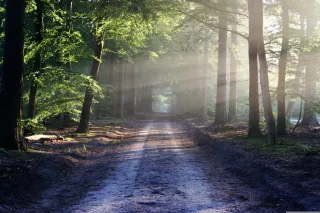
A sacred space is not confined to traditional religious architecture. It can be as simple as a park bench, an entire forest, a stretch of beach, or a designated area within one’s own home. For many, particularly within their living spaces, this often involves creating a personal ‘altar’—a dedicated corner adorned with mementos, photographs of loved ones, religious or spiritual icons, or cherished natural objects like crystals and rocks.
Ancient Wisdom, Modern Relevance
Ancient wisdom traditions have long advocated for establishing ties to specific places—be they forests, lakes, individual trees, natural alcoves, or domestic altars. This research suggests these practices were prescient, tapping into a fundamental human need for connection that significantly impacts mental health.
Universal Sacredness and Well-being
This perspective posits that virtually any location or object can be imbued with sacredness and, in turn, become integral to one’s mental health and overall well-being. This notion offers a powerful framework for cultivating a richer, more resilient internal life.
Business Style Takeaway: Cultivating a sense of spiritual connection to specific places, whether natural or personal, can act as a powerful resilience-building mechanism. Leaders can foster this by encouraging employees to identify and connect with their own ‘sacred spaces’ and by designing work environments that acknowledge and support the human need for meaning and belonging beyond task completion.
Based on materials from : www.psychologytoday.com