

 Walter Scott Book Prize
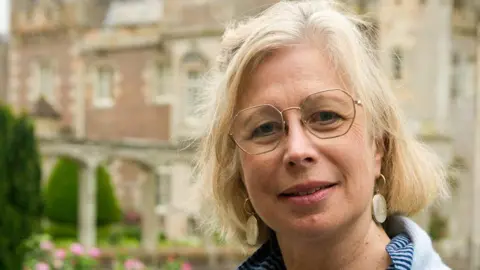
A novel lauded by judges as potentially “the most unusual book you will encounter this year” has been awarded the prestigious Walter Scott Prize for Historical Fiction.
Alice Jolly’s *The Matchbox Girl* delves into the life of Adelheid Brunner, a non-verbal autistic patient under the care of Dr. Hans Asperger at Vienna’s Children’s Hospital during the turbulent 1930s, a period marked by Nazi occupation of the city.
The esteemed prize was presented to Jolly by Matthew Maxwell Scott, a direct descendant of Sir Walter Scott, at a ceremony held at the Borders Book Festival, situated near Melrose.
Now in its 17th year, the prize, administered by the Abbotsford Trust, has previously celebrated literary giants such as Sebastian Barry, Robert Harris, Andrea Levy, and Hilary Mantel.
The Author’s Triumph and Vision
Jolly expressed her profound delight at receiving the award, asserting that it champions historical fiction as a “truly serious form of literature.”
“It feels overwhelming and incredibly exciting – I feel as though I have waited all my life for something like this to happen to me,” she remarked.
“This is a dream realised, and I believe it will fundamentally reshape my writing career.
“I am filled with immense optimism for the future, and this prize has bestowed upon me a powerful new sense of purpose.”
The judging panel commended the “originality, innovation, and ambition” evident in Jolly’s narrative, describing it as a “gripping tour de force” that “confronts a topic of immense complexity.”
“*The Matchbox Girl* may well be the most unusual book you read this year,” the judges noted.
“Its honesty, power, and narrative dexterity ensure that our 2026 winner will also be one of the most significant.”
Significantly, Jolly was part of the first all-British shortlist in the award’s history.
Exploring the Complexities of the Past
Reflecting on her writing process, Jolly shared her enduring contemplation of the age-old question: “How did individuals who were certainly not wholly ‘evil’ nevertheless find themselves complicit in appalling crimes?”
“In 2018, two non-fiction books were published that presented starkly different accounts of Dr. Asperger’s history,” she explained.
“My book originated from the simple query – who was Dr. Asperger?”
Dr. Asperger gained recognition for his contributions to child psychiatry and for identifying what he termed “autistic psychopathy” in 1944, a condition later evolved into the diagnosis of Asperger syndrome in 1981 by British psychiatrist Lorna Wing.
However, evidence emerged in 2018 suggesting that Dr. Asperger may have referred child patients to the Am Spiegelgrund clinic in Vienna, where they were subsequently subjected to lethal experiments under the Nazi regime.
Jolly elaborated that as she delved deeper into her research, she discovered that Asperger’s overlooked colleagues were “perhaps more fascinating than he was.”
She felt compelled to “bring them into the light” and honour their efforts to “preserve their research and their principles, even as they found themselves at the epicentre of the 20th Century’s most horrific storm.”
Business Style Takeaway: Alice Jolly’s Walter Scott Prize win highlights a growing appetite for nuanced historical narratives that grapple with complex ethical questions and often-forgotten figures. For global brands and executives, understanding this trend signifies an opportunity to connect with consumers through storytelling that is not only engaging but also demonstrates intellectual depth and cultural awareness, resonating particularly with audiences seeking substance beyond surface-level appeal.
Learn more at : www.bbc.com