

For a decade, a symbiotic relationship between a major news network and a singular political figure fueled mutual ascendance. However, as critical midterm elections loom, the underlying power dynamics are revealing a shifting landscape, questioning who truly commands the loyalty of the Republican base.
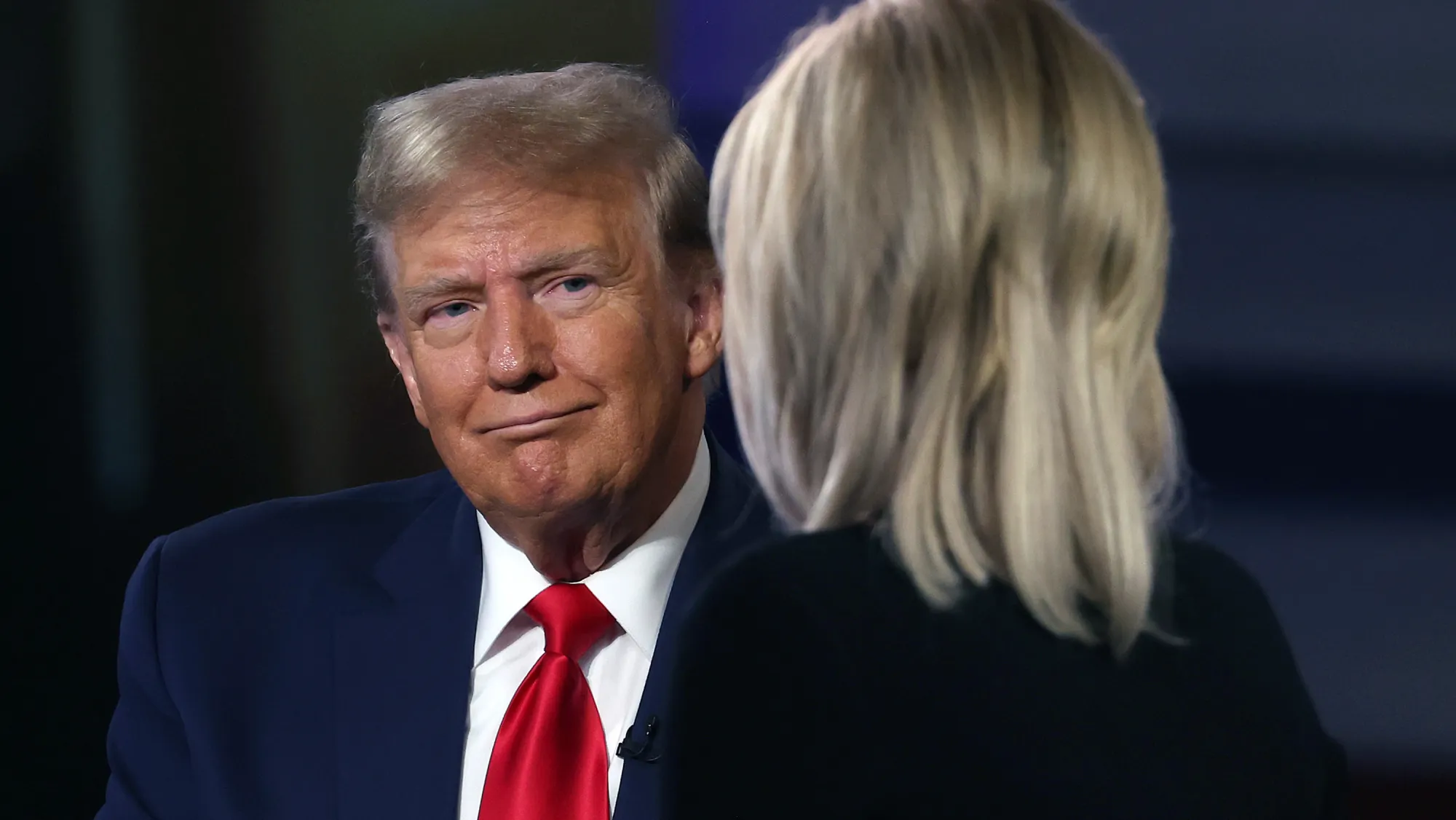
The Evolving Alliance
During a recent period of intense online activity, a post on Truth Social conveyed a palpable sense of grievance directed at Fox News, the media entity that had been instrumental in propelling his political career over the past decade. This alliance, though mutually beneficial, has shown signs of strain, and with Trump’s approval ratings faltering and political divisions deepening, the approaching midterms are poised to become a critical juncture that could signal the dissolution of this powerful partnership.
The former president expressed frustration, stating, “You could listen to Fox News all day long, absolutely devour it… but then, when you hear SLEAZEBAGS, like Congressman Ro Khanna, ‘a wolf in sheep’s clothing,’ LIE, LIE, LIE, AND LIE AGAIN, without any pushback, or competent rebuttal from an anchor.” He specifically called out commentator Jacqui Heinrich and her guest, Democratic Congressman Ro Khanna, over a discussion about trade policy and its implications for the “America First” agenda.
The “America First” critique struck a particularly sensitive chord, arriving at a time when Trump’s public approval has dipped to its lowest point in either term, with significant dissatisfaction regarding the economy and inflation, traditionally his strong suits.
Genesis of a Media Powerhouse
The rise of Trumpism was not an isolated phenomenon; it was intrinsically linked to the ascent of Fox News, which established itself as a dominant force by catering to millions of Americans seeking a particular narrative: a romanticized view of history, politically charged rhetoric, and an outlet for channeling economic anxieties. This created a loyal viewership, a demographic that increasingly relied on the network, and that included Donald Trump himself.
The decade-long rapport between the network and the political figure began when the Murdoch family-owned outlet, facing a lackluster Republican primary field in 2015, engaged with Trump. His burgeoning movement resonated with a segment of the Republican audience whose Tea Party fervor had waned but who remained captivated by his rallies. For a Fox News audience already predisposed to distrust external institutions, Trump represented a natural alignment.
However, Trump’s strategy was always long-term. By cultivating loyalty among key opinion hosts, such as Sean Hannity and Laura Ingraham (and previously Tucker Carlson), he strategically fractured the network’s institutional cohesion. These on-air personalities were not merely allies but instruments in a sustained effort to undermine the network’s editorial independence in favor of personal allegiance. Despite public pronouncements and periodic threats, the interdependence between Fox News and Trump has been profound, though the current era may represent the twilight of this arrangement.
The Ailes Doctrine and Audience Cultivation
To comprehend Fox News’s evolving relationship with its audience, one must appreciate the foundational principles established by its former president, Roger Ailes. Drawing on his background in local television and Republican politics, Ailes created a distinctive news programming model characterized by conflict, the demonization of perceived liberal adversaries, dynamic graphics, and personalities who cultivated an intimate connection with viewers.
Simultaneously, Rupert Murdoch’s business strategy involved subsidizing cable operators to carry the channel, a move that reversed industry norms and secured widespread carriage in American homes. This approach proved remarkably successful, with viewership surging during the 2000 election and reaching a pivotal turning point following the September 11th attacks and the subsequent military engagements in Afghanistan and Iraq. Fox positioned itself as the patriotic counterpoint to what it termed the “liberal media,” significantly outperforming competitors in primetime viewership.
What Ailes and Murdoch constructed was more than an audience; it was an “emotional infrastructure.” The Tea Party movement of the Obama era served as a testament to this, with Fox News providing extensive coverage of its rallies and protests. Subsequent academic studies indicated a direct correlation between Fox News viewership and increased fundraising and primary votes for Tea Party candidates, demonstrating the audience’s growing influence and Trump’s subsequent ability to capitalize on it.

The Audience’s Ascendancy
The dynamic where the audience dictates terms over the network, and journalism takes a backseat, has largely governed Fox News’s interactions with Trump since that time. Megyn Kelly eventually departed, and Shep Smith, a prominent straight-news anchor, left in 2019 amidst sustained pressure. Trump publicly celebrated both departures, and Bill Shine, Fox’s former president, transitioned to a role in the White House communications team, highlighting the deep ties between the network’s personnel and the administration.
The inherent fragility of this arrangement became starkly evident on election night 2020, when Fox News was the first to project Arizona for Joe Biden. This decision triggered immediate and intense backlash from Trump’s campaign and a significant portion of the network’s viewership, leading to a notable audience shift towards Newsmax. This was followed by what could be considered a landmark editorial capitulation in cable news history, revealed through the Dominion Voting Systems lawsuit. Internal communications showed Fox stars and executives privately disavowing Trump’s election fraud claims while publicly amplifying them. Tucker Carlson, at the time the network’s most influential primetime host, expressed sentiments of strong personal dislike for Trump, while CEO Suzanne Scott moved to suppress a fact-checking segment, citing business concerns driven by audience anger. The two editors responsible for calling Arizona, Bill Sammon and Chris Stirewalt, were subsequently dismissed, and the network ultimately settled the lawsuit for $787.5 million.
As the midterms approach, the critical question is which entity—the network or the former president—will retain sway over the Republican electorate. Trump is actively influencing GOP primaries through endorsements of challengers targeting perceived political adversaries within Congress, successfully ousting numerous incumbents based on past grievances. This represents a power shift from the influence Fox News once held. Several recent primary contests indicate a new schism, with outcomes that should be raising significant concerns across the network’s leadership.
Primary races in Kentucky’s 4th District and for the Texas Senate seat, which saw incumbents Thomas Massie and John Cornyn defeated by Trump-backed challengers, exemplify this trajectory. Trump’s dual, and sometimes conflicting, primary strategies have exposed a fault line where the network’s institutional interests diverge from Trump’s punitive agenda. While the network’s ownership desires a functional Republican majority, Trump seeks a purged, curated, and deeply loyal Congress.
In Kentucky, Trump endorsed Ed Gallrein over Thomas Massie, who had been a vocal critic of the administration. Gallrein secured the primary victory. This outcome underscored a crucial shift: Massie, a conservative with a distinct ideological platform, was ousted not for ideological deviations but for insufficient loyalty to Trump, establishing MAGA allegiance as the paramount criterion.
Fox News ultimately provided Massie with airtime shortly before the primary, his first appearance on the network in fourteen months. Massie described the lack of prior access as being “blacklisted,” attributing it to the intraparty conflict and the network’s fear of alienating the White House. He suggested that the desire for access outweighed providing a platform for his views.
The Texas Senate race further illustrated Fox News’s diminished capacity to shape audience perception. Ken Paxton, despite facing significant scandals, secured a victory against John Cornyn—a senator with a near-perfect Trump voting record—following Trump’s late endorsement. Fox News’s journalistic division, which had expressed concerns about Cornyn’s electability, was confined to Fox Digital. Conversely, the opinion side heavily favored Paxton, portraying Cornyn as an opponent of the former president. Upon Paxton’s decisive win, Fox News’s coverage quickly aligned with the outcome, demonstrating a reactive rather than a proactive approach to setting the narrative, waiting to follow the audience’s lead.

Structural Challenges and Future Outlook
Beyond the immediate electoral cycle, Fox News confronts a fundamental structural challenge that transcends any single election outcome. The transition of leadership within the Murdoch family, with Lachlan Murdoch now at the helm, necessitates navigating the post-Trump media landscape and devising strategies for sustained audience and revenue growth. This endeavor is complicated by demographic realities: a Pew Research analysis from August 2025 indicated that only 32 percent of adults aged 30-49 and 28 percent of those under 30 regularly watch Fox News. In weekly primetime viewership, the network registered 278,000 viewers in the crucial 25-54 demographic, a 5 percent year-over-year decrease, suggesting an aging core audience with insufficient replacement.
The independent ventures of former Fox News host Tucker Carlson underscore this shift. Since April 2023, Carlson has amassed approximately 34 million monthly views across his platforms without traditional cable distribution or affiliate agreements, demonstrating the potential for direct audience engagement built on a familiar brand. What once required a major network infrastructure can now be achieved through digital channels at a significantly reduced cost.
The independent voices now vying for this audience, including Carlson and Candace Owens, have at times diverged from the Trump agenda, often on contentious terms. These entities are smaller, more agile, and unencumbered by institutional constraints. They are effectively inheriting an audience conditioned over two decades to distrust established institutions, including, eventually, Fox News itself.
Fox News’s reported $22 billion acquisition of Roku is a strategic response to these mounting challenges, aiming to position the network as a critical gateway for streaming services. This reflects a significant investment in distribution, data analytics, and advertising technology to counteract shrinking viewership. However, such strategic maneuvers may not address the core issue of audience loyalty, which is intrinsically tied to political alignment.
Trump’s concluding remarks in his Truth Social post, a perfunctory acknowledgement of his Fox News allies following a public critique, reveal his ongoing reliance on the network’s platform. He clearly intends to leverage it on his own terms.
Following the midterms, Fox News may adopt a more conciliatory approach, moderating dissenting voices and aligning more closely with the former president’s preferences. However, Trump must consider the implications of the media environment he helped to shape. A base that has been extensively trained to distrust institutions and is primed for outrage and betrayal may not remain indefinitely amenable to control. The radicalization of this base, facilitated by Fox News, raises the possibility that if this partnership fully unravels, the subsequent focus of their restlessness might not be directed at political opponents.
It could very well be directed at him.
Business Style Takeaway: The evolving, and increasingly strained, relationship between Fox News and Donald Trump highlights a fundamental shift in media power, where audience allegiance has superseded traditional editorial control. This dynamic poses a significant challenge for legacy media organizations seeking to maintain influence in an era of fragmented attention and direct-to-consumer digital platforms, impacting corporate strategy and leadership’s ability to navigate political and economic currents.
Source: : www.hollywoodreporter.com