

The live-in personal assistant to the late Friends star Matthew Perry has been sentenced to 41 months in federal prison, concluding a lengthy legal process that emerged following the actor’s death.
Kenneth Iwamasa, 60, was found to have administered ketamine to Perry and, in collaboration with two medical professionals, supplied the actor with over $50,000 (£38,000) worth of the drug in the weeks leading up to his passing. Prosecutors highlighted that Iwamasa possessed no medical training.
Perry was discovered deceased in his backyard hot tub in Los Angeles in October 2023.
Iwamasa entered a guilty plea in August 2024 to a single charge of conspiracy to distribute ketamine resulting in death, facing a potential maximum sentence of 15 years. He also received a two-year supervised release term and was ordered to pay a $10,000 fine. His surrender date for prison is set for July 17.
Judge Sherilyn Peace Garnett cited Iwamasa’s awareness of Perry’s ongoing battle with addiction, coupled with his actions in concealing evidence post-death, as key factors in determining the sentence.
In a Los Angeles courtroom, Iwamasa addressed the actor’s family directly.
“I’m so sorry to all of you. I’m just so sorry to have done illegal acts that I will forever regret. I will take it to my grave,” he stated, expressing his hope to serve as a “cautionary tale” for others in similar positions to make more responsible choices.
He reiterated his profound apologies and extended his condolences.
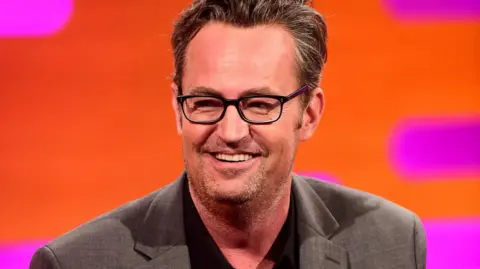 PA Media
Understanding Ketamine’s Role in the Context of Celebrity Deaths
Prosecutors had recommended a sentence of three years and five months for Iwamasa, who was the first of five defendants in the case to accept a plea deal and the last to be sentenced.
Prior to Iwamasa’s sentencing, Perry’s mother and sisters submitted letters to the court, expressing their views on his punishment.
“I have no sympathy for Kenny Iwamasa,” wrote his sister Caitlin Morrison, asserting that his departure from Perry on the night of his death indicated either an escape from responsibility or a deliberate abandonment of a vulnerable individual in a perilous state.
Perry’s other sister, Madeline Morrison, conveyed to the judge her belief that Iwamasa bore greater culpability than Jasveen Sangha, identified as a ketamine dealer.
Suzanne Morrison emphasized that Iwamasa’s primary duty was to act as a companion and guardian to her son in his struggle against addiction, ensuring Perry remained drug-free.
She noted that Iwamasa was aware of a support system he could call upon if he felt unduly pressured, ensuring his position and that help would arrive. Instead, she wrote, he facilitated and abetted illegal drug use, orchestrating multiple supply sources.
“We trusted a man without a conscience, and my son paid the price,” she stated in her letter.
 Getty Images
Iwamasa admitted to administering ketamine injections to Perry on multiple occasions, including the day of his death.
Official medical findings attributed Perry’s overdose death to the acute effects of the dissociative anesthetic, with drowning listed as a contributing factor.
“You were privy to his trouble with addiction,” Judge Garnett remarked to Iwamasa before sentencing. “You knew he should not have used ketamine at the amount he did.”
The judge elaborated that Iwamasa observed the negative consequences of the drug but continued to procure and administer ketamine, including on the day Perry died, when he left the actor alone after a significant dose.
“Your conduct was reckless the day of his death and the days leading up to that you made concrete steps to get rid of the evidence,” she stated, noting his repeated dishonesty with police regarding his involvement.
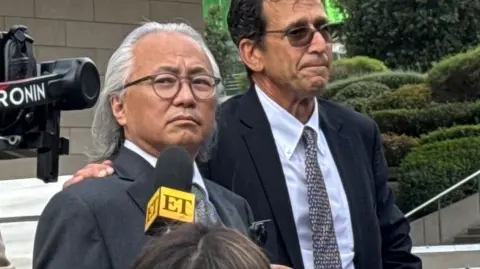
Speaking outside the courtroom, Iwamasa expressed, “I’m horribly sorry and I wish I could turn back time.”
His attorney, Alan Eisner, contended that Iwamasa acted solely at Perry’s direction, arguing that the actor held agency to refuse and that an unequal power dynamic existed between the assistant and his employer. Eisner stated that while Iwamasa should have resisted Perry’s requests for injections, he was “incapable” of refusing.
“This is not an incident that falls solely on the shoulders of Mr Iwamasa,” his attorney added.
Sentencing in the Matthew Perry Overdose Death Case
US authorities have indicated that a group of defendants supplied ketamine to Perry, exploiting his addiction for financial gain, which ultimately led to his overdose death.
All five defendants involved have agreed to plead guilty to their respective charges.
In April, Jasveen Sangha, a Los Angeles woman referred to as the “Ketamine Queen,” received a 15-year prison sentence for her role in supplying drugs that contributed to the actor’s death.
Dr Salvador Plasencia, who supplied Perry with ketamine in the period before his death, was sentenced in December to 30 months in prison.
Also in December, Dr Mark Chavez, a California physician who sold ketamine to Perry, was given a sentence of eight months of home detention and three years of supervised release.
Erik Fleming, who sourced the drug from Sangha, was sentenced earlier this month to two years in prison, three years of supervised release, and a $200 penalty.
Family Perspectives on Sentencing
Reports on the “Ketamine Queen”
Business Style Takeaway: The legal repercussions and personal testimonies surrounding Matthew Perry’s death underscore the profound responsibility that accompanies managing high-profile individuals and the associated supply chains. For luxury brands and those operating in celebrity-adjacent industries, understanding the ethical implications of drug procurement, addiction support, and the legal framework surrounding such issues is paramount to maintaining brand integrity and avoiding reputational damage in an increasingly scrutinized global market.
Details can be found on the website : www.bbc.com