
In the United Kingdom, a significant shift in the labour market is underway, with over a million individuals now holding second jobs. This trend is fueled by escalating living costs, the prevalence of precarious work, and evolving industry landscapes, collectively pushing workers into a more dynamic and often demanding gig economy.

Billy-Jo Pierce, a resident of Bristol, describes her existence as “survival mode,” where she meticulously balances multiple employment roles to navigate the financial pressures of living in one of the UK’s most expensive cities. This multi-job approach has become a crucial strategy for many seeking to enhance financial stability and gain greater flexibility in their working lives, particularly in response to the escalating cost of living crisis.
At 29, Pierce acknowledges the demanding nature of her commitments, admitting that “burn out is real.” Her professional life is a testament to this: she dedicates 50-60 hours weekly to her primary business, which specialises in applying cosmetic gems to teeth, while also undertaking reception duties, bartending, working at festivals, and selling clothing online.
The Intensifying ‘Rat Race’
Official figures from the Office for National Statistics indicate that approximately 1.3 million individuals in the UK currently hold a secondary job. While this represents a slight decrease from the record high of 1.35 million recorded in 2025, it underscores a persistent trend.
Pierce’s entrepreneurial spirit emerged during her university studies in interior design. Despite achieving a first-class degree, she found securing industry employment challenging. Consequently, she accepted a conventional 9-to-5 role in the gaming sector while concurrently developing her own business on the side.
“I’d finish work at five or six in the evening and then head straight to my own business, staying there until around eleven at night,” she recalls. “I was working excessively, with no social life. It felt like being trapped in a relentless ‘rat race’ that offered no real prospect of winning. Despite working incredibly hard, I wasn’t saving money, nor was I truly living.”
After facing redundancy last year, Pierce made the strategic decision to commit to her business full-time. However, the sharp rise in living expenses and Bristol’s high cost of accommodation made it challenging to subsist on a single income stream.

Research indicates a substantial increase in material costs within the beauty sector, with figures showing a rise of over 90% in the last decade. To manage these expenses, Pierce now resides in a van and juggles multiple jobs to sustain her business. Her typical weekday involves working at her studio from 10:00 to 19:00, followed by reception shifts that extend to 23:00, with weekends often dedicated to bar work or festival engagements.
Despite this relentless schedule, financial anxiety remains a constant companion. “Work is overwhelming, and I still feel like I’m not earning a substantial monthly wage that would ever allow me to get close to owning a home,” she explains. “It feels like the norm right now to work multiple jobs. There’s definitely something fundamentally wrong with the current situation.”

The UK’s unemployment rate has recently seen an uptick to 5%, coinciding with a five-year low in job vacancies. Simultaneously, the gig economy, characterised by freelance and contract-based work, has experienced substantial growth. Nearly five million individuals are now engaged in gig work, encompassing roles such as food delivery, freelance design, cleaning, pet care, and online retail, although only a fraction rely on it as their primary source of income.
As unemployment figures rise, a greater number of individuals are turning to gig work. For many, particularly younger professionals, the security offered by a single employer is diminishing. Dr. Emily Beaumont, an associate professor of enterprise and entrepreneurship at the University of Gloucestershire, observes, “People are taking second jobs primarily because a single income is no longer sufficient.” She notes that while having a second job or a side hustle is becoming more commonplace, it doesn’t always translate to entrepreneurial empowerment. “The proliferation of side hustles signals a more fragmented and risk-shifted economy,” she adds.
AI’s Impact on Creative Demand
Engy Elboreini, a freelance graphic designer based in Bristol, has had to adapt her career trajectory due to the evolving dynamics of her industry. “The last two years have been my worst in terms of business,” she states. “I’ve observed that within the digital design field, the accessibility of tools like AI and Canva means clients often undertake a significant portion of the design work themselves.”
After more than a decade in graphic design, the 35-year-old finds that AI technologies have drastically reduced the demand for traditional design services. In addition to her freelance projects, Elboreini now pursues roles in creative production and coordination, and is undergoing retraining in events management.
“When faced with scarcity, humans naturally seek solutions,” she reflects. “Especially for the creative sector, finding solutions is inherent.”
Despite her resourcefulness, financial constraints have necessitated cutbacks on discretionary spending, such as holidays and festival tickets. “Is this the lifestyle I desire? No. However, living in Bristol is enjoyable, and being immersed in creative communities is profoundly fulfilling.”
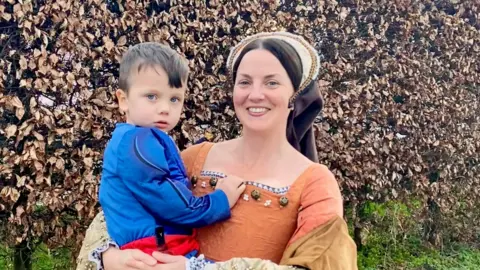
For others, the impetus to take on multiple roles stems from personal circumstances intersecting with financial necessity. Hollie, also from Bristol, found herself a single mother requiring work that offered flexibility to accommodate her son Max’s schooling while she relied on a sole income. Through a recommendation, she began working as a life model.
“It was never part of my plan, but when you’re in such a situation, you become open to opportunities you might not have previously considered,” she commented. The 41-year-old, who also works part-time as a legal assistant and occasionally as a TV extra, highlights how this role allows her to align her work schedule with her son’s school hours.
“It was born out of necessity,” she stated. “I would rather pose nude for artists than work a minimum wage job where I’m constantly rushed, unable to make ends meet, and miss out on precious time with my son.”

She reflects that this work has been instrumental in helping her overcome feelings of vulnerability. “I often worry about finances or my son’s well-being. However, I don’t experience that same fear when I’m naked in a room full of strangers,” she notes. Like many in the gig economy, she points to the absence of long-term security as a source of “constant pressure.” “I’m always thinking about the next bill, the next job. Even though work is coming in, there’s no genuine security,” she says. Despite the inherent instability, she believes that shifting economic realities are fundamentally altering perceptions of work and the lengths individuals will go to in order to make ends meet.
Business Style Takeaway: The rise of the multi-job economy and the gig workforce signifies a profound recalibration of traditional employment structures. For businesses and brands, understanding this trend is crucial for talent acquisition, employee retention, and developing marketing strategies that resonate with a demographic prioritizing flexibility, security, and diverse income streams in an increasingly unpredictable economic climate.
According to the portal: www.bbc.com