

The race for Los Angeles mayor has taken an unexpected turn, with City Council member Nithya Raman significantly narrowing the gap on rival Spencer Pratt following a new batch of primary vote counts. This development introduces a dynamic shift to the expected runoff, potentially altering the political landscape of the city.
The Tightening Mayoral Contest
As of Friday’s latest ballot drop, Raman has gained approximately 10,000 votes, bringing her total to 154,000, or 25 percent. This surge places her just 20,000 votes behind Pratt, who currently holds 28 percent. With a quarter-million votes still uncounted, Raman is strategically positioned to challenge Pratt for the second spot in the general election against incumbent Mayor Karen Bass.
Mayor Bass has already secured her place in the runoff, projected to receive 35 percent of the primary vote. The initial results had suggested a clear path forward, with Pratt, a reality television personality, confidently anticipating a head-to-head contest with Bass, even declaring victory of sorts on election night.
Shifting Dynamics and Strategic Implications
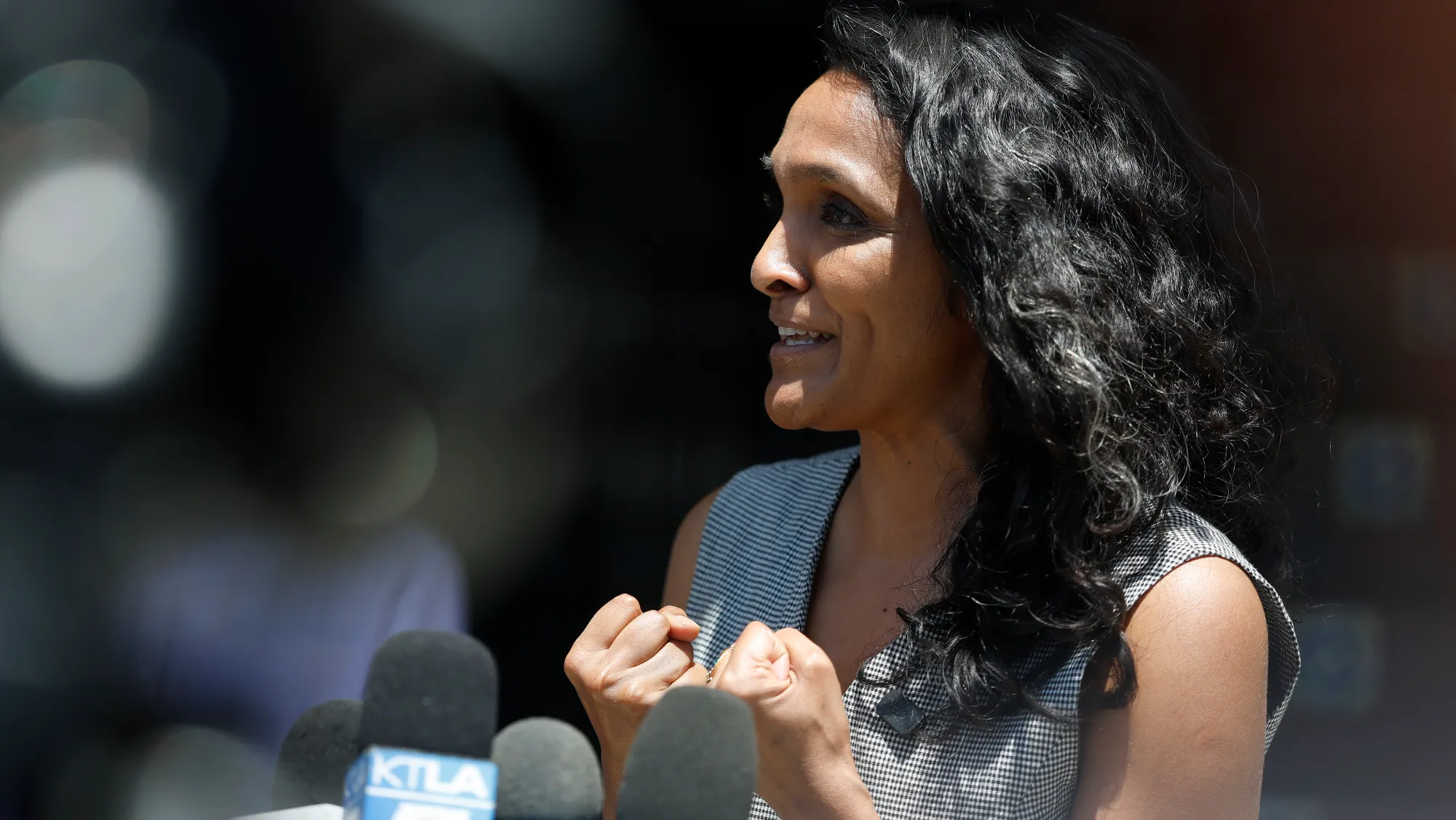
Raman, whose political trajectory has been influenced by her background and connections, has steadily eroded Pratt’s initial lead. What began as a 10-point advantage on election night has dwindled to a mere three points as more votes are tallied. This trend, coupled with the established tendency for later-counted ballots to favor Democratic candidates, suggests Raman has a strong possibility of surpassing Pratt in the final count.
Pratt’s campaign, initially characterized as a “novelty,” gained significant traction through effective online engagement and criticism of Mayor Bass’s performance on key issues such as wildfire response and homelessness. However, Raman’s late surge, driven by a progressive platform and strategic entry into the race, could reshape the November election from a contest of celebrity appeal to a substantive policy debate between Bass’s moderate stance and Raman’s more activist approach.

Should Raman secure the second position, it would elevate the general election to a choice between Bass’s established leadership and Raman’s progressive vision, potentially aligning Los Angeles with a more liberal political direction seen in other major cities like New York.
California Gubernatorial Race Developments
In parallel, the California gubernatorial primary race appears to be solidifying its general election matchup. Democrat Xavier Becerra is now projected to advance, having surpassed Republican Steve Hilton in recent vote counts. Becerra holds approximately 1.73 million votes with 68 percent of precincts reporting, closely trailed by Hilton with 1.7 million votes. The contest for the second spot is now primarily between Hilton and progressive Tom Steyer.
Becerra’s potential victory positions him to become the first Latino governor in California’s history, marking a significant demographic milestone for the state.
Business Style Takeaway: The evolving dynamics in the Los Angeles mayoral race underscore the growing influence of grassroots movements and progressive policy agendas in urban politics, challenging traditional media narratives and celebrity-driven campaigns. Similarly, the potential for a historic Latino governor in California signals a broader demographic shift impacting political representation and future policy priorities in one of the nation’s most populous states.
According to the portal: www.hollywoodreporter.com