

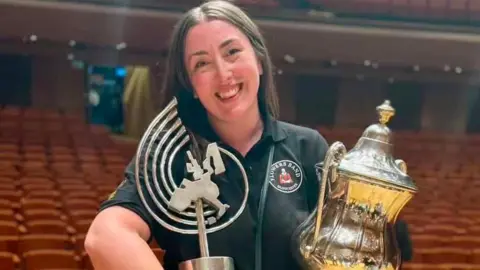
Reflecting on her childhood, Stephanie Binns, now 32, shared, “I definitely wasn’t considered cool growing up, but honestly, it didn’t bother me much.” She explained that while her peers navigated the complexities of friendships and minor disputes, she was already engaging with a diverse range of people across different generations and backgrounds through her involvement in a brass band.
Binns, who joined her first band at the age of eight, credits this early passion with opening numerous opportunities, including extensive international travel for performances. This experience, she notes, more than compensated for any perceived lack of ‘coolness’ among her friends.
She elaborated, “I already possessed a form of social stability that brass bands inherently provide. So, while it might not have been fashionable, when I consider the incredible experiences I’ve had – like traveling the world and achieving numerous competition victories – the question of whether I was ‘cool’ becomes rather insignificant.”
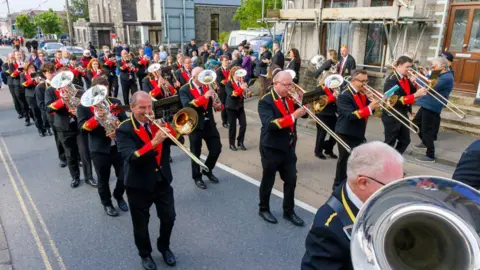
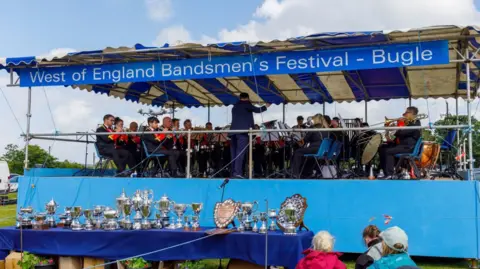
This past Saturday marked a significant gathering, with hundreds of brass band musicians converging in Cornwall for the centenary celebration of the West of England Bandsmen’s Festival, affectionately known as the Bugle Band Contest.
The day-long event, running from morning until late evening, featured seven distinct competition categories, including a dedicated youth section, showcasing the vibrant spectrum of brass band talent.
Binns, who is serving as an adjudicator this year, recently celebrated a major triumph as the assistant principal cornet player for the Gloucester-based Flowers Band, securing the Champion Band of Europe 2026 title in Austria. Her own musical journey began in Cornwall, where she played with notable bands such as Mount Charles and St Austell, before relocating to Manchester.
Although not from a musical family, Binns’s introduction to the world of brass bands was serendipitous. “Someone visited my school to give a demonstration, and I was so inspired that I went home and declared, ‘I’m going to do that’,” she recalled.
“I essentially fell into it at age eight and have continued ever since,” Binns added. “I’ve never looked back.”
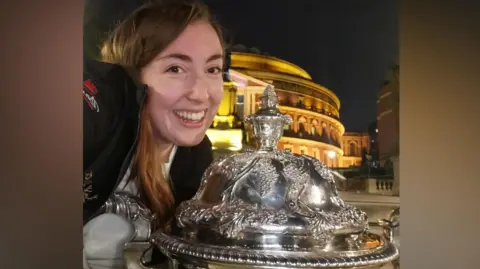
Binns also holds the esteemed position of chairperson for the Cornwall Youth Brass Band, an organization she was a part of as a young musician.
She acknowledges that engaging young people in brass music presents unique challenges in today’s rapidly evolving world. However, she remains optimistic about the enduring appeal of brass music among younger generations and actively encourages anyone interested to explore local band opportunities.
“Following the pandemic, the youth band had dwindled to about nine members, but we’ve since grown to over 40,” Binns reported with enthusiasm. “We are actively working to bring in internationally acclaimed players and musicians to mentor our young talent.”
“I believe the outlook is incredibly positive, and I would strongly urge anyone who is hesitant to simply get involved.”
'Missing social gatherings'
For 22-year-old Lia Teague, a career in brass bands felt almost preordained, given her mother’s involvement in the Bugle Silver Band and her father’s long-standing role as a promoter of the Bugle Band Contest.
Teague, who plays principal cornet for the Camborne Town Band, began her musical journey at age seven. She feels that music has profoundly shaped her personality, fostering significant creativity.
“I believe you gain an immense sense of accomplishment, both individually and as part of a team working towards a common objective,” stated Teague, who also serves as the contest’s press secretary.
She also highlighted the impact on her maturity, stemming from playing alongside adults from a young age.
Teague admitted that her dedication to brass bands meant she often missed social events. “I remember having to say, ‘I can’t make it, I have band practice,’ and my friends would respond, ‘Well, we expected you to say that.'”
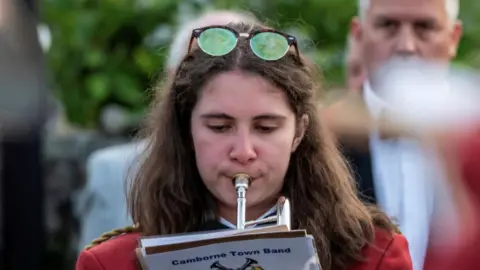
Teague observed a decline in the number of younger participants in recent years but expressed confidence in the continued vitality of brass bands. “Certainly here in Cornwall, there’s still a strong contingent of enthusiastic young brass musicians, which is wonderful to witness,” she stated. “There are also many dedicated individuals working to ensure this enthusiasm persists.”
Percussionist Harry Chambers began his brass band journey around the age of eight or nine. He describes himself as a versatile musician, adept at various instruments, though he humorously admits to being a “jack of all trades, master of none.”
The 20-year-old, a member of Cornwall’s St Dennis Band, proficiently plays instruments such as the glockenspiel, tubular bells, bass drum, cymbals, and vibraphone.
“Ever since I first joined a band, I’ve remained deeply engaged with brass music,” he shared. “While I’ve explored other musical avenues, brass bands have consistently held my primary interest.”
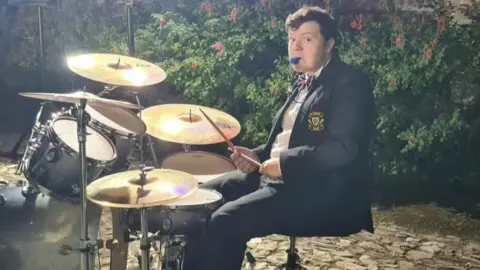
Chambers resides near Honiton, Devon, necessitating a three-hour round trip for band practice, which included three sessions in the week leading up to the contest. Despite the demanding travel, he expressed his willingness, stating that being part of the band provided him with “a lot of purpose.”
“I manage mental health challenges, including clinical depression, and being part of a band significantly aids me in this regard,” Chambers revealed, recounting performances at the Royal Albert Hall with his band.
“The camaraderie is invaluable; knowing you have friends there and having a focused activity provides essential structure. It’s something demanding of attention, incredibly rewarding, and profoundly beneficial for mental well-being, particularly for me.”
Christopher Bond, who will be present as the conductor of Northamptonshire’s GUS Band, first encountered brass bands during his primary school years in Camborne, where he began learning the cornet.
At 34, Bond progressed to join the town’s youth band before pursuing higher education at the Royal Welsh College of Music in Cardiff, where he honed his skills in composition and conducting.
Bond initially felt hesitant about entering the brass band world, but it ultimately “shaped” his life. “It’s a profoundly communal experience,” he remarked. “For young people, forging friendships through an activity that becomes genuinely enjoyable in a group setting was something I truly cherished.”
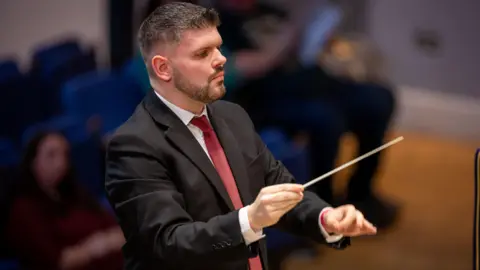
Bond, who has composed a piece to be performed at Saturday’s competition, described brass bands as providing a “brilliant social outlet” for individuals of all ages. “It’s fundamentally about teamwork and collaboration; the social skills developed within a brass band extend far beyond musical proficiency,” Bond commented, adding that he would be attending the contest with the GUS Band.
He also noted a continued influx of young people embracing instruments and joining brass bands. While acknowledging past concerns about appearing “uncool” among his peers, Bond expressed immense pride in his involvement with brass bands.
“I think that’s a crucial takeaway for any young person – something that might initially seem unfashionable can, with dedication and skill, become incredibly cool,” he concluded.
Business Style Takeaway: The enduring appeal of brass bands highlights the powerful role of collective participation and skill development in fostering community and personal growth. For global brands and executives, understanding such niche yet deeply resonant cultural activities can unlock pathways to authentic engagement and highlight the value of tradition, discipline, and shared purpose in building lasting connections.
Based on materials from : www.bbc.com