

Before stepping onto a set, Rico Nasty undergoes a subtle, atmospheric shift, akin to light adjusting to a new space. For her, transformation has always been an expansion of self rather than a reinvention, allowing her to navigate different facets of her identity without abandoning previous ones. This instinct now finds a new avenue in her acting debut in “Margo’s Got Money Troubles” on Apple TV, where performance transcends the stage to inhabit a world that continues to exist beyond the camera’s gaze.
Rico Nasty on Personas, Performance, and On-Set Evolution
Roark Bailey, a frequent musical collaborator, initiates their conversation with a voice note that serves as an invitation rather than a prompt. He questions whether the personas and alter egos Nasty has cultivated through her music have prepared her for acting. Without hesitation, she affirms, “My god, yes,” seamlessly merging these creative worlds. “I think anytime I’ve ever been on set for a music video has prepared me for acting.”
In retrospect, music videos, makeup sessions, and every transitional moment blur into a form of rehearsal rather than mere memory. “Anytime I’ve gotten my makeup done has prepared me for acting,” she elaborates. “Anytime I’ve gone through any type of transformation… I really live by that.”
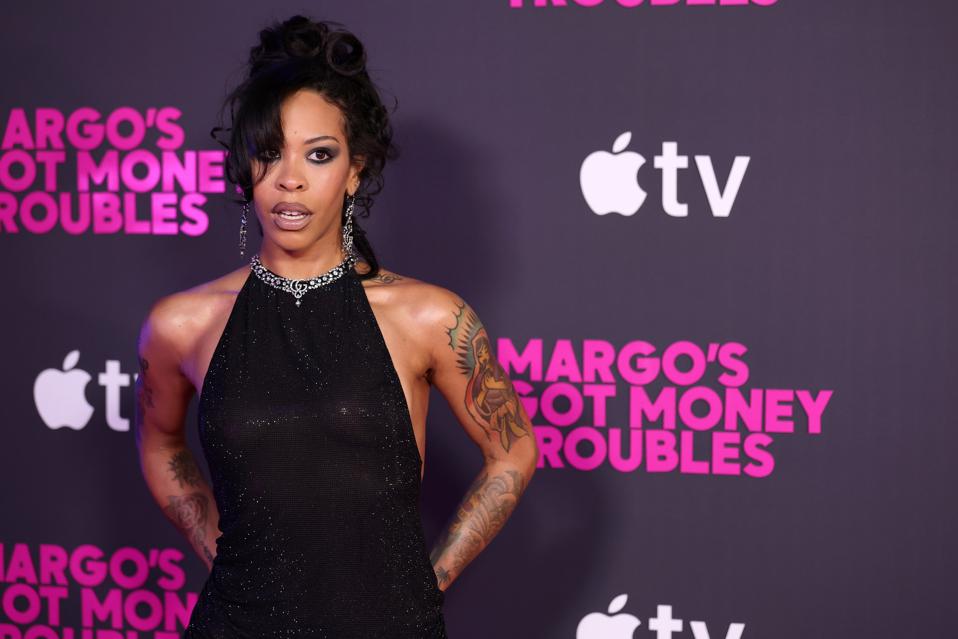
Nasty perceives identity not as a fixed state but as something to be donned. “You got to wear the clothes, don’t let the clothes wear you,” she states, articulating a guiding principle. “If I’m wearing dark hair then I’m going to act darker. If I’m wearing blonde hair, I might be a little more bubbly.” She emphasizes that this isn’t about reinvention but about granting herself permission—permission to shift, to embrace, and to play without compromising her core self. “It’s not a complete personality switch,” she clarifies, “but I do think allowing yourself to transform in a fun, whimsical way… it helps when you’re given a character.”
Rico Nasty Discusses Costume, Color, and Character as Forms of Expression
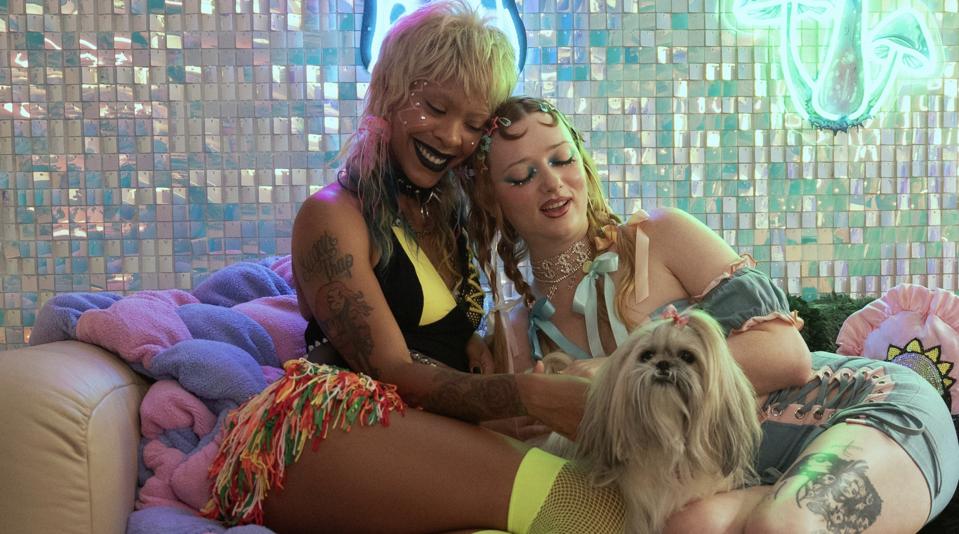
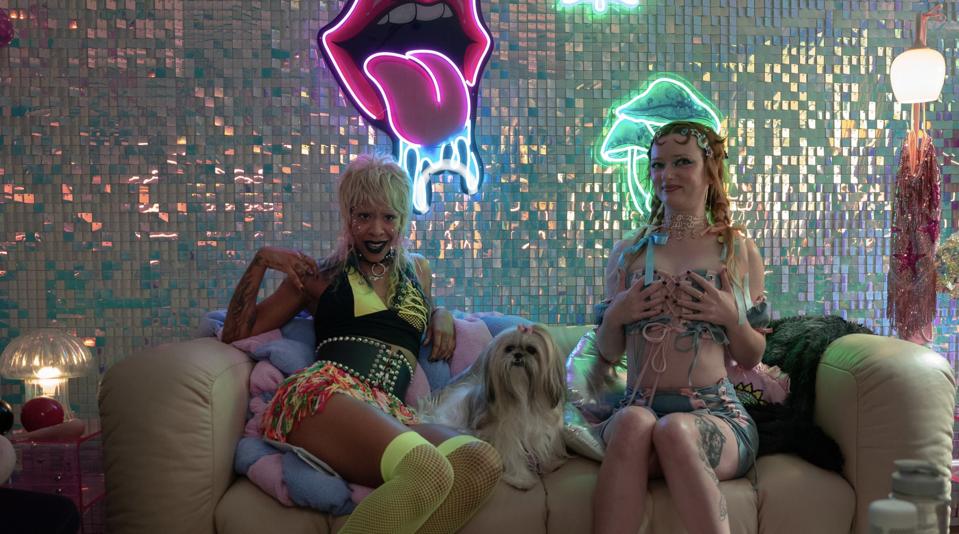
This philosophy directly informed her approach to character development, where even costume became a form of communication. Through a limited number of fittings, she rediscovered a visual boldness she had recently moved away from. “Everyone knows me for being colorful,” she notes, “but I had been wearing darker stuff, more muted tones.” The role, she explains, encouraged a return to vibrancy and a willingness to take risks. “There were moments I was like, I don’t necessarily like this outfit, but it goes with the character,” she admits. “So I had to step outside of myself in that way.”
One of the most surprising fittings, she recalls, involved an all-lace ensemble. “I wore these full lace outfits and I thought it was so funny,” she shares. “I was like, huh, this is different for me.” The experience felt less like discomfort and more like a recalibration. “It really just helped me be confident in myself again,” she adds. “I kind of felt like I hadn’t lost it—I was just playing it safer.” The character herself seemed defined by contradictions. “She’s a very questionable girl,” Nasty says of KC, “but in a very nonchalant way. I love her.”
Rico Nasty Reflects on On-Set Chemistry and Off-Camera Routines
On set, structure often yielded to intuition, with scenes evolving organically through cast chemistry. This was particularly evident with her co-star Lindsey Normington, who plays Rose. “We were literally dying [laughing] in between shots,” Nasty recalls. “We had amazing chemistry from the first time we read together.” Even scripted moments took on a looser quality due to this dynamic energy. “There’s a part where we’re reaching for pizza that was scripted, but we kept laughing,” she says.
Away from the cameras, her dressing room rituals are pared down to essentials, providing small anchors within a constantly shifting environment. “I need a blunt,” she states matter-of-factly, followed by a laugh. “I need a Celsius [drink]. I need a blanket.” She pauses, seemingly amused by her candor. “I am very mindful that I come from the rapper world,” she adds, “but my rituals are the same, brother.” The craft services, she notes, felt almost surreal in their opulence. “They had everything—banana bread, sandwiches—it was insane. We were all talking about it every day.”
Rico Nasty Details Her Audition Process Amidst Hollywood’s “Nepo Baby” Discourse
Nasty is careful to dispel any notion that her audition process was effortless. “I didn’t just get the role because I’m Rico Nasty,” she asserts immediately. The process involved readings, callbacks, and ultimately, an acting coach who provided a new perspective. “Your job is to defend the character even if you don’t agree with them,” she recalls the coach advising. “You can’t be like, why would she say that—this is supposed to be you. You have to get into it.”
She also counters the idea that her existing recognition was the sole factor in securing the role. “Which was even weirder,” she adds, “because when we got on set and I met the author, she was a fan and had on literal merch from 2020.” While casting discussions often focus on access and privilege, industry data from 2025 indicates that approximately 16% of actors aged 35 and under in U.S. films have at least one parent in the entertainment industry, highlighting the diverse and often uneven paths into acting.
By the final audition round, Nasty ceased downplaying her individuality and instead embraced her presence. “I wore a hoodie that said ‘ex-bisexual,’” she recounts with a laugh. “I wanted them to laugh—because that’s what the character made me feel.” She describes a palpable shift in the room following this. “It gets to that point where you’re like, I have to do this really good… because a lot of these people, this is what they literally do for a living.” In that moment, her performance transcended adaptation and became pure translation.
Business Style Takeaway: Rico Nasty’s transition into acting highlights the strategic advantage of leveraging existing creative personas as a foundation for new ventures, rather than viewing them as separate entities. Her approach demonstrates that artistic adaptability and a willingness to embrace character-driven transformations are key assets for navigating diverse professional landscapes, proving that transferable skills extend beyond traditional industry boundaries.
Source: : www.forbes.com