

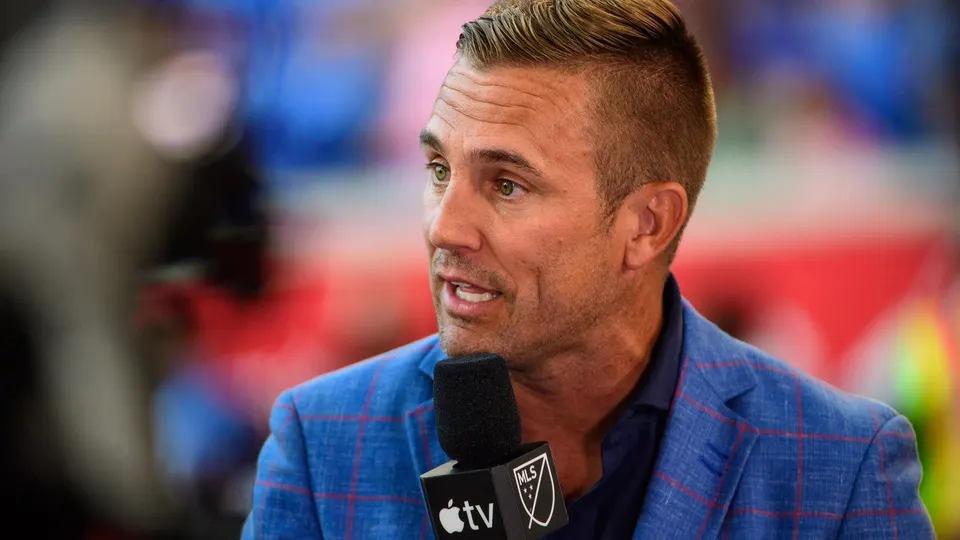
Major League Soccer (MLS) announced on Thursday morning that the upcoming Saturday match between the LA Galaxy and Houston Dynamo will mark a significant milestone: it will be the inaugural sporting event broadcast entirely using iPhone cameras.
While some viewers might express concern that this technological shift could lead to the omission of crucial game details on the Apple TV broadcast, such anxieties are largely unfounded. This issue has, in fact, become a recurring problem with conventional camera setups since Apple TV secured exclusive global streaming rights for all MLS fixtures at the commencement of the 2023 season.
To be clear, MLS and Apple TV have implemented numerous beneficial changes since Apple TV assumed worldwide rights for every match in the MLS Regular Season, MLS Cup Playoffs, and Leagues Cup. These improvements include the introduction of the “Sunday Night Soccer” package, the scheduling of more daytime matches in colder climates, and most recently, the integration of all matches into the standard Apple TV+ subscription, eliminating the need for a separate MLS Season Pass.
However, on a match-by-match basis, the production quality of MLS broadcasts frequently falls short of the established industry standards seen in other major North American professional sports. This underperformance typically stems from one or both of the following issues:
1) Camera direction fails to adequately capture pivotal moments in real-time.
2) Broadcast production either misinterprets or deliberately avoids significant narrative elements.
La Familia Feud
Ironically, one of the most pronounced examples of these shortcomings occurred just four days prior to Thursday’s announcement, during a “Sunday Night Soccer” broadcast featuring Inter Miami against the Portland Timbers.
The most compelling storyline emerging from Miami’s 2-0 victory was not the match outcome itself, but rather the apparent ongoing discord between “La Familia”—Miami’s supporters’ groups—and star players such as Lionel Messi, Rodrigo De Paul, and Luis Suarez.
During a chant from La Familia expressing dissatisfaction with perceived disrespect from these players and others, Messi directed a gesture toward the group, which was captured by Apple TV’s cameras. However, play-by-play announcer Jake Zivin and color analyst Taylor Twellman, hindered by their limited understanding of the song sung in Spanish, incorrectly interpreted the incident as Messi attempting to offer an apology.
Furthermore, a separate gesture from De Paul, which appeared confrontational towards the supporters, went unrecorded. Additionally, Messi’s post-game action of guiding De Paul and Suarez away from direct engagement with La Familia during post-game formalities was also missed.
Despite subsequent clarification of the incident’s true nature, the broadcast made no effort to correct its initial mischaracterization.
It is plausible that the production team intentionally sought to sidestep a storyline that casts a negative light on the league’s premier team and its most prominent star. A unique aspect of Apple’s partnership with MLS is that the league itself bears the production costs and has contracted IMG to produce its matches and studio content. This arrangement can lead to broadcasts that appear sanitized of controversy, potentially safeguarding the league’s overall image, which may explain the editorial choices made during Sunday night’s broadcast.
Slow-Motion Replay
Beyond narrative avoidance, there are consistent instances of more fundamental production errors that are unrelated to the omission of sensitive topics.
Replays of contentious foul calls or offside decisions are frequently delayed, often occurring well after a color commentator has verbally requested such an angle on air.
Additional broadcast features, such as win-draw-loss probabilities, heat maps, and expected goals data, are presented with minimal contextual information or analysis.
Given that match commentators are tasked with leading the halftime segments, these breaks typically consist of perfunctory highlight recitations rather than tactical breakdowns that would require dedicated preparation time away from commentary duties.
Moreover, there is a notable absence of informational graphics overlaid on match footage, a common feature in the coverage of other major North American sports.
Against this backdrop, Saturday’s all-iPhone broadcast emerges, building upon experimental initiatives seen in Apple TV’s Major League Baseball coverage and previous MLS Cup broadcasts.
This technological showcase will likely serve as excellent publicity for the continually advancing capabilities of Apple’s iPhone technology.
However, for viewers encountering MLS broadcasts for the first time, it may create the impression that MLS games are at the technological vanguard of sports broadcasting. The reality, perplexingly, remains quite the opposite for a product distributed via a platform that shares its name with one of the world’s foremost technology corporations.
Business Style Takeaway: The adoption of iPhone technology for broadcasting MLS games highlights a strategic move to leverage accessible, high-quality mobile hardware for content creation, potentially lowering production costs and increasing broadcast flexibility. However, this innovation must be carefully balanced with the continued need for sophisticated editorial judgment and narrative storytelling to ensure comprehensive and insightful sports coverage, rather than merely a technological demonstration.
Original article : www.forbes.com