

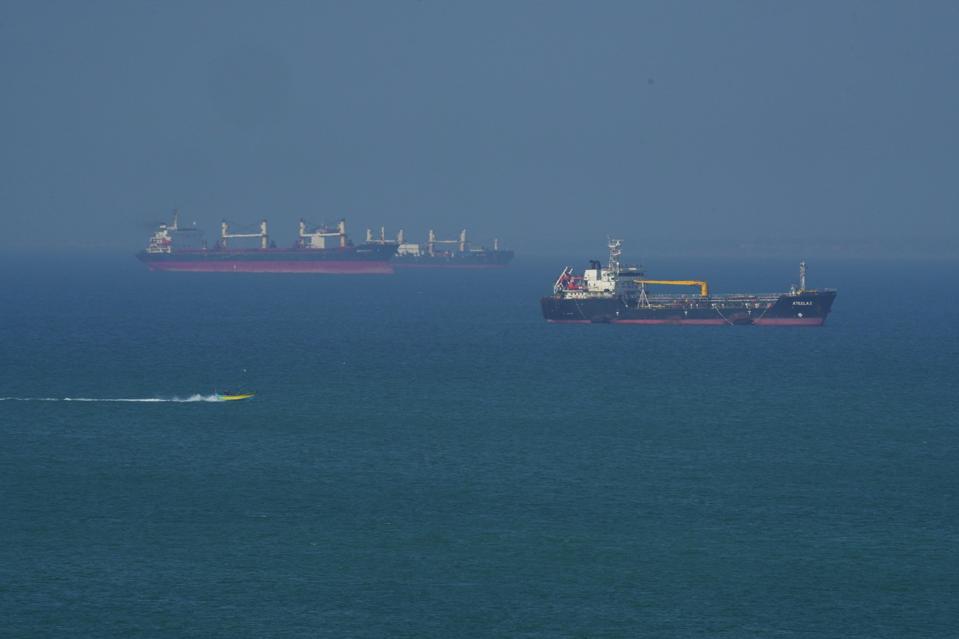
A U.S. intelligence assessment indicates that Iran has successfully demonstrated its capability to shut down the Strait of Hormuz, effectively acquiring a new strategic leverage point that it did not possess prior to the recent conflict, with no immediate impediments to its future use.
Key Facts
Intelligence reports suggest Iran is contemplating an expansion of its strategy to disrupt global shipping, potentially extending its influence to the Bab-el-Mandeb strait connecting the Red Sea and the Indian Ocean. This potential move would be facilitated through cooperation with the Houthi rebel group in Yemen, should diplomatic talks with the U.S. prove unsuccessful.
Contrary to President Trump’s assertions regarding the degradation of Iran’s military capacity, intelligence assessments reportedly indicate that Iran maintains a substantial arsenal, including underwater mines and naval assets, suitable for controlling maritime traffic in the Strait of Hormuz.
The intelligence assessment also identified the capability to launch attacks against neighboring Gulf states, such as Qatar and the United Arab Emirates, as another effective tactic Iran has acquired during the conflict.
The reopening of the Strait of Hormuz is anticipated to be a significant condition within the agreement between Iran and the U.S. aimed at concluding the war. However, specific details concerning the implementation and timeline for the strait’s reopening have not yet been publicly disclosed.
While President Trump has projected that the strait will be fully operational by Friday, some executives in the shipping industry have expressed concerns regarding the resumption of operations without concrete security assurances. Furthermore, Iran has deployed mines within the strait that have not yet been fully cleared.
What To Watch For
Iran has not entirely ruled out the possibility of imposing transit fees on vessels traversing the Strait of Hormuz, a measure it initially implemented during the shutdown. Although President Trump has stated the strait will be completely toll-free, Iran’s Foreign Ministry spokesperson, Esmail Baghaei, indicated on Monday that fees could still be levied “in exchange for the services that are provided.”
Contra
An unnamed senior U.S. official informed CNN that the United States will not lift economic sanctions or its naval blockade on Iranian ports if Iran fails to reopen the strait and adhere to other stipulations of the agreement. Additionally, disrupting passage through the strait could alienate China and other Gulf nations upon which Iran’s economy relies, according to another anonymous source cited by CNN.
Crucial Quote
“We have now handed Iran de facto control over the strait—a weapon more powerful than any nuke,” one of the sources privy to the assessments stated to CNN.
Key Background
The United States and Iran electronically signed an agreement to end hostilities on Sunday, with a formal in-person signing ceremony anticipated in Geneva on Friday. While the specifics of the agreement remain largely undisclosed, Iran may stand to gain several advantages it lacked before the war. It remains uncertain whether crucial U.S. objectives, such as regime change in Iran and the cessation of its nuclear program, will be achieved. Nuclear negotiations are expected to commence following the initial agreement signing on Friday, with a 60-day timeframe set for reaching a comprehensive accord.
Further Reading
Crucial Aspects Of Trump’s Iran Deal Remain Secret: Nuclear Program, Strait Of Hormuz Tolls And Sanctions Relief
Trump Says Iran Peace Deal ‘Complete’—Ends Strait Of Hormuz Blockade
Trump And Vance Angrily Deny Peace Deal Favors Iran
Business Style Takeaway: Iran’s demonstrated ability to control the Strait of Hormuz presents a significant geopolitical and economic risk, potentially empowering the regime with a new, potent bargaining tool in future negotiations and impacting global trade routes. The successful leverage of this choke point underscores the need for businesses reliant on maritime transport to reassess supply chain vulnerabilities and contingency planning in the face of heightened regional instability.
Learn more at : www.forbes.com