


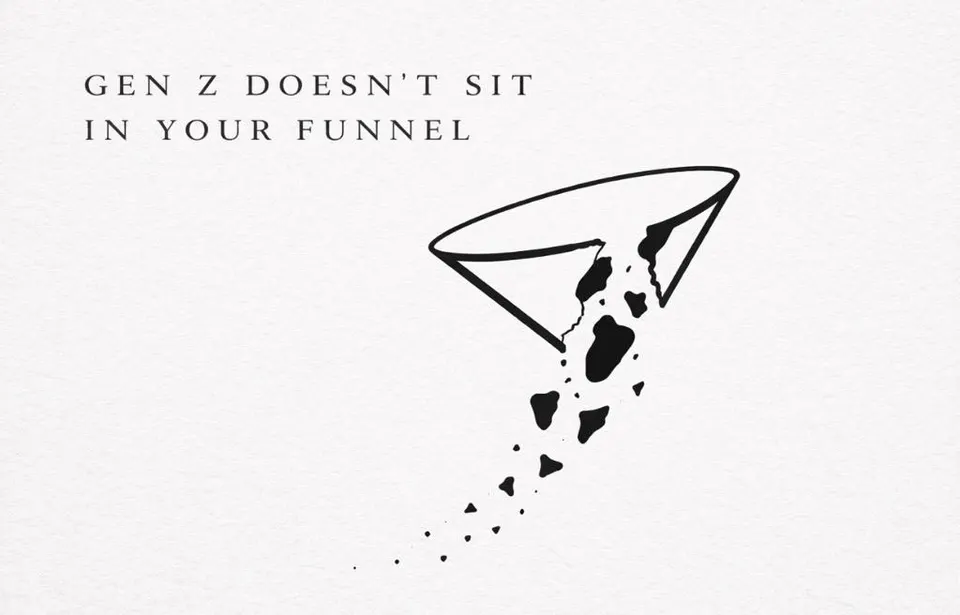
The conventional marketing paradigm is predicated on the funnel model: awareness at the top, consideration in the middle, and purchase at the bottom. This linear, predictable, and controllable methodology involves constructing a funnel, populating it with consumers, and then optimizing for conversion. However, this approach is increasingly ineffective with younger demographics, particularly Gen Z and, by extension, Gen Alpha. Their consumer behavior is dismantling the traditional funnel, enabling discovery, validation, and purchase to occur almost instantaneously, often within the same digital environment and at the same moment. Crucially, this shift is driven not by brands, but by their generational peers.
Gen Z Consumer Behavior: A Dynamic System, Not a Static Segment
Gen Z consumers are proactive participants, generating the content that fuels discovery, validating product merit through engagement, and determining which trends gain traction or fade. As reported by Vogue Business, Gen Z increasingly utilizes social media as a search engine, rapidly increasing search volume on platforms like TikTok over the past two years for product research stemming from online or real-world exposure. Rather than acting as a passive consumer segment, they function as a dynamic system, actively shaping demand in real-time.
Consequently, processes that once took weeks are now compressed into minutes. A product might surface in a video, garner validation in the comments, be remixed and reinterpreted by the community, and then be purchased, often without leaving the platform. This journey eschews the step-by-step funnel for a layered system where conversion is perceived as belonging, and it is the young consumers themselves, not the brands, who define the criteria for inclusion.
This trend appears to be extending to Gen Alpha. A PwC survey on Gen Alpha revealed that 97% of children aged 7-14 make purchasing decisions independently at least some of the time, with 61% citing social media as the primary influencer of their buying choices. This significantly surpasses peer influence and traditional channels such as television advertising. Brands are no longer the primary architects of culture; instead, culture is generated externally, and brands are subsequently integrated into it.
Adapting to Young Consumers Requires a New Strategic Philosophy
Companies encountering challenges with Gen Z’s consumer behavior often grapple with a speed deficit. They frequently perceive culture as an internal set of values rather than the dynamic operating system it truly is, rendering them ill-equipped to meet Gen Z’s rapid pace. Trends now emerge, peak, and disappear before traditional organizational systems can effectively respond. Merchandising cycles, approval workflows, and campaign planning timelines were conceived for an era of slower demand. Today, demand outpaces organizational processing capabilities, leading to cultural lag and missed market opportunities.
Kecia Steelman, CEO of Ulta Beauty, emphasized the imperative of keeping pace by engaging consumers in their preferred environments. She noted, “You have to be where the social activity is happening, especially with the younger consumer. You want to be a part of the conversation, and you have to really lean into social to be able to do that.” Ulta’s response included launching on TikTok Shop, acknowledging that discovery, commerce, and culture are now converging in a single, seamless experience.
It is impossible to control an inherently participatory phenomenon. The more rigidly a brand attempts to manage its narrative, the greater its disconnect from the culture that shapes demand. Neil Saunders, Managing Director of Retail at GlobalData, accurately characterized this transition: “Instead of gatekeeping insights, companies are choosing collaboration—a future-first approach that benefits not only the entirety of the industry, but the young people this industry serves too.”
Integrating Within the System Established by Gen Z
Gen Z and Gen Alpha represent the first generations to mature within environments characterized by constant content creation, immediate distribution, and decentralized influence. They do not delineate between audience and creator, product and content, or brand and community. In their context, these traditional distinctions dissolve, compelling brands to recalibrate their strategies to remain relevant.
Gen Z’s consumer behavior unequivocally demonstrates their disinclination to conform to the traditional marketing funnel, moving fluidly from awareness to consideration to purchase. To adapt, organizations must learn to build collaboratively with Gen Z, operating within the framework they have created. This necessitates a fundamental re-evaluation of organizational structures, prioritizing faster decision-making cycles, closer proximity to community sentiment, and empowered teams capable of real-time responses.
Most importantly, brands must embrace the paradigm shift where consumers are no longer passive segments to be targeted but active contributors to the cultural discourse. They dictate viral trends, influence product discovery, establish trust, and drive purchases, often concurrently. Instead of viewing them as the endpoint of a strategy, it is time to recognize them as the architects of the environment in which brands operate.
Business Style Takeaway: The traditional marketing funnel is obsolete for younger generations who experience discovery, validation, and purchase simultaneously through peer-driven social media ecosystems. Brands must shift from controlling messaging to participating in emergent culture, adopting agile structures and collaborative approaches to remain relevant.
Learn more at : www.forbes.com