

At the dawn of the 21st century, the landscape of soccer within the United States was characterized by a delicate yet promising state of development. Major League Soccer (MLS), having commenced operations in 1996, was still in the process of solidifying its financial footing and establishing a broader cultural presence.
The league’s early years were marked by significant challenges, including the unfortunate contraction of franchises like the Miami Fusion and the Tampa Bay Mutiny, underscoring its inherent vulnerability. On the international stage, the U.S. men’s national team had reappeared on the global scene after a prolonged period of relative obscurity, yet it was not yet recognized as a consistent contender on the world stage. Generally speaking, soccer remained a niche sport in the American consciousness, trailing considerably behind the established popularity of American football, basketball, baseball, and even ice hockey.
Despite these initial hurdles, the essential groundwork for sustained, long-term growth was being meticulously laid. A pivotal factor in establishing this foundation was the successful hosting of the 1994 FIFA World Cup in the United States. While the tournament did not immediately precipitate a widespread cultural revolution surrounding the sport, its enduring structural legacy proved to be critically important. This event directly paved the way for the establishment of MLS, spurred enhancements in athletic infrastructure, and fostered improved organizational frameworks within U.S. Soccer.
By the latter part of the 1990s, however, the initial wave of enthusiasm had begun to recede. The profound and lasting impact of the 1994 World Cup would only become truly apparent over time, as it subtly but significantly reshaped the developmental pipeline for American soccer talent. The appointment of Bruce Arena as the head coach of the U.S. men’s national team in 1998 represented a significant turning point. Arena introduced a level of tactical discipline, organizational acumen, and a crucial belief that the United States could indeed compete effectively on the international stage.
Under Arena’s guidance, the U.S. Men’s National Team (USMNT) adopted a pragmatic playing style, emphasizing a strong defensive structure and collective team cohesion. His tenure, which extended from 1998 to 2006, is widely regarded as one of the most influential and impactful periods in the history of American soccer.
Following the disappointing performance in the 1998 World Cup, both MLS and U.S. Soccer began to allocate more substantial resources towards player development initiatives. The inherent limitations of exclusively relying on the collegiate soccer system became evident, prompting the early establishment of dedicated youth academies and more structured developmental pathways for aspiring players.
Strategic programs, such as the ambitious “Project-2010,” were launched with the explicit aim of elevating the national team’s competitive standing on a global level. Concurrently, an increasing number of American players started seeking opportunities in European leagues. Talents like Clint Dempsey and Landon Donovan emerged as symbols of this heightened ambition, while seasoned goalkeepers Brad Friedel and Kasey Keller achieved notable success in some of Europe’s top-tier leagues. This exposure to international competition significantly enhanced the overall quality and professional standards within the national team setup.
The 2002 FIFA World Cup marked a watershed moment, as the U.S. team achieved a remarkable quarter-final finish, including victories over established powerhouses like Portugal and Mexico. This success dramatically bolstered the team’s credibility and reignited domestic interest in the sport, serving as validation for years of dedicated developmental efforts. The subsequent decision to retain Bruce Arena as coach ensured crucial continuity and stability. The U.S. team began to earn a reputation as a disciplined and formidable opponent, while consistent participation in tournaments such as the CONCACAF Gold Cup and the FIFA Confederations Cup provided invaluable experience against high-caliber opposition.
By the time the qualification cycle for the 2006 FIFA World Cup began, reaching the tournament had become an expectation rather than a hopeful aspiration. The squad featured a stable core of experienced players, including luminaries like Landon Donovan and Claudio Reyna, alongside emerging talents such as midfielder Michael Bradley. However, the tournament itself proved to be a disappointment, exposing certain tactical limitations and an over-reliance on past achievements. Despite this setback, Arena’s overarching impact remained profound.
He successfully established a strategic blueprint that effectively integrated players from MLS with those competing in Europe, thereby fostering a cohesive team identity. His successor, Bob Bradley, continued this trajectory by emphasizing discipline, physical conditioning, and accountability, thereby maintaining competitive standards while instilling a resilient team mentality.
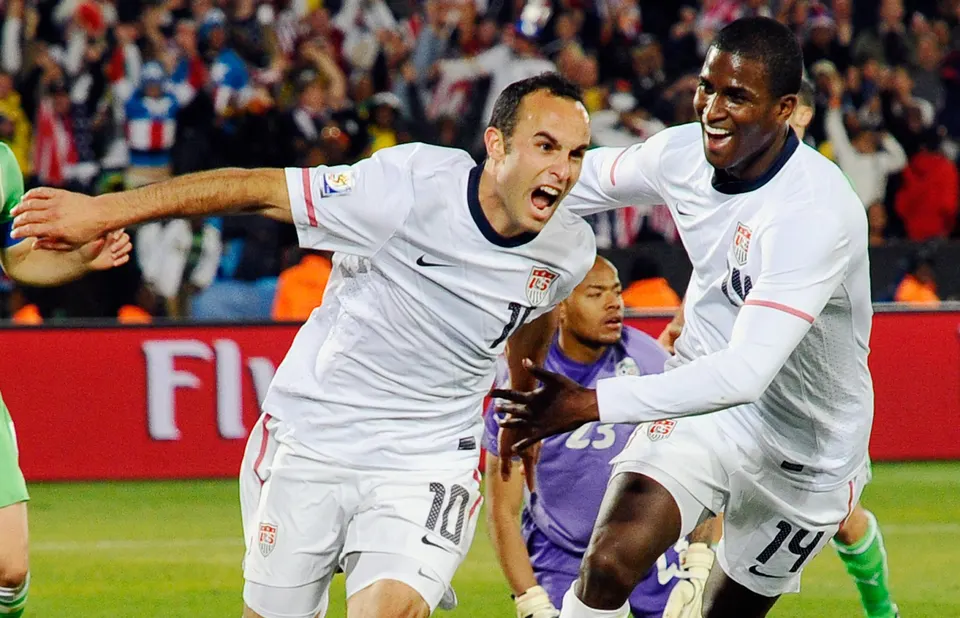
The USMNT’s impressive run to the final of the 2009 FIFA Confederations Cup, highlighted by a historic victory over world champions Spain in the semi-finals, further cemented the team’s growing prowess. By the 2010 FIFA World Cup, expectations had risen considerably. The team successfully navigated its group stage, notably with Landon Donovan’s dramatic last-minute winning goal against Algeria, but ultimately fell short in the Round of 16. This performance solidified the U.S.’s position as a competitive force, though not yet among the elite global soccer nations.
By the close of the decade, both Major League Soccer and the national team had experienced substantial growth. The league saw significant expansion, the construction of soccer-specific stadiums, and a marked increase in average attendance. Ultimately, the 2000s transformed American soccer from a precarious endeavor into a stable and credible entity. The organizational structures, elevated expectations, and distinct team identity forged during this transformative period continue to significantly influence the sport’s trajectory in the United States today.
Clemente Lisi is the author of “The World Cup: A History of the Planet’s Biggest Sporting Event, 2026 Edition."
Business Style Takeaway: The strategic investment in infrastructure, player development, and consistent coaching philosophies during the 2000s established a robust foundation for American soccer’s growth. This period demonstrates how sustained, long-term vision and adaptation can transform a niche sport into a credible international competitor, offering a valuable case study for other industries seeking to build market presence.
Original article : www.forbes.com