

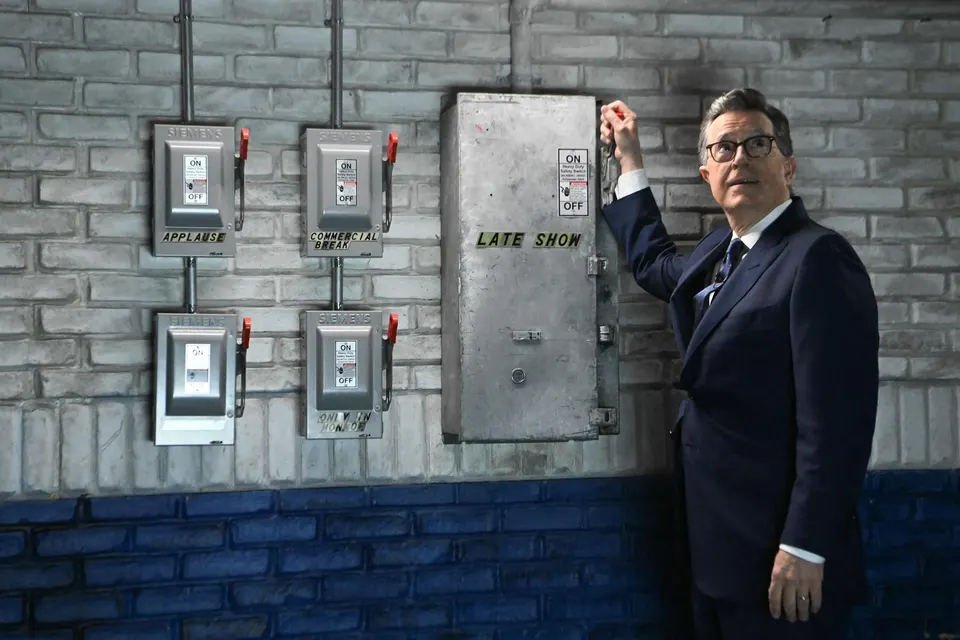
Paramount’s Chair of TV Media, George Cheeks, has indicated that despite the conclusion of “The Late Show with Stephen Colbert,” the network is not entirely exiting the late-night television landscape. Cheeks expressed optimism about the potential for original programming to continue filling the vacated time slot.
Currently, the late-night slot on CBS will be occupied by “Comics Unleashed with Byron Allen.” Notably, this arrangement involves Allen’s production company leasing the time block, with the financial responsibility resting on his shoulders for the initial season, which could be renewed based on mutual benefit.
For CBS, this arrangement presents an immediate financial advantage, as it significantly reduces the network’s expenditure in that programming block.
The Rationale Behind ‘The Late Show With Stephen Colbert’s’ Conclusion
The cessation of “The Late Show with Stephen Colbert” garnered considerable attention, particularly following Stephen Colbert’s remarks in July 2025 regarding Paramount’s $16 million settlement with President Trump concerning a “60 Minutes” interview with former Vice President Kamala Harris, which Colbert characterized as a “big fat bribe.”
This timing prompted congressional Democrats to seek clarification from Skydance regarding its potential influence on Paramount’s decision to end the show. Skydance, however, denied any involvement.
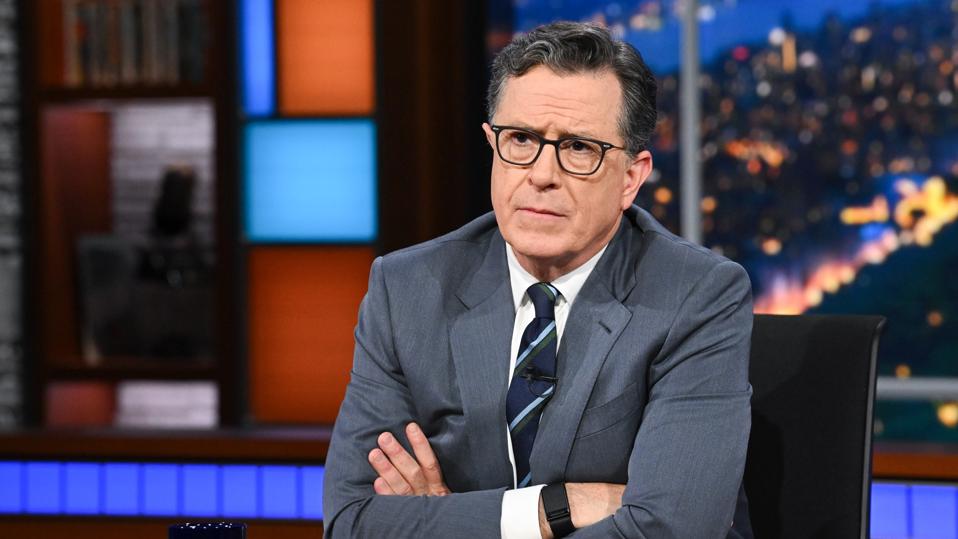
George Cheeks, who served as co-CEO of Paramount Global at the time the decision was made, cited financial considerations as the primary driver for the show’s scheduled conclusion. During a press conference in August 2025, after the finalization of the Paramount-Skydance deal, Cheeks explained to reporters, “The challenge in late night is that the advertising marketplace is in significant secular decline. We are huge fans of Colbert, we love the show, unfortunately the economics made it a challenge for us to keep going.”
He elaborated that “The Late Show” was incurring substantial financial losses, estimated to be in the “tens of millions,” though specific figures were not disclosed. The timing of this decision, which Cheeks attributed to contract renegotiation cycles for writers and producers, fueled public speculation and accusations of censorship against CBS, suggesting Colbert’s show was terminated due to his commentary.
On the final broadcast of the late-night program, the Committee for the First Amendment, representing over 3,000 entertainment and media professionals, released a video expressing gratitude to Stephen Colbert for his courage and pledging to uphold the principles he championed.
Understanding ‘Comics Unleashed’
The half-hour series, which originally debuted in 2006, is structured as a comedy panel show. It features comedians sharing jokes, but it deliberately avoids controversial political discourse. In response to inquiries about the program’s political content, Byron Allen stated on “CBS Mornings,” “No politics. You come, you laugh.”
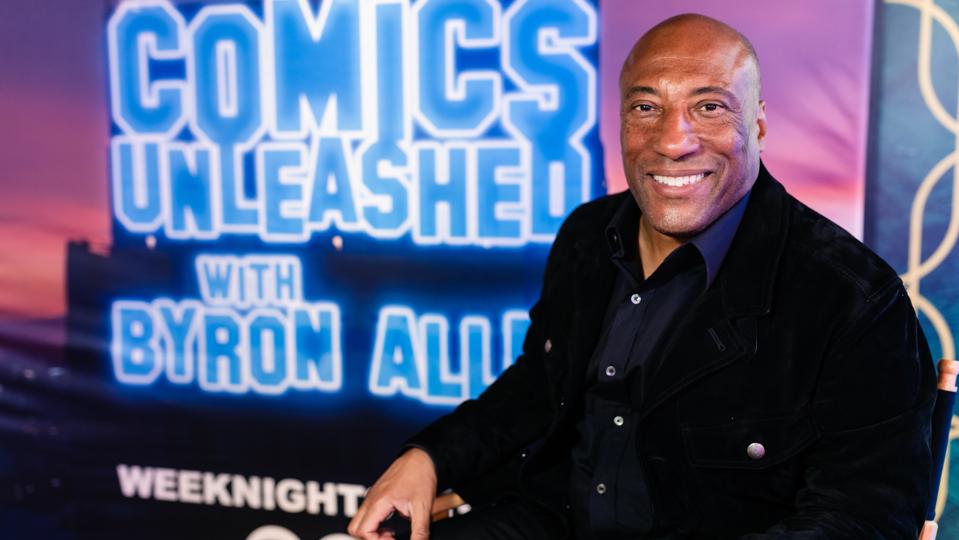
Allen’s objective is to foster unity through comedy, asserting that “Comedy can heal it all.” He believes “Comics Unleashed” can not only retain Colbert’s existing audience but also expand upon it. The show is set to commemorate its 20th anniversary in the fall of 2026.
Allen views the move to the former “Late Show” slot as a strategic business opportunity. While expressing admiration for Colbert and identifying as a fan, he recognized the situation as an “unfortunate event” and an instance where “this isn’t show business, it’s business show.” He then proposed a solution to CBS’s financial challenges.
Allen explained, “The networks are challenged because sports rights are very expensive. And ad dollars are shifting from linear to digital. So there’s some financial pressure. I’ve invested about a billion dollars buying ABC, NBC, CBS, and FOX affiliates… what I said to the networks, I said look, you’re spending about $150 million dollars on Colbert and the show after Colbert (After Midnight). You’ve decided to cancel both of them.”
He further elaborated, “My recommendation is that you don’t spend money on that time period now that you’ve decided to cancel them. At the end of the day, you’re throwing me an audience at 1:30 in the morning to my CBS affiliates that I own around the country, and I’m running half-hour infomercials… I said save your money, I will put my show Comics Unleashed on… they said, this is great. You’re going to save us from $150-170 million.”
Is CBS Concluding Its Late-Night Venture?
While CBS is open to extending its agreement with Allen, Cheeks has not entirely dismissed the possibility of reintroducing an original late-night program in the 11:35 p.m. slot.

At a press conference in April, he indicated that the network is “developing other ideas” for the timeslot. However, Amy Reisenbach, CBS Entertainment president, clarified that no projects are currently in “active development,” though discussions about future programming are ongoing.
Cheeks reiterated his belief in the late-night format, referencing his own career origins. He acknowledged, “I think the reality is that the reach is still there, but the reach is there primarily on YouTube, which is under monetized. So if we’re going to go back in that space, we have to go back in that space with a different financial model.”
The specific direction CBS might take remains uncertain. Meanwhile, YouTube is expanding its late-night offerings with the premiere of “Good Night with Ben Gleib” on Thursday, May 28, at 10 p.m. ET, billed as “The evolution of late night is here.” Another program, “Outside Tonight” hosted by Julian Shapiro-Barnum, is also slated for the platform.
This expansion on YouTube reflects the growing trend of viewers consuming late-night content via clips or full episodes post-broadcast. The decrease in live viewership for traditional television has directly impacted the advertising revenue crucial for supporting the substantial production costs of broadcast late-night talk shows.
The conclusion of “The Late Show” on CBS has led to frequent discussions about the relevance of late-night television. Colbert himself has pondered its existence, stating, “People like it. I enjoy doing it,” and extending the question to his peers.
Jimmy Kimmel offered a perspective on the viewership numbers, noting, “I look at the figures. The fact of the matter is, more people are watching late night television then, and I know everybody gets crazy, then when Johnny Carson—now obviously Johnny Carson had a lot of people watching one show—but we have a lot of shows with 30,000 people watching each one, right? And it adds up. People watch us on YouTube now. People have a lot of different options and yet they’re still coming to us.”
Cheeks is aware of this dynamic, which is why CBS is strategizing its next move in the late-night arena. Maintaining cultural relevance requires topical commentary, a distinct perspective, and an engaged audience interested in hosts’ and guests’ insights on current events. CBS aims to remain competitive in this space, provided the financial model aligns with the investment.
For the present, the “immediate profitability” of “Comics Unleashed” will guide the network’s strategy, as it transitions to a less controversial alternative within the broadcast late-night landscape.
Business Style Takeaway: CBS is strategically navigating the financially challenging late-night landscape by leveraging a leased-time model with Byron Allen’s “Comics Unleashed” to ensure immediate profitability. While pivoting away from expensive, high-production-value talk shows, the network remains open to future original late-night programming, emphasizing the need for a revised financial structure that aligns with current viewing habits, particularly the shift towards digital platforms like YouTube.
Based on materials from : www.forbes.com