

Consumer Spending Falters During China’s Key E-commerce Event
Beijing, China — Evidence continues to mount that China’s domestic consumption remains a critical bottleneck for its economic expansion. The recently concluded “618” online shopping festival, typically a bellwether for consumer sentiment and spending power, registered a significant deceleration in growth compared to the previous year.
Data compiled by retail analytics firm Syntun reveals that total online sales during the May 13 to June 18 period increased by a mere 4% year-over-year. This represents a stark contraction from the robust 15.2% growth observed during the 2023 iteration of the festival, underscoring a palpable slowdown in household expenditure. This trend contrasts with resilience seen in China’s export performance and advancements in technology-centric industries.
The subdued performance of the 618 festival adds to concerns following May’s retail sales figures, which declined by 0.6% from the prior year, marking the first such contraction since the nation transitioned away from its stringent pandemic-era restrictions in 2022.
“The divergence between high-tech/AI and property/consumption continues to widen in both industrial production and capital market data,” noted Hui Shan from Goldman Sachs in a recent analysis. “Top leaders’ domestic travel, recent policy communications, and our on-the-ground channel checks all suggest these trends will persist.”
In light of these developments, Goldman Sachs has revised its second-quarter real GDP growth forecast downwards to 4.5% year-over-year, from a prior estimate of 4.7%, while maintaining its full-year growth projection at 4.7%.
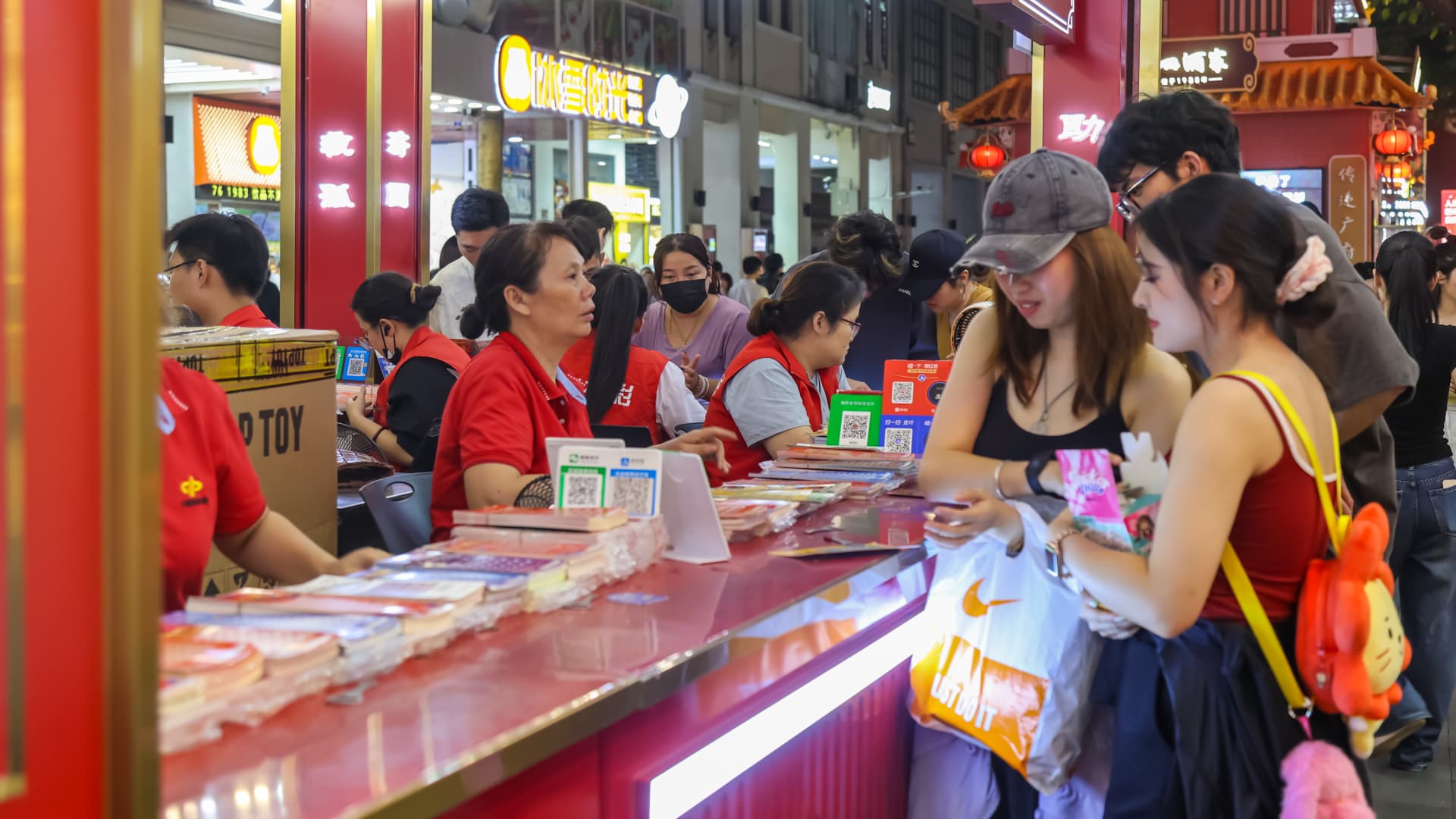
Shifting Consumer Priorities Amid Economic Headwinds
The 618 shopping event, despite significant promotional activities by major e-commerce players, failed to ignite substantial consumer demand. Syntun’s reported total sales figure of 934 billion yuan (approximately $137.86 billion), encompassing same-day delivery and group purchase orders, paints a picture of cautious spending.
Within the major e-commerce platforms, Alibaba’s Tmall reported the highest sales volume, followed by JD.com and ByteDance’s Douyin. However, even these giants experienced a notably subdued sales growth of just 0.9% for the overall segment, according to the Syntun report.
Intriguingly, the secondhand electronics market demonstrated remarkable growth, with ATRenew reporting an almost 80% increase in preowned product sales during the 618 period. This surge points towards a growing consumer preference for value-oriented purchases and cost-effective alternatives.
Last year’s 618 festival benefited from government subsidies that incentivized the trade-in of older electronics for new models. This year, consumer behavior has evidently shifted. Jacob Cooke, co-founder and CEO of WPIC, observed a decline in home appliance sales growth, which had previously seen astronomical increases due to subsidies, and instead noted a significant upswing in demand for home cleaning services, citing data from JD.com.
“Fashion did well, lifestyle, beauty, and health supplements are also doing really, really well. So people are taking good care of themselves, they’re looking good, and they want to go out and experience the world,” Cooke commented, highlighting a focus on personal well-being and experiences.
Additionally, there was noted growth in demand for artificial intelligence-related hardware, and an increased adoption of AI tools by online shopping platforms, which may have positively impacted brand profit margins. Nonetheless, the broader macroeconomic implications of AI adoption, particularly concerning potential job displacement, remain a subject of ongoing scrutiny and could present future challenges.
“AI-related job displacement could amplify macroeconomic headwinds and delay, if not derail, the recovery in the property market and household consumption,” warned Goldman Sachs’ Shan.
Business Style Takeaway: The decelerating consumer spending in China, as evidenced by the lackluster “618” festival, signals persistent domestic demand challenges that could impact global supply chains and corporate revenue forecasts reliant on the Chinese market. Investors and businesses must recalibrate growth expectations and explore strategies that cater to shifting consumer priorities towards value, services, and potentially experiences over discretionary goods.
Information compiled from materials : www.cnbc.com