

History does not record the initial valuations of groundbreaking companies; rather, it commemorates whether nations grasped the industrial revolutions they initiated.
The forthcoming SpaceX IPO may capture the financial headlines of the year, but the largest public offering in history is merely a marker of a more significant trend: the United States has entered a new epoch of the space economy. This era is defined by the convergence of private capital, agile software development, robust industrial capacity, artificial intelligence, and national strategy, leading to unprecedented speed, scale, and strategic advantage.
The financial media has been abuzz with the potential of the SpaceX IPO, and the anticipated figures are indeed expected to be substantial. However, the ultimate valuation will be far less significant than the developments that follow.
America has witnessed such pivotal moments before – the rise of railroads, oil, aviation, and the internet. Each of these created immense wealth, but more importantly, each fundamentally reshaped national power, industrial capabilities, military superiority, and even the very identity of the nation.
The more critical question is whether the nation recognizes the necessary subsequent steps and whether governmental policies will foster another century of American leadership, or if, through inaction, the system will become overly centralized, stagnant, and excessively financialized.
I was first apprised of SpaceX’s ambitious goals over two decades ago. Even years later, the Pentagon’s assumption was that space systems would remain as they had been for decades: designed, owned, and operated by the government, limited in number, slow to advance, and prohibitively expensive.
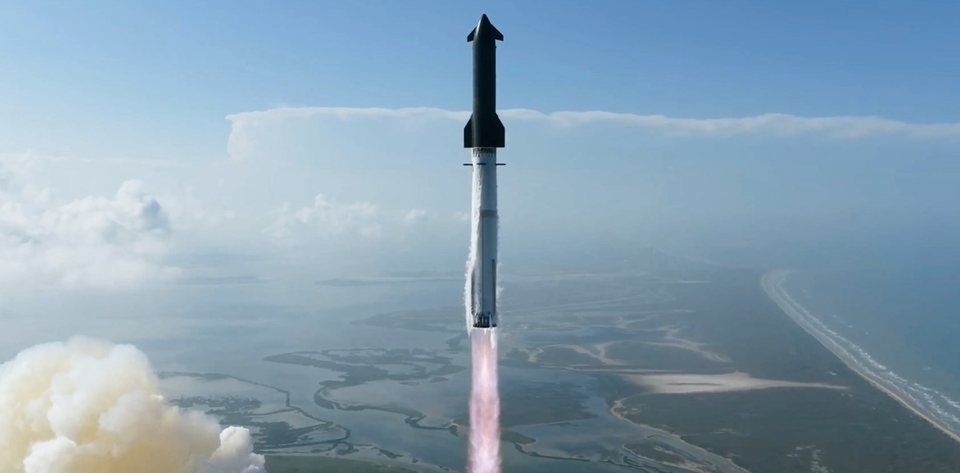
Today, governmental demand for space capabilities has shifted towards widespread, software-defined, commercially funded infrastructure operating at internet speeds. Retail investors, through their 401(k)s, now consider space investments a standard component of diversified portfolios. They understand, for instance, that a rocket company without a viable path to reusability is likely headed toward economic obsolescence.
Private capital, ranging from venture funds to large institutional investors, is now absorbing development risks at a magnitude previously borne almost exclusively by governments. Even the Defense Advanced Research Projects Agency (DARPA) is striving to keep pace with the velocity of commercial innovation. Defense Department leaders now confront a stark reality: government technology is no longer the primary driver of progress; commercial adoption is.
From SpaceX’s Starlink network to commercial satellite imagery, institutional lag is impacting every facet of the space economy. This lag is now even becoming evident in the realm of GPS, the essential, albeit invisible, infrastructure underpinning modern warfare, global transportation, and the precise timing of financial transactions worldwide.
GPS plays a critical role in synchronizing global financial markets, yet potential adversaries have already demonstrated the efficacy of exploiting its vulnerabilities. Consequently, maintaining GPS resilience will increasingly necessitate commercial augmentation. The federal government now acknowledges that the future is hybrid, involving a secure-by-design architecture that integrates commercial capabilities with specialized technologies that were once considered ancillary.
Approximately a decade ago, sufficient trends had emerged to allow for plausible forecasting. Some predictions proved accurate: Moore’s Law persisted, hardware became commoditized, satellite costs decreased dramatically, launch frequency accelerated, and private investment began to surpass government funding.
However, several key assumptions proved incorrect. Government adoption has lagged significantly behind expectations. More critically, the military and geopolitical significance of space has escalated far beyond even the most forward-thinking early proponents anticipated. Space is no longer solely about rockets and exploration; it has transformed into a critical economic and military infrastructure.
Even based on SpaceX’s broader financial disclosures, it is evident that the company’s satellite internet service, Starlink, is emerging as its primary revenue generator, surpassing revenues from reusable Falcon 9 rockets or Starship development. The broader space economy is only just beginning to mature.
Only a select few companies from this nascent period of the second space race will ultimately be historically recognized, and it is impossible to definitively identify them today. The titans of the oil and railroad industries eventually receded from prominence. The “Copper Kings” faded. Much of the early aviation industry dissolved or underwent significant consolidation. Even the Vanderbilt fortune has largely diminished. The same pattern is destined to unfold within the contemporary space industry.
The clear historical lesson is that a single dominant company rarely, if ever, dictates the entirety of an industrial future, nor should it. Government policy centered on a solitary firm risks fostering complacency, stagnation, and ultimately entrenching an ecosystem that loses its dynamism over time. Instead, the government must cultivate highly competitive space industrial ecosystems. Competitive procurement should be the standard approach for meeting national requirements, not the exception. Failure to do so risks the United States forfeiting the second space race, even with SpaceX’s current advantages.
Centralization, often termed “sole source contracting,” may appear more efficient in the short term. However, protecting incumbents and selecting permanent champions is precisely how industrial revolutions lose momentum and economies cease to evolve.
America’s enduring advantage has never stemmed from perfect planning. It has arisen from competitive dynamism, entrepreneurial risk-taking, robust capital markets, and a culture that celebrates disruption.
Family fortunes ebb and flow. Many of today’s prominent names will eventually fade from view. New entities, currently known only within niche engineering circles, may well define the next era. Therefore, for a moment, let us look beyond the immediate IPO figures and concentrate on what will genuinely secure American leadership for the coming century.
A new generation of space industry leaders is likely to emerge from advancements in AI-driven decision systems, autonomous operations, edge computing, cybersecurity, and software platforms that transform orbital infrastructure into real-time economic and military assets. These companies will thrive only within an environment characterized by rapid institutional adaptation and sustained competition.
History does not commemorate eras by their initial financial metrics. It remembers whether nations understood and adapted to the profound transformations occurring around them. We must preserve the cultural ethos, competitive landscape, entrepreneurial tolerance for risk, and strategic foresight necessary to cultivate the next generation of American industry.
Business Style Takeaway: The impending SpaceX IPO signifies a broader shift in the space economy, driven by private capital and rapid technological advancement. The true measure of this new era will be the nation’s ability to foster a competitive industrial ecosystem that sustains innovation and strategic advantage, rather than relying on a single dominant player.
Details can be found on the website : www.forbes.com