

CBS News leadership is facing heightened scrutiny following the dismissal of senior executives and established correspondents from the esteemed program “60 Minutes.” Accusations suggest a deliberate dismantling of the show, which has historically held the position of the nation’s top-rated news program for over five decades, according to Nielsen data.
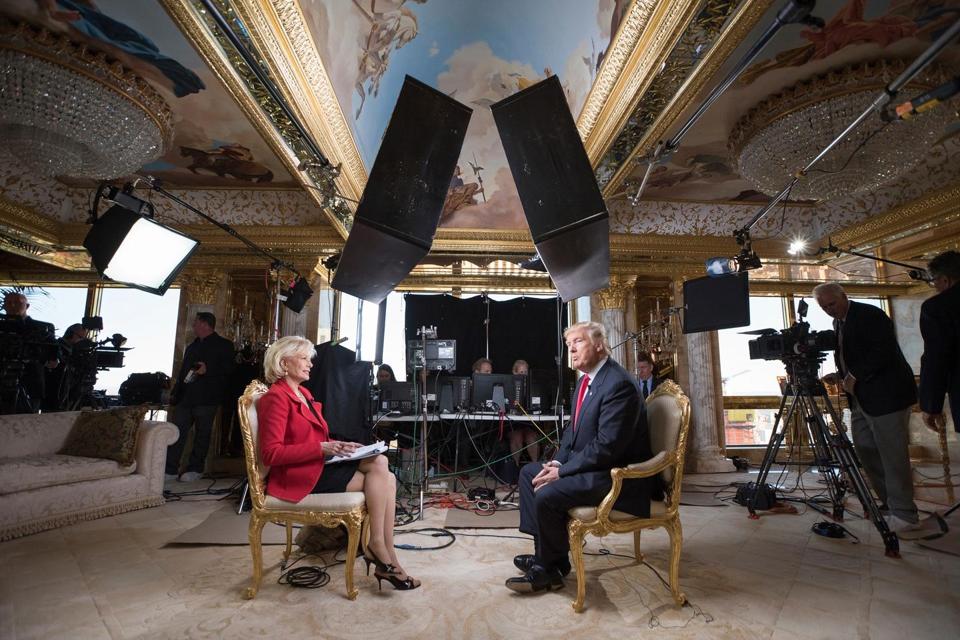
Historical Significance of “60 Minutes”
The inaugural broadcast of “60 Minutes” aired on September 24, 1968, featuring Mike Wallace and Harry Reasoner. Early segments included journalist Andy Rooney and an interview with then-Attorney General Ramsey Clark addressing police brutality, alongside an excerpt from the Academy Award-winning short film “Why Man Creates.”
During the 1979-80 television season, “60 Minutes” achieved its first No. 1 ranking in viewership, with Nielsen estimating that approximately one-third of American households tuned in each Sunday, surpassing popular shows like “Dallas,” “Three’s Company,” and “M*A*S*H.”
While the show secured the top spot for only one season in the 1980s, it remained a consistent presence within Nielsen’s top 10 for the entire decade. It frequently outranked contemporaries such as “Dallas,” “Magnum P.I.,” and “Dynasty,” establishing a record for the longest sustained run in the top 10 television programs.
From 1991 onwards, “60 Minutes” held the No. 1 position for three consecutive seasons, attracting a larger audience than “Roseanne” and “Cheers” during their peak popularity.
The advent of cable news significantly impacted broadcast news in the 2000s. Although “60 Minutes” did not reclaim the top overall program title that decade, a 2008 interview with then-President-elect Barack Obama and his wife Michelle garnered 25.1 million viewers, marking the most-watched episode since Nielsen began tracking individual episode viewership.
“60 Minutes” commemorated its 50th season in 2017, an anniversary shared only by NBC’s “Saturday Night Live.” By that milestone, the program had accumulated 20 Peabody Awards, 12 du Pont Awards, and a record 138 Emmy Awards.
An interview with correspondent Anderson Cooper and Stormy Daniels regarding her alleged affair with President Donald Trump drew 22.1 million viewers. This episode became the most-watched “60 Minutes” broadcast since the Obama interview and one of the highest-rated news programs of that decade.
In the 2025-26 season, “60 Minutes” averaged a weekly audience of 9.1 million viewers, representing a 9% increase year-over-year. Furthermore, over one-third of the American population engaged with the program at least once during the 2025-26 season across linear television and streaming platforms.
During the 2025-26 season, “60 Minutes” exceeded 2.5 billion digital views across various social media platforms.
Significant Achievement
The program has maintained its status as the highest-rated news program in America for an unprecedented 52 consecutive years.
Current Developments
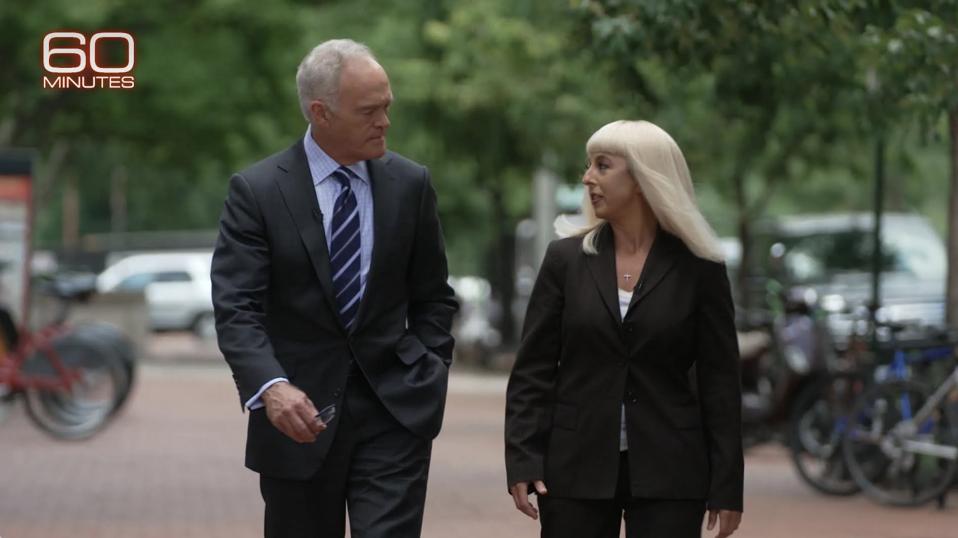
Last month, Weiss dismissed key personnel from “60 Minutes,” including executive producer Tanya Simon, executive editor Draggan Mihailovich, senior producer Matthew Polevoy, producer Guy Campanile, and journalists Maria Vega and Andrew Alfonsi. This action was reportedly undertaken with the stated aim of “building a show that thrives in the 21st century.” The situation intensified during a Monday staff meeting with the new executive producer, Nick Bilton, where longtime correspondent Scott Pelley allegedly voiced strong opposition to Weiss, asserting that she was appointed to dismantle CBS News and was actively pursuing that objective. Pelley was subsequently terminated the following day, leading to a public exchange with Weiss, during which Pelley accused her of pressuring him to incorporate “falsehoods and bias into a politically sensitive story.”
Critical Commentary
According to reports, Pelley stated to Bilton, “She has no qualifications for her job; you have slender qualifications for this job. The changes that she’s made at the ‘Evening News’ have been catastrophic, so why should we expect that any of this is going to be any better?”
Contextual Background
Prior to her role at CBS News, Weiss led the right-leaning media organization The Free Press. Her appointment at CBS occurred last year, subsequent to David Ellison, son of billionaire and Trump supporter Larry Ellison, acquiring the network’s parent company, Paramount, through his firm Skydance Media. Shortly thereafter, Ellison also purchased The Free Press for $150 million. As a condition for approving the Skydance merger, Paramount implemented measures to appease the Trump administration, including the termination of all Diversity, Equity, and Inclusion programs and the establishment of a bias ombudsman position at CBS News. The Ellison family has articulated a goal of restoring trust in journalism by prioritizing reporting that is “balanced and fact-based.” However, critics have highlighted Weiss’s limited experience and an editorial focus characterized by criticism of the political left, condemnation of “wokeness,” and advocacy for a pro-Israel stance. Since assuming leadership, Weiss has been responsible for several high-profile decisions, including hosting a controversial town hall event with Erika Kirk, widow of Charlie Kirk, and appointing Tony Dokoupil as the sole anchor for “CBS Evening News.”

Notable Contributions
“60 Minutes” has been the source of some of television’s most impactful investigative journalism. The program facilitated President Bill Clinton’s indirect admission of infidelity. In the 1980s, it played a crucial role in the exoneration of Lenell Geter, a young Black man wrongly imprisoned. In 2004, the show broke the story of prisoner abuse at Abu Ghraib prison in Iraq, becoming a defining journalistic moment of the Iraq War. The program has also featured interviews with Clint Hill, the Secret Service agent who was with President John F. Kennedy during his assassination; former Iranian president Mahmoud Ahmadinejad; Vladimir Putin; former President Richard Nixon following the Watergate scandal; Prince Charles; and Boris Yeltsin, who was a rising Soviet politician when he appeared on “60 Minutes.”
Further Information
Business Style Takeaway: The recent upheaval at “60 Minutes” signifies a critical juncture for legacy media outlets navigating evolving audience expectations and corporate pressures. The controversy underscores the delicate balance between modernizing content and preserving established journalistic integrity, with potential implications for talent retention and public trust in news programming.
Based on materials from : www.forbes.com