

The Asian Development Bank (ADB) has unveiled an ambitious $70 billion initiative designed to catalyze new energy and digital infrastructure across the Asia-Pacific region. While the program’s scope encompasses the entire region, projections indicate that Southeast Asia stands to gain the most significant uplift from this substantial investment.
Key components of the program include a pan-Asian power grid initiative aimed at interconnecting national and subregional electricity systems, alongside the development of an Asia-Pacific digital highway. These endeavors are strategically targeted to bridge the existing infrastructure deficit prevalent throughout the region, with the ADB setting a 2035 deadline for project funding completion.
“Energy and digital access will fundamentally shape the trajectory of the region’s future,” stated ADB President Masato Kanda in a recent release. He further elaborated that enhanced connectivity is paramount for establishing the robust systems required for Asia and the Pacific to foster growth, maintain competitive parity, and deepen interconnections. “By linking power grids and digital networks across borders, we can achieve lower costs, broaden opportunities, and extend reliable power and digital access to hundreds of millions of individuals,” Kanda added.
While the allocation of funds is broadly regional, financial and infrastructure experts posit that Southeast Asia is poised to be the primary beneficiary of the ADB’s connectivity drive. Greg Statton, Vice President and Chief Technology Officer for Asia Pacific and Japan at Cohesity, observed that the bank typically prioritizes developing member countries based on growth imperatives, project feasibility, and its established mandate, rather than solely on market scale.
Statton further elaborated that major economies like China and India, along with Japan, possess more mature domestic capital markets, extensive infrastructure financing channels, and greater fiscal capacity for self-funded large-scale projects. China, in particular, has largely transitioned away from ADB financing, relying instead on its own financial institutions and policy frameworks. India, despite continuing to receive considerable ADB funding, benefits from robust access to capital markets and a high volume of domestically financed projects. In contrast, Southeast Asia is characterized by a structural underinvestment in both energy interconnection and digital infrastructure, making it a more fertile ground for external capital deployment.
“This dynamic creates a more efficient environment for capital deployment, where each invested dollar can stimulate broader private sector engagement and accelerate regional integration,” noted Chasen Nevett, Managing Partner of Principal Investments at GMA Capital Partners.
Strategic Power Investments
Within Southeast Asia, countries such as Indonesia, Vietnam, and the Philippines are anticipated to receive the most substantial portions of the $70 billion allocation. This is attributed to factors including their population size, significant infrastructure requirements, and active project development pipelines, aligning with the ADB’s historical lending patterns and current strategic priorities.
While Malaysia and Thailand are also positioned to benefit, particularly as regional hubs for energy and data infrastructure, the incremental impact of ADB capital may be comparatively less pronounced given their more developed infrastructure bases within the Southeast Asian context, according to Nevett. Malaysia, for instance, boasts the most significant data center project pipeline in the region, accounting for approximately 60% of all proposed projects. Alongside Thailand, it is projected to lead data center demand in Southeast Asia by 2035.
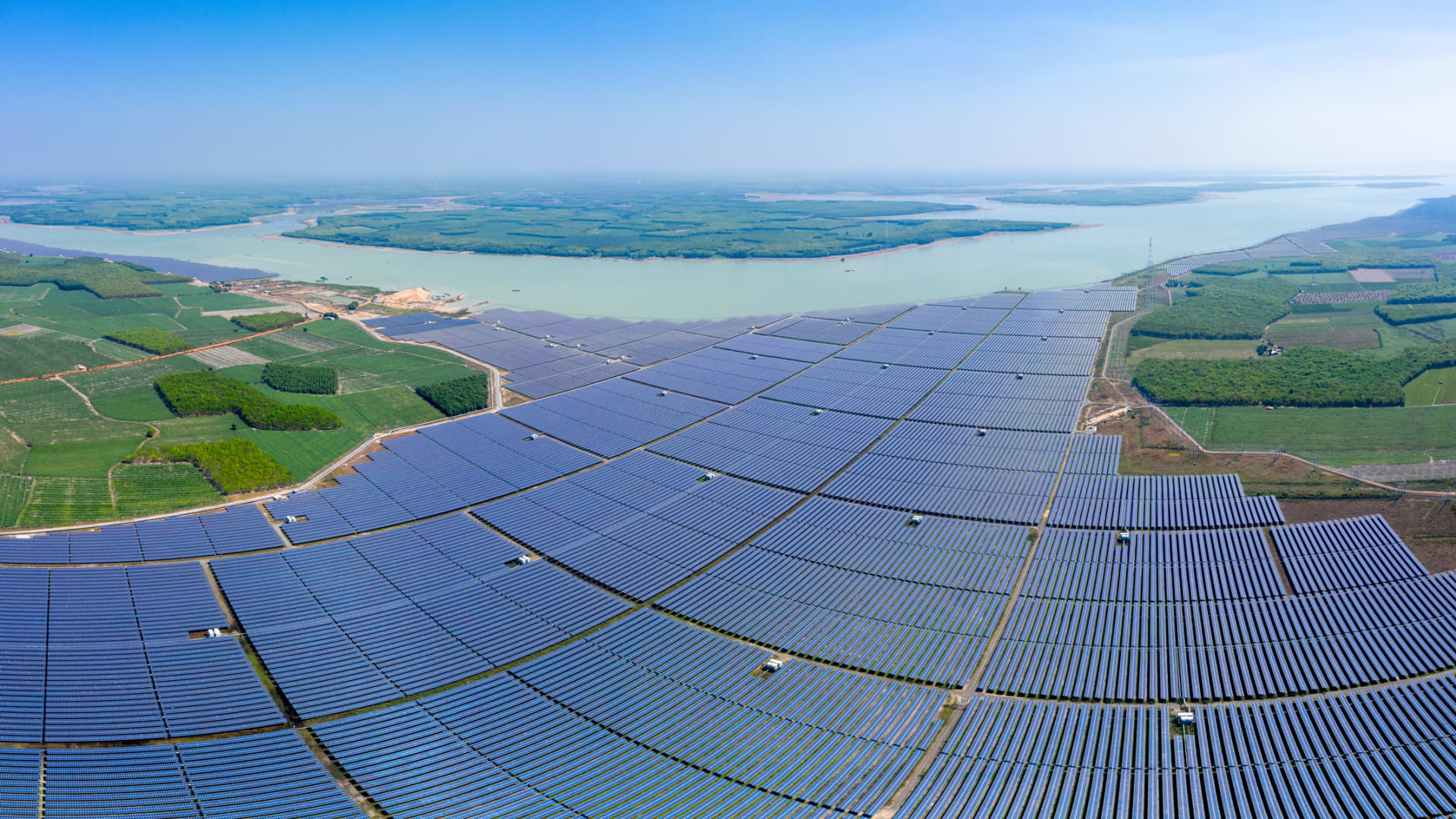
The ADB funding also presents a critical opportunity to establish interoperable transmission systems that facilitate cross-border clean energy flows, thereby enhancing grid reliability and reducing costs, according to Scott Dunn, Strategy and Growth Lead for Asia at AECOM. Markets including Laos, Thailand, Vietnam, and Cambodia possess abundant renewable energy resources, such as hydropower, solar, and wind, but currently lack the necessary cross-border transmission capacity to transport this clean power to major demand centers. Dunn highlighted that the ADB’s plans are “effectively designed to address these specific conditions.”
By 2035, the ADB aims to facilitate the integration of nearly 20 gigawatts of renewable energy across borders and establish approximately 22,000 circuit-kilometers of interconnected transmission lines.
Business Style Takeaway: The ADB’s substantial infrastructure investment signals a strategic pivot towards fostering greater regional economic integration and resilience in Asia. Investors and businesses should identify opportunities arising from enhanced digital connectivity and the transition to cleaner, more interconnected energy grids, particularly within the high-growth markets of Southeast Asia.
Based on materials from : www.cnbc.com