

The exhibit hall at Cape Town’s Good Life Show carried the distinct aromas of rooibos, baobab, and an indefinable scent of ambition. This May, Africa’s largest natural food tradeshow attracted hundreds of exhibitors, including kombucha makers utilizing indigenous South African botanicals, macadamia milk brands operating carbon-negative facilities, and moringa farmers who transitioned from providing porridge to orphaned children to establishing export-ready wellness companies. I spent two days interviewing these founders, and not one of them needed to mention a lion in their backyard.
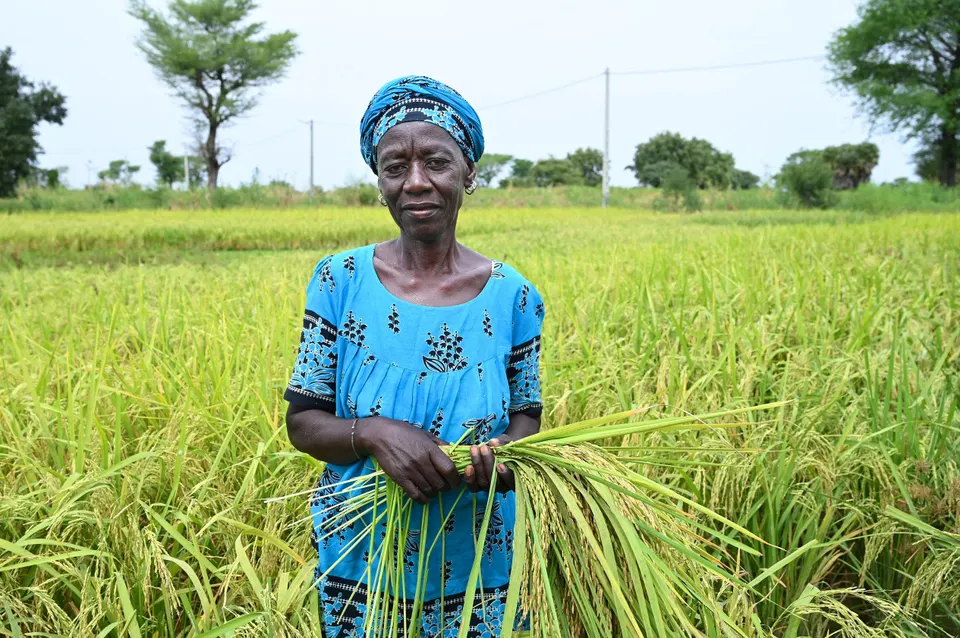
The enduring joke, and the fact that it still needs to be told, highlights why American companies and retailers frequently overlook Africa. The continent, home to the planet’s most abundant biodiversity of functional plant ingredients, a consumer market projected to exceed $2.5 trillion by 2030, and seven of the world’s twenty fastest-growing economies, is still viewed through a lens of risk and philanthropy rather than one of partnership and opportunity.
Cosmos Mamhunze, an International Trade Specialist and co-organizer of the Good Life Show, shared in an interview: “International buyers typically believe that Africa lacks quality and capacity. However, this show demonstrates the opposite. Africa is brimming with creativity, innovation, and capacity: farmers are present, eager to cultivate, and ready for export. Africa is poised for business with the global community.”
Why the Perception Differs So Greatly from Reality
Economic data presents a stark contrast to prevailing perceptions. Africa’s economies are forecast to expand by 4.2% in 2026, nearly doubling the projected growth rate of the United States. Ethiopia, in particular, is expected to achieve a growth rate of 9.2% this year, according to IMF projections. By 2030, the African middle class is anticipated to surpass 500 million individuals. Sixty percent of the continent’s population is under the age of 25. McKinsey estimates African consumer spending at $2.1 trillion for 2025, with an upward trajectory towards $4 trillion by the end of the decade.
The food sector mirrors this robust growth trend. Africa’s food and beverage market, valued at $346 billion in 2024, is projected to reach $567 billion by 2032, exhibiting a compound annual growth rate of 6.34%. The natural ingredients segment is experiencing even more rapid expansion, with the Africa Natural Food Flavors market growing at an annual rate of approximately 7.5% to 9.5% through 2035.
Despite this, over 60% of natural flavor formulations consumed in Africa are still imported, predominantly from Europe, India, and China. American food companies often source ingredients from Southeast Asia and South America, overlooking the unique offerings of Africa. Rooibos, for instance, is indigenous to a single mountain range on Earth; baobab trees yield fruit across a continent that accounts for 80% of global supply; and moringa, recently recognized by the World Health Organization as a plant vital for combating malnutrition, is still regarded as an exotic novelty in U.S. wellness markets.
What Ingredients is the World Missing Out On?
The founders I encountered at the Good Life Show were not presenting curiosities; they were introducing ingredient categories that the global wellness industry is only beginning to comprehend.
Jacques van Zyl, co-founder of Culture Lab Kombucha, crafts fermented beverages using South African botanicals such as buchu, honeybush, and confetti bush. “Plants possess immense power,” he stated in an interview, “and there is a vast untapped potential here. We have an exceptionally rich floral kingdom that remains underutilized and inaccessible. It’s regrettable that we are not leveraging it more extensively. Even within South Africa, our rich history with medicinal plants is gradually fading.”
Duhne Liebenberg, founder of Namo Health in Stilbaai, develops products from South Africa’s fynbos, a unique floral kingdom found exclusively in the Western Cape, comprising hundreds of species endemic to the region. “Fynbos plants are indigenous solely to South Africa,” she explained in an interview. “There is no other location globally where these flowers and plants originate.” Her top-selling products include Cancer Bush tea and Buchu, the latter traditionally used for bladder and urinary tract health, with a long history in Khoikhoi traditional medicine. “This represents a completely untapped market where consumers are only now beginning to recognize its benefits.”
Fiona Sephton, founder of StoneBridge Herbal, cultivates artemisia afra in the Eastern Cape, being one of only seven licensed growers of this plant in South Africa. It is recognized as the most widely used medicinal plant in Africa, possessing antibacterial, anti-inflammatory, antifungal, and antiparasitic properties, and is employed for respiratory ailments, gut health, and general immune support. Notably, it is entirely unavailable in the United States.
“This situation reflects a north-south disparity,” Sephton observed in an interview, “where botanicals originating from the Global South face significant barriers to entry into the Global North.” To introduce such a botanical into the European Union, it would require 40 years of documented use within European borders, a regulatory paradox that no African botanical can currently fulfill. “It’s impossible to even begin that documentation process now.”
Africa offers unique products such as rooibos, baobab, moringa, and alternative coffee varieties. My aim is for every U.S. buyer to recognize that Africa possesses a substantial portion of their potential sourcing needs.
Cosmos Mamhunze, Good Life Show co-organizer
Although most Americans may be unfamiliar with them, staple African ingredients like moringa and baobab are experiencing significant growth in the global market. The global moringa market was valued at $10 billion in 2025 and is projected to reach $25 billion by 2034. The baobab market is on a trajectory to nearly double, from $4.8 billion to $8.5 billion, over the same period. Companies that establish direct sourcing relationships with African farmers and founders now will gain control of supply chains that others will be competing for in the coming decade.
How Are African Entrepreneurs Already Solving for Scale?
One of the most persistent misconceptions regarding sourcing from Africa is its alleged inability to provide consistency or scale. The entrepreneurs I engaged with would strongly disagree.
Philip Moufarrige, founder of Giraf Macadamia and proprietor of the Amber Macs processing facility in Mpumalanga, collaborates with 150 macadamia farmers and hosts what he terms the world’s largest macadamia expo, featuring 180 exhibitors, 3,000 visitors, and 12 guest speakers annually. His facility is an approved supplier for Costco.
“Every one of our clients commends the exceptional quality of our product,” he stated in an interview. Regarding the establishment of a manufacturing business in South Africa, he commented, “I found the process remarkably easy and straightforward. There is a deficit of foreign direct investment, so when investments are made, they are viewed very favorably. I have encountered no issues or obstacles; it has been an exceptionally secure, positive, and pleasant experience.”
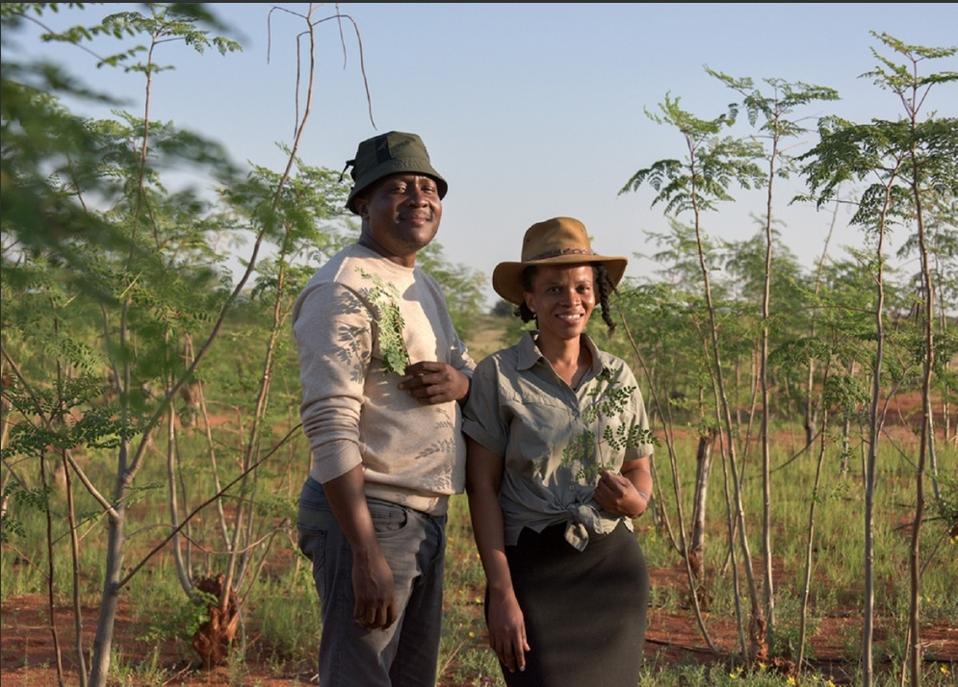
Tshepiso Seloane, co-founder of Mor-Nutritional Products, initiated her moringa company by distributing moringa seedlings to families, empowering them to manage their own nutrition. She has since distributed 3,000 moringa seedlings within her village community and is actively working towards establishing what she described in an interview as “an international wellness brand, a renowned, quality moringa brand.” She was among numerous entrepreneurs I met whose businesses seamlessly integrated social impact with potent plant-based nutrition.
The pharmaceutical industry initially derived its knowledge from the plant kingdom. This resource has always been available. Plant-based supplements can support daily life.
Richard Gaisie, co-founder of Akan Moringa
Faatin Bux, founder of Make Everything Beautiful in Cape Town, is a beekeeper specializing in the Western Cape honeybee, a species so unique that it cannot legally cross its provincial border without disrupting other hive populations. Her bees forage on fynbos. Addressing the establishment of a startup in South Africa, she offered a pragmatic perspective: “Entrepreneurs are resourceful. Free resources are accessible. The key is to engage with the right networks, identify appropriate avenues, and form strategic partnerships.” She further added, “We are a hospitable people who value community and are dedicated to serving the greater good.”
Francois Henning, co-founder of Boabos Tea and Uplift Kombucha, views Africa’s innovative approach as a strength rather than a limitation. “In Africa, we are compelled to redesign products to suit our markets, which often have limited disposable income. This necessitates finding novel methods to ensure affordability,” he explained in an interview. “This fundamentally alters our product development methodology.” This imperative for affordable innovation, maximizing the value derived from a single ingredient across multiple product forms, aligns precisely with the current demands of the global wellness market.
What Would It Actually Take to Change The Demand for African Products?
Marie-Louise Oosthuizen, co-founder of Two in a Bush, produces rooibos cordial from the Cederberg region, the sole location on Earth where rooibos grows, possessing geographic protections comparable to Champagne. Naturally caffeine-free and rich in antioxidants, her rooibos cordial is endorsed by the South African Diabetic Council. “It should be utilized in its most natural form,” she recommended in an interview. “It is produced by exceptional individuals. Simply enjoy it.”
Pieter Coetzee of MannaBrew crafts a caffeine-free coffee substitute from mesquite, an invasive species that is encroaching on Northern Cape farmland, effectively transforming an ecological challenge into a blood-sugar-stabilizing superfood product. Thabi Hlela of African Alabaster Botanical Skincare incorporates marula and shea butter into formulations that have successfully treated acne and reversed early signs of aging in clients who had previously explored pharmaceutical alternatives. “Africa is the source of most authentic ingredients,” she stated in an interview. “Here, individuals own farms and cultivate these oils.”
The ingredients are available. The entrepreneurs are in place. Consumer demand, both within African domestic markets and globally, is well-documented and accelerating. What remains absent is the American retail buyer willing to engage rather than dismiss the potential outright.
The ingrained perception of Africa as a continent defined by need, rather than by its abundant supply, has resulted in a decade-long sourcing advantage being missed by U.S. companies. The founders present at the Good Life Show are forging ahead, unhindered by this outdated perception.
Brands that act decisively now will demonstrate significant foresight in five years. Those that hesitate will spend those same five years justifying why they are paying a premium for ingredients that their competitors are sourcing directly from the cultivators.
Business Style Takeaway: Western businesses continue to underestimate the African continent’s potential in the natural ingredients and wellness sectors, overlooking its rich biodiversity, growing consumer market, and innovative entrepreneurs. This oversight presents a significant opportunity for early movers to establish direct sourcing relationships and gain a competitive advantage in a rapidly expanding global market.
Details can be found on the website : www.forbes.com