


The current proliferation of data center ventures, driven by the burgeoning demand for AI infrastructure, encounters a significant operational hurdle: the intricate and time-consuming process of setting up and managing these facilities. Beyond the acquisition of essential hardware like GPUs, network switches, and storage, the critical phase of system configuration, operational deployment, and customization for diverse client needs can extend for months. This delay directly translates into increased costs, as expensive hardware remains idle, impacting time-to-market and profitability.
Addressing the Operational Bottleneck
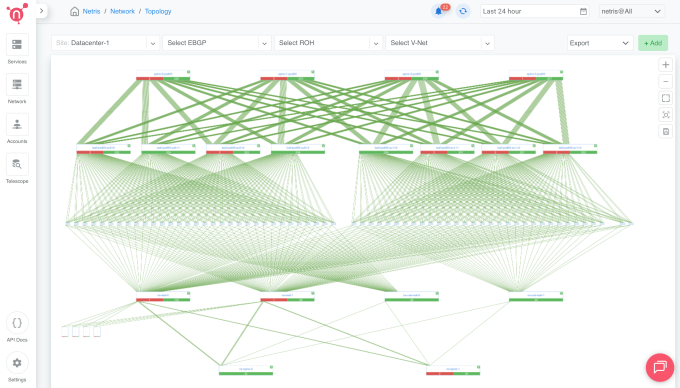
Network automation startup Netris positions itself as the solution to this pervasive challenge for “neocloud” operators. The company offers a software-based approach that integrates with network switches, complemented by a platform designed to automate the setup, configuration, and ongoing operations of data centers. This automation significantly accelerates the deployment timeline. Furthermore, Netris’s platform provides network abstraction, enabling flexible hardware configuration changes and implementing hardware-layer isolation for multi-tenancy, thereby allowing neoclouds to securely serve multiple clients concurrently.
This offering addresses a gap largely overlooked by smaller players. Historically, data centers have been the domain of major infrastructure providers such as Equinix, Digital Realty, and hyperscale cloud giants. These entities possess the resources—both in terms of engineering talent and in-house development capabilities—to manage complex network configurations and multi-tenancy solutions. Smaller neocloud businesses, however, typically lack these extensive resources.
The Hardware-Accelerated Approach
Alex Saroyan, CEO of Netris, explains the limitations of traditional software-defined networking (SDN) in the context of high-volume AI workloads. “As a GPU cluster operator, you need to make configuration changes to every link, every day. At traditional data centers, they were using something called SDN [software-defined networking] to do this, but SDN is falling short, because it’s a software technology,” Saroyan stated. He emphasizes that for AI applications, where traffic volumes are immense, solutions must be hardware-accelerated. “For AI, software is not okay, because the amount of traffic is so high, everything must be hardware accelerated. So you need something like SDN, but completely hardware accelerated. This is what we do, and this is what we’ve been doing for eight years.”
Market Validation and Funding
Netris’s platform is designed to be vendor-agnostic, supporting standard networking equipment compatible with both Nvidia and AMD server architectures commonly found in data centers. This flexibility has garnered significant industry attention. Notably, Nvidia, impressed by an early demonstration of Netris’s capabilities, has been a proponent, recommending the company to its clients. Currently, Netris is deployed in over 35 GPU clusters globally, supporting approximately one million GPUs across prominent clients including Lightning AI, Foxconn, Visionbay, Hewlett Packard Enterprise, TensorWave, and Telus.
Building on this market traction, Netris has secured $15 million in Series A funding, led by Andreessen Horowitz. Interestingly, the company emphasizes that its core technology does not rely on generative AI. Instead, it utilizes proprietary algorithms developed over eight years for automation and operational configuration. Saroyan clarified, “We started way before AI. We understood the challenge early on, and we started developing this algorithm early on. AI is not deterministic, right? Sometimes it likes to do things on its own. It’s good for creative work, but for changing many thousands of switch configurations, you don’t need to be creative. You need to be very persistent and repeatable.”
Guido Appenzeller, a partner at Andreessen Horowitz, will join Netris’s board. The company plans to allocate the new capital towards expanding its engineering and sales teams, broadening support for additional hardware vendors, and further refining its algorithmic capabilities.
Business Style Takeaway: Netris’s success highlights a critical market need for operational efficiency in the AI infrastructure sector, demonstrating that specialized, non-AI-driven automation can unlock significant value. For investors, this underscores the opportunity in infrastructure enablers that address the complex hardware and network challenges of high-performance computing, rather than focusing solely on the AI models themselves.
Details can be found on the website : techcrunch.com