

Federal Reserve Chairman Kevin Warsh’s initial major policy adjustments signal a significant, albeit subtle, transformation in the central bank’s operational framework. The establishment of specialized task forces dedicated to re-evaluating virtually every facet of monetary policy formulation and execution underscores an ambitious agenda for institutional introspection.
Following his inaugural policy meeting, Warsh unveiled a comprehensive initiative comprising five distinct task forces. These groups are poised to leverage both internal Federal Reserve expertise and external insights to dissect and reimagine existing practices.
This undertaking represents a profound examination of the foundational elements that define contemporary monetary policy. Observers note that no recent Federal Reserve chairman has initiated a project of comparable scope and ambition.
The mandate for these task forces is broad, encompassing a review of the Fed’s communication strategies, the economic data utilized for policy decisions, the prevailing understanding of inflation and its drivers, the burgeoning impact of technologies such as artificial intelligence, and a critical assessment of the Federal Reserve’s $6.7 trillion balance sheet, including potential strategies for its reduction.
Warsh articulated the task forces’ mission as commencing “with first principles, asking hard questions, examining current practice, considering alternatives, and ultimately proposing next steps for policymaker consideration.” He further emphasized that each group will serve a “clear-eyed” objective, ensuring the Federal Reserve remains “fit for purpose, and focused on the future.”
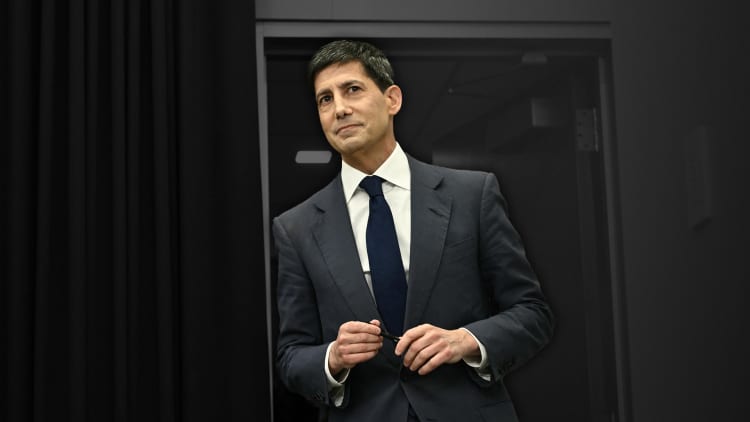
Warsh’s announcement of these task forces was characterized by both deliberate emphasis and a noticeable departure from his prior critical rhetoric concerning the central bank. This shift in tone, from previous calls for “regime change” and complaints of a “credibility deficit,” to expressions of being “incredibly impressed” with the institution’s traditions, suggests a strategic move towards consensus-building and internal reform.
This evolution from a potentially contentious stance to a more collaborative approach has been described as a “regime change, but in a velvet glove.” The comprehensive review of core operational aspects, from communication protocols to data interpretation and balance sheet management, indicates a substantial potential for structural adjustments.
For seasoned Federal Reserve observers, Warsh’s measured approach is consistent with established methods of institutional change. As former central bank Vice Chair Roger Ferguson noted, the creation of task forces is a recognized mechanism for building consensus, though he cautioned that certain changes might require careful consideration.
Initiating Reform
Loretta Mester, former President of the Cleveland Fed, brings direct experience with Fed reform initiatives, having served on a communications subcommittee previously. She acknowledges that while the subject areas under review are not entirely novel, Warsh’s structured and potentially accelerated timeline distinguishes this effort.
“All the things he’s looking at are things that the Fed has looked at. But he’s organizing the work, and I think he’s putting it on a faster than typical timeframe for some of these projects that the Fed has undertaken before,” Mester observed. “So, I think this is all good to be studying. Of course, we’ll have to see what then the recommendations are, and what changes he wants to make.”
One of the most tangible shifts has been in the post-meeting statement. Stripped of much of its previous boilerplate language, the statement now prioritizes the policy action, a return to a format preceding March 2009. Mester supports the removal of redundant phrasing but suggests further clarification on the Fed’s “reaction function” – the framework guiding its response to economic developments – may be necessary.
“I like the fact that they got rid of a lot of what we would call boilerplate language that really wasn’t serving any purpose anymore,” she stated, likening the situation to a “Hotel California problem” where outdated language proved difficult to remove. This “purging” is seen as a necessary step for improved clarity.
Further areas slated for review include the potential discontinuation of the “dot plot” forecasts and a re-evaluation of the press conference format that has been standard for the past fifteen years.
Broader Areas of Examination
The task forces will address a wide spectrum of the Federal Reserve’s operational activities. The significant expansion of the Fed’s balance sheet, a consequence of interventions during the 2008 financial crisis and the 2020 pandemic, will be a key focus. The methodology for assessing inflation, particularly in light of persistent overshoots and the earlier “transitory” inflation assessment, will also undergo scrutiny. Emerging technologies like artificial intelligence and their economic implications, alongside a comprehensive review of data analytics employed in economic forecasting, are also on the agenda.
Rick Rieder, Chief Investment Officer of BlackRock’s Global Fixed Income group, hailed the chairman’s approach as ushering in “a new era of monetary policy in the United States.” He anticipates that enhanced clarity and rigorous examination of complex economic factors will bolster confidence in the achievement of policy objectives.
“Building a sense of confidence in achieving monetary policy targets will only be enhanced by an impressive consideration of complex subject matter that could be very influential on the economy and Fed targets going forward,” Rieder commented. “So, this time is different, we are hearing about a different philosophy, different tools, and potentially a very different policy ethos.”
Mester underscored the importance of articulating clear policy frameworks. “It doesn’t have to be numerical, doesn’t have to be very prescriptive, but to get a sense of kind of what are they looking at, what kinds of things are going to persuade them one way or the other,” she explained. “I think that’s something that we want our central bankers to be able to articulate to us. Otherwise it’s sort of ‘trust me,’ and ‘trust me’ is not good communication.”
Business Style Takeaway: The Federal Reserve’s comprehensive review under Chairman Warsh signals a proactive effort to modernize its policy toolkit and communication strategies in response to evolving economic landscapes and technological advancements. This fundamental reassessment has significant implications for global investors seeking greater predictability and transparency in monetary policy decisions, potentially influencing asset allocation and risk management strategies.
According to the portal: www.cnbc.com