

The Strait of Hormuz experienced a brief reopening, yet a more enduring threat to global maritime commerce is steadily intensifying. An escalating number of aging tankers and cargo vessels, operating as a “shadow fleet,” are not only circumventing U.S. sanctions but are also engaging in the sabotage of subsea cables with alarming impunity, thereby disrupting international trade and data transmission. Russia and China are leveraging these vessels to sever critical infrastructure while maintaining a veil of plausible deniability, exploiting existing loopholes in international maritime law that currently hinder the United States and its allies. Consequently, a coordinated effort among law-abiding nations is imperative to establish robust legal and technical frameworks capable of neutralizing the shadow fleet and safeguarding subsea cables and vital cross-border data flows.
What is the Shadow Fleet?
The shadow fleet is characterized by its utilization of older vessels, often with opaque ownership structures and frequently operating under false flags, to evade sanctions and engage in illicit maritime activities. Key indicators of their operations include the disabling of automatic identification systems (AIS), broadcasting of false positional data, engaging in ship-to-ship cargo transfers, employing flags of convenience, and frequently re-flagging and renaming vessels. China has also been observed employing analogous tactics with its state-owned fishing fleets. Vessels associated with the shadow fleet have been implicated in or are suspected of involvement in several recent subsea cable-cutting incidents, notably in the Baltic Sea and near Taiwan. For instance, in October 2023, the Hong Kong-registered and Chinese-owned vessel Newnew Polar Bear allegedly dragged its anchor, causing damage to the Balticconnector pipeline and associated cables before docking in Russia, with China attributing the incident to storm conditions. Similarly, in November 2024, the China-flagged bulk carrier Yi Peng 3 reportedly severed two Baltic Sea cables while dragging its anchor, with allegations suggesting its Russian captain acted on intelligence from Russian naval reconnaissance. In early 2025, the Belize-flagged, Russian-operated Vasili Shukshin was observed loitering for an extended period near Taiwan, concurrently with the Cameroon-flagged, Chinese-crewed Shunxin-39, which severed a cable off Taiwan. The Shunxin-39 had reportedly utilized multiple AIS identities and vessel names. France has recently seized at least five Russian shadow fleet vessels, though legal complexities have thus far impeded prosecution efforts.
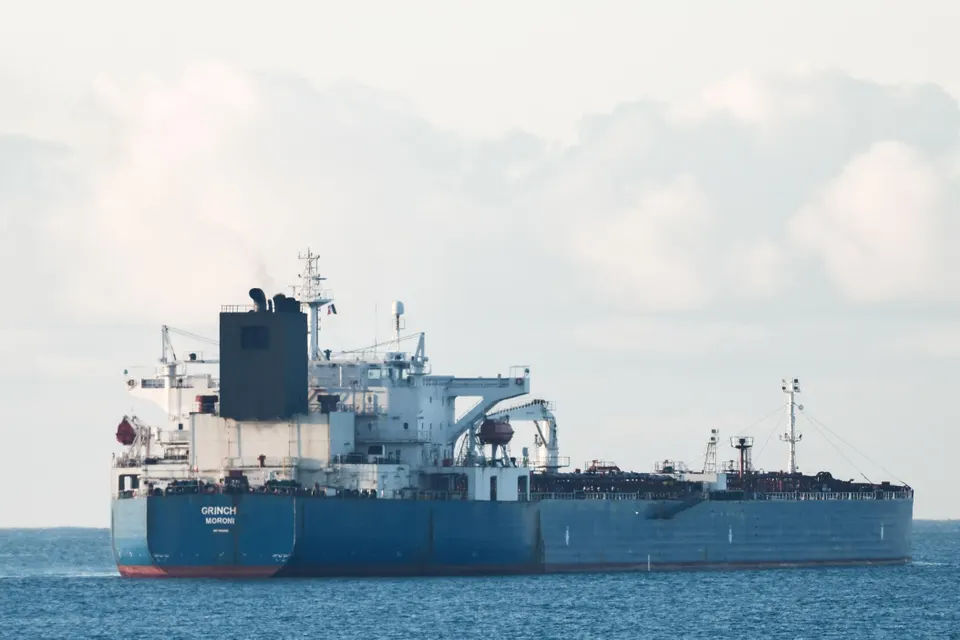
How Russia and China Are Exploiting Gaps In International Law Using the Shadow Fleet
The incident involving the vessel Eagle S exemplifies the challenges faced by NATO allies in confronting the shadow fleet due to exploitable gaps in international maritime law. On Christmas Day 2024, this Cook Island-flagged vessel, linked to Russia’s shadow fleet, severed an electricity cable connecting Finland and Estonia and damaged four data cables within Finland’s exclusive economic zone (EEZ). Estonia declined to investigate or board the vessel, citing an interpretation of the UN Convention on the Law of the Sea (UNCLOS) that exempts vessels in international waters from investigation. Finland subsequently invited the vessel into its territorial sea and conducted a boarding, but a Finnish court later ruled the boarding unlawful, asserting the cable cutting occurred outside Finnish territorial waters. This decision is currently under appeal.
Russia and China are strategically employing “lawfare” – the deliberate exploitation of legal ambiguities – to impede efforts by law-abiding nations to curtail the shadow fleet’s activities. A fundamental issue lies in the disconnect between where violations occur and where enforcement jurisdiction resides, leaving victim states and cable owners with limited recourse for investigation or prosecution. The primary international convention governing the protection of submarine cables dates back to 1884, predating the digital age. UNCLOS primarily grants enforcement jurisdiction for the protection of submarine cables only within a state’s territorial waters. Beyond this, the authority to prosecute cable cutting incidents typically rests with the vessel’s flag state. However, many states that offer “flags of convenience” lack the infrastructure or the political will to effectively prosecute maritime crimes committed by vessels registered under their flag. To evade apprehension, shadow fleet vessels frequently resort to tactics such as disabling their AIS transponders after passing over cable routes and anchoring in international waters to prevent boarding. Some have also been observed utilizing naval escorts. Furthermore, existing UN mechanisms are inherently ill-equipped to address the threat of cable sabotage, particularly given the influence of Russia and China on the Security Council. The legal landscape concerning subsea cables is further complicated by the significant role of the private sector. Major content providers and hyperscalers, including Google and Meta, own approximately 60% of the world’s major subsea cables, and the legal framework regarding their liability for damages and their states’ responsibilities in protecting these assets from adversarial actions remains unclear.
How Law-Abiding States Can Counter the Shadow Fleet
Law-abiding nations must collaborate to establish unified legal frameworks that enable a more agile response to shadow fleet provocations. A crucial initial step involves achieving a consensus on international legal interpretations regarding boarding protocols. When a vessel intentionally manipulates its AIS data, changes its name or flag, such actions should be considered sufficient grounds for suspecting it lacks legitimate nationality. Under Article 110 of UNCLOS, vessels without nationality are subject to the jurisdiction of any state’s warship, allowing for boarding to verify documentation. The state whose warship conducts the boarding is then obligated to formally determine the vessel’s statelessness by cross-referencing its claimed flag with the registry of the purported flag state. If confirmed as stateless, the vessel may be subject to seizure, enabling the lawful disposal of its cargo to legitimate purchasers.
To empower coast guard authorities with immediate law enforcement capabilities within their exclusive economic zones (EEZs), nations such as Denmark, Australia, and New Zealand have enacted cable safety zone legislation. UNCLOS Articles 56 and 60 permit such legislation, provided it is narrowly defined to protect a state’s sovereign rights within its EEZ and does not impede freedom of navigation. While the adoption of safety zone laws requires domestic legislative action by individual states, a coordinated approach among law-abiding nations is essential to prevent legal fragmentation and avoid creating jurisdictional gaps. Some observers express concern that the implementation of cable safety zone legislation could provoke reciprocal measures from China against European-flagged vessels in the South China Sea. However, given China’s existing expansive claims of jurisdiction over nearly the entire South China Sea, the incremental risk associated with such legislation is considered minimal.
On a practical level, states can implement cooperative measures to curtail the shadow fleet’s operations. The U.S. Treasury Department’s designation of 183 oil tankers in January 2025, coupled with similar actions by the United Kingdom and the European Union, significantly reduced shadow fleet loadings at Baltic terminals by March 2025, although Russia subsequently adapted its strategies. Nations can also counteract the illicit financial mechanisms associated with flags of convenience by leveraging financial intelligence to trace flag registration payments, thereby highlighting risks for insurers and financiers and encouraging the rapid de-flagging of vessels engaging in AIS manipulation. Diplomatically, states can exert pressure on flag states to establish transparent, verifiable online registries for vessel flags. The Guiding Principles for Underwater Infrastructure Defence Exchanges, an initiative involving 17 nations announced during the recent Shangri-La Dialogue, offers a collaborative framework for enhancing the security of subsea cables.
How States Can Work With the Private Sector to Counter the Shadow Fleet
Governments can forge closer partnerships with the private sector to enhance the tracking and neutralization of the shadow fleet. Cable operators and major cloud service providers already possess the capability to detect anomalies within their infrastructure. By integrating public and private sector resources, an effective architecture can be developed to channel this intelligence to the relevant authorities for action. States and private entities could pool resources, such as satellite imagery and maritime domain awareness data, to monitor the behavior patterns of the shadow fleet. This collaboration could also involve quantifying violations and associated losses, and establishing a public database of suspect vessels to empower the private sector and even individuals to identify and report the shadow fleet and the states supporting their operations. A formalized mechanism could be established to embed cleared security personnel within major cable consortiums, defining a common threshold for suspicious activity, and creating a direct, real-time data feed into NATO’s operational commands, such as Baltic Sentry and Nordic Warden, which are specifically tasked with protecting subsea cables.
Arguably, the most potent countermeasure available to the United States and its allies involves restricting insurance access for the shadow fleet. A significant portion of the insurance for Russian shadow fleet vessels is underwritten through European markets. Furthermore, the majority of global reinsurance operations are connected to either the U.S. or European financial systems. By engaging with the international group of Protection and Indemnity (P&I) clubs, states can advocate for a unified, real-time blacklist of vessels with a history of AIS manipulation or other legal infractions, drawing information from NATO’s Baltic Sentry and Nordic Warden operations. Denying insurance coverage would effectively sever market access for the shadow fleet, allowing market forces to enforce compliance where legal frameworks have proven insufficient.
Subsea cables are the backbone of global data transmission, carrying approximately 99% of all international data, including critical Internet traffic, financial transactions, and military communications. China and Russia have been systematically exploiting vulnerabilities in international law through the shadow fleet to undermine this vital infrastructure. Addressing this threat requires a shared understanding of permissible international legal actions and the institutional resolve to implement accountability mechanisms that are effective. The security of global commerce and communication depends on decisive and coordinated action.
Business Style Takeaway: The increasing exploitation of subsea cables by a state-sponsored “shadow fleet” presents a significant and escalating risk to global commerce and data security. Addressing this threat necessitates a multi-faceted approach involving legal reforms, enhanced international cooperation, and the strategic leveraging of financial and market mechanisms to cut off operational support for illicit vessels.
Learn more at : www.forbes.com