

Topline
Democrats have pressed the White House for clarification this week following reports that President Donald Trump may have received access to an experimental weight loss drug through the Food and Drug Administration’s “compassionate use” program. This program is typically reserved for individuals with life-threatening conditions. The original report emerged from STAT News.
Key Facts
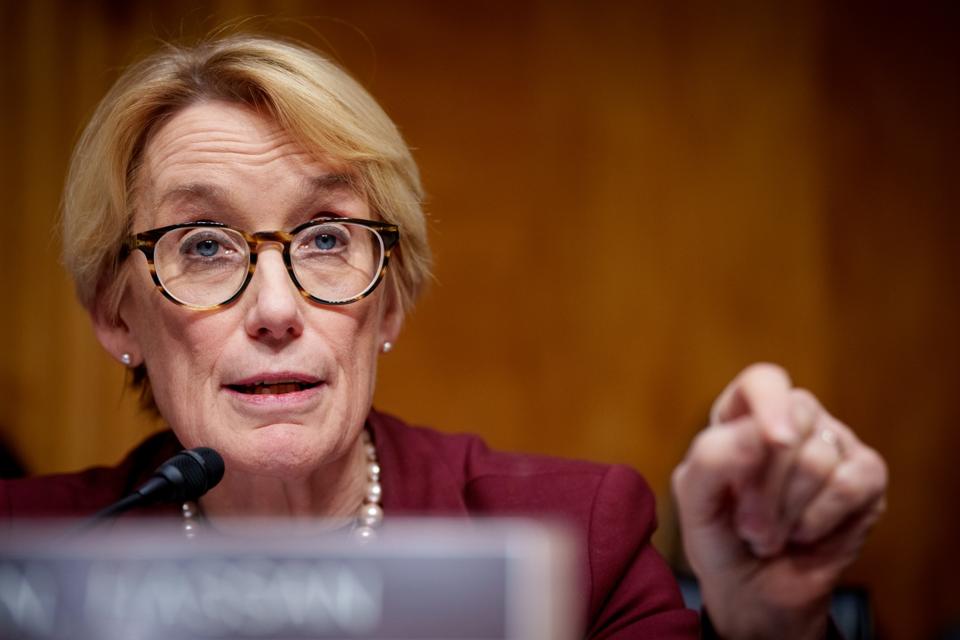
In a letter addressed to Health and Human Services Secretary Robert F. Kennedy Jr. on Wednesday, Senator Maggie Hassan of New Hampshire expressed significant concern. She stated she was “deeply concerned” by reports indicating potential manipulation of a federal program and the exertion of undue political influence to grant preferential access to an exclusive prescription drug for a well-connected individual.
The STAT News report, published Tuesday, detailed that a 79-year-old male was administered an Eli Lilly weight loss drug that has not yet received FDA approval. The request for this drug was reportedly made in April, when Trump was also 79 years old.
The White House has strongly refuted the STAT News report, asserting that Trump was not the recipient of the drug and characterizing the STAT reporter as a “big idiot.”
Senator Hassan’s letter to Secretary Kennedy further highlighted that the report “suggests that this individual was the President or someone closely connected to him.” She posed a series of questions, including whether the drug was provided at no cost, if Trump received the medication, and which official within the Department of Health and Human Services authorized its approval.
Representative Ted Lieu of California suggested on Wednesday that Trump’s cancellation of a bill signing might have been due to experiencing side effects from the drug.
Lieu also put forth the possibility that Trump may be experiencing a “terminal illness,” citing instances where the President appeared to doze off during Cabinet and Oval Office meetings.
Chief Critic
Steven Cheung, the White House communications director, responded to Representative Lieu’s comments on X (formerly Twitter), calling him a “dumbass” and suggesting that Lieu “probably spent hours laughing to himself thinking that peddling this lie would be funny.”
Key Background
The STAT News investigation revealed that Ranganath Muniyappa, a senior clinician at the National Institutes of Health, requested the drug for a patient suffering from refractory obesity, obstructive sleep apnea, and pulmonary hypertension. The latter condition can be life-threatening. In recent months, Trump has exhibited several visible health concerns. These include bruising on his hands, which he has attributed to frequent handshaking and daily aspirin use, as well as swollen ankles. Last year, he was diagnosed with chronic venous insufficiency, a condition prevalent among individuals over 70. Trump’s weight was recorded as 238 pounds during his most recent physical examination, a 14-pound increase since April 2025, placing him close to the threshold for clinical obesity.
Further Reading
White House Aggressively Denies Trump Received Exclusive Weight Loss Drug Access (Forbes)
Trump Diagnosed With Common Chronic Vein Disease—White House Insists He Is In ‘Excellent Health’ (Forbes)
Business Style Takeaway: The controversy surrounding the potential use of an experimental drug by a high-profile individual highlights the critical intersection of political influence, healthcare access, and regulatory oversight. This situation underscores the importance of transparency and adherence to protocol in drug approval processes, particularly when dealing with potentially life-saving or performance-enhancing medications, and the significant reputational risks associated with perceived preferential treatment.
According to the portal: www.forbes.com