

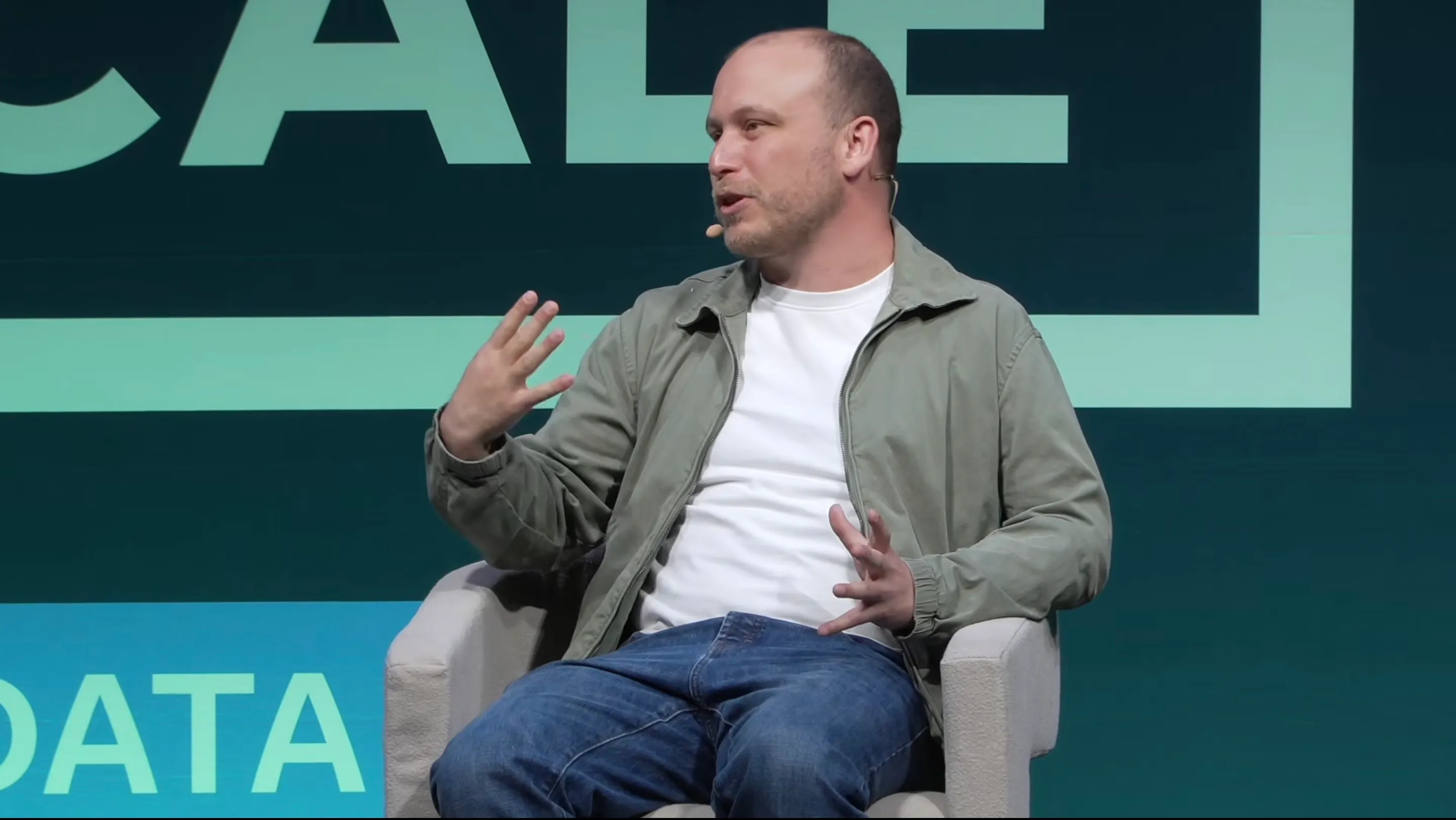
During a recent appearance at Meta’s @Scale conference, Boris Cherny, Head of Claude Code at Anthropic, addressed a foundational question regarding the future of AI development: the significance of “loops.” Far from dismissing them as a fleeting trend, Cherny asserted their crucial role, likening their importance to the transition from human-written code to AI-generated code.
The Evolution of AI in Code Generation
Cherny outlined a trajectory in AI’s involvement with software development. Initially, humans meticulously crafted source code. This evolved to a stage where AI agents began writing code autonomously. The current paradigm shift, according to Cherny, involves agents prompting other agents, which then generate the code. He posited that this development, termed “loops,” represents a leap in capability as significant as the initial move towards AI-driven code generation.
Understanding Agentic Loops
Elaborating on his work, Cherny described continuous loops where specialized agents collaborate. One agent focuses on refining code architecture, while another identifies and consolidates redundant abstractions. These agents submit their work via pull requests, mirroring human developer workflows. The dynamic nature of code ensures these loops operate perpetually, driving ongoing improvement.
Implications for AI Autonomy
The concept of agentic loops extends beyond current practices of managing individual AI agents. While typical approaches involve setting clear objectives and monitoring discrete progress points, loops empower a network of agents to operate continuously and autonomously in the background. This delegation signifies a substantial increase in trust placed in AI systems, potentially unlocking new levels of productivity as AI models mature.
Technological Precedents and Innovations
The underlying principle of loops is not entirely novel. Recursive functions, a staple in computer science education where a function calls itself to repeat an action until a specific condition is met, share conceptual similarities. AI agentic loops introduce non-deterministic logic, where a sub-agent, rather than a predefined condition, determines when to cease an operation. This mirrors the iterative nature of AI problem-solving, particularly as AI is increasingly tasked with overseeing AI processes.
Distinguishing from traditional programming, agentic loops can be remarkably straightforward. A popular iteration, the “Ralph Loop,” involves iteratively summarizing completed work and evaluating progress against the initial goal. This method helps mitigate the issue of AI models losing focus during prolonged operations, effectively guiding them back to the task until completion.
Compute, Cost, and the Future of AI Workflows
Agentic loops can also be viewed as an extension of the drive for increased “test-time compute.” As observed by researchers, advanced AI models can solve complex problems given sufficient computational resources. Loops leverage this by continuously applying compute to refine solutions, particularly for optimization tasks like code improvement, until a desired threshold is achieved or computational resources are exhausted.
This continuous operation inherently leads to significant token consumption, potentially proving more expensive than traditional Q&A chatbots. While advantageous for companies like Anthropic, which operate within a token-based business model, the cost could be a barrier for widespread adoption. However, for specific, high-value problems, and with careful management of token spend and potential AI drift, the substantial benefits offered by agentic loops may well justify the investment.
Business Style Takeaway: The emergence of agentic AI loops signifies a pivotal shift towards more autonomous and continuous AI operations. Businesses should explore how these sophisticated, iterative workflows can unlock efficiency and innovation, while strategically evaluating the associated computational costs and necessary oversight mechanisms.
Information compiled from materials : techcrunch.com