

Contrary to popular belief, events such as Taylor Swift’s Eras Tour and the World Cup do not spur economic expansion. In fact, the opposite is more likely true.
Challenging Keynesian Economics
It is a fundamental economic truth, often overlooked by proponents of Keynesian theory, that saving never diminishes demand. All demand is a consequence of production; unless the fruits of labor are being hoarded, production is inherently matched by consumption.
This principle is crucial to understand when considering the economic implications of major events like the World Cup. Headlines predicting significant global economic booms from such events are fundamentally flawed. For instance, a recent New York Post article claimed the World Cup was expected to generate a $45 billion global economic boom, likening it to “the Taylor Swift effect on steroids.” This is entirely inaccurate.
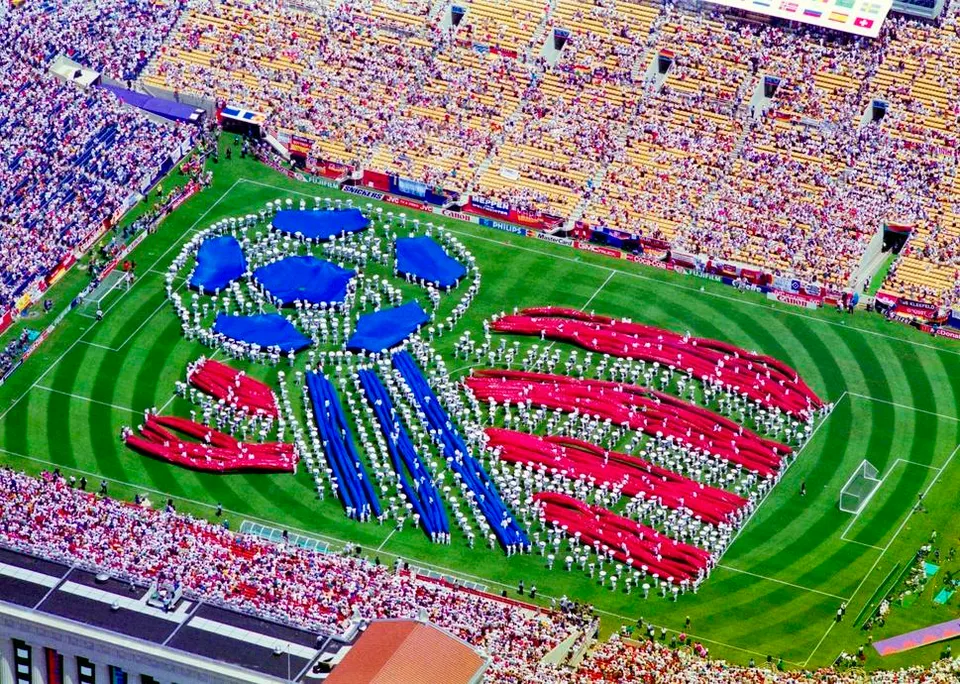
While the Eras Tour was undeniably successful, it did not stimulate domestic or global economic growth. The World Cup will similarly not lead to a global economic boom, except perhaps in the distorted metric of Gross Domestic Product (GDP). GDP, a concept championed by Keynesians, erroneously posits that consumption drives economic activity. In reality, consumption is merely an effect, not the cause, of economic growth.
Consumption as an Effect of Production
If consumption were the true engine of economic growth, the global economy would perpetually be in a state of expansion, given humanity’s unlimited desires.
What Keynesians fail to grasp is that while our wants are boundless, our capacity to satisfy them is strictly limited. We can only consume what we have previously produced. Consequently, reduced production inevitably leads to reduced consumption.
This simple fact underscores that consumption does not drive economic growth; rather, it follows growth that has already occurred. The assertion by many economists that events like the World Cup, with billions in projected global spending, will spur economic growth represents a fundamental misunderstanding—a double counting of economic activity. All the anticipated spending at stadiums, sporting goods stores, bars, restaurants, airports, hotels, and merchandise outlets is a manifestation of past economic prosperity.
The “Seen” vs. the “Unseen”
The significant consumer spending surrounding both the Eras Tour and the World Cup is indeed a positive indicator of wealth. It demonstrates that, due to an increasingly liberalized global economy, individuals worldwide possess greater disposable income for discretionary spending and life’s comforts. This is a welcome outcome.
However, this visible consumption represents the “seen” aspect of economic activity. The “unseen” consequence of this substantial spending is the diversion of savings that could have been allocated elsewhere.
It is vital to recognize that savings do not disappear from the economy. Financial institutions like banks and brokerages do not simply hold onto savings without purpose. Saved funds are typically channeled back into the economy through loans to individuals or businesses, or invested in new ventures and innovations.
These investments, particularly those aimed at automation and increased efficiency, can drive future production and, consequently, future consumption. Therefore, this opinion piece suggests that the surge in spending associated with the Eras Tour and the World Cup, while a beautiful display of existing wealth, may actually indicate a relative slowdown in genuine economic growth. The choice between consuming on entertainment and concerts versus shifting savings towards productive, economy-expanding ideas is a critical differentiator. The former, while enjoyable, does not foster the same level of long-term economic expansion as the latter.
Business Style Takeaway: Major consumer events, while indicative of existing wealth, do not fundamentally drive economic growth. True expansion stems from savings reinvested into productive capacity, not from the redistribution of existing funds for consumption, which can paradoxically signal a slower pace of underlying economic development.
Learn more at : www.forbes.com