

The geopolitical tensions in the Middle East, stemming from the Iran War, have inadvertently spurred a significant revival in coal consumption across the Asian continent. As liquefied natural gas (LNG) prices skyrocket due to considerable supply disruptions, nations such as China, India, and South Korea are increasingly relying on coal as a primary source for electricity generation.
The damage to Qatar’s Ras Laffan facility alone has led to the removal of over 10 million tonnes per annum (mtpa) of LNG from the market, consequently driving spot LNG prices in Asia to levels not seen in nearly three years. Rystad Energy estimates that approximately 90 terawatt-hours (TWh) of energy demand has already shifted to coal, with projections indicating an additional 70 million tons of coal consumption by 2026.
Industry experts are characterizing this trend as a crucial “reality check” for the ongoing energy transition, underscoring coal’s persistent role as an essential fallback option until renewable energy infrastructure and grid flexibility achieve a more robust and dependable state.
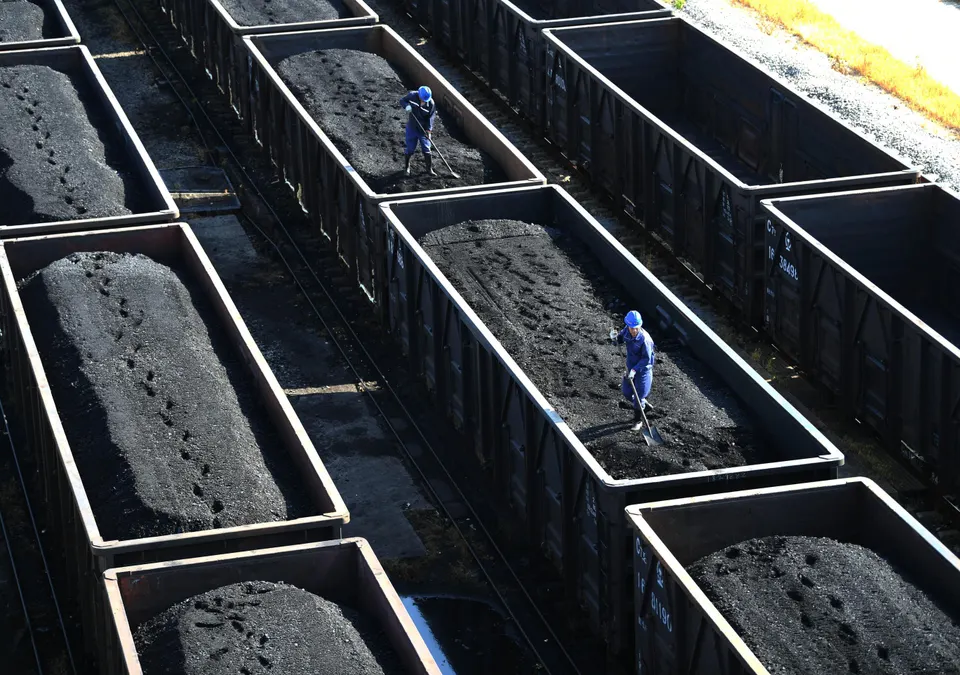
The interruption of liquefied natural gas (LNG) supplies from the Middle East to the high-demand energy markets in Asia, exacerbated by the Iran War, has benefited a particular alternative fuel: coal. This situation has potentially amplified its short-term significance.
Contrary to expectations of a pivot towards renewable energy, the disruption in Middle Eastern LNG flows, primarily from Qatar, has instead ignited an unexpected surge in coal demand across Asia.
This includes the two largest economies on the continent, China and India, both of which have invested heavily in renewable energy initiatives. While these nations have been reducing their dependence on coal imports, reports indicate they increased domestic coal production, leveraging this resource during the crisis to meet energy needs instead of relying more heavily on gasification power plants.
However, they are not alone in this shift. Data from South Korea, Taiwan, Thailand, Vietnam, and the Philippines also suggest an increase in coal consumption for power generation.
Continent-Wide Coal Usage Shift
While China and India possess diversified energy portfolios that allow them to integrate coal as one of several sources, other nations in the Asia-Pacific region have found it necessary to turn to coal due to the war impacting their primary LNG supply source.
Qatar’s Ras Laffan facility, sustaining damage from the conflict, has triggered force majeure clauses, removing approximately 10.2 mtpa of LNG supply destined for Asia. The partial shutdown is anticipated to persist through the late summer months, potentially even longer, despite reports of a peace agreement between the U.S. and Iran.
Consequently, regional gas markets have tightened considerably, pushing Asia’s spot LNG prices to near three-year highs. This price surge is discouraging some LNG demand while simultaneously increasing demand for coal.
Rystad Energy indicates that the issue is more profound, estimating that the outage in Qatar has created an LNG supply gap of roughly 35 mtpa by 2026 that the region will struggle to replace.
“The shortfall is increasingly being absorbed through higher coal utilization, with approximately 90 terawatt-hours shifting directly to coal-fired power generation,” the energy research firm stated in a recent client briefing.
As a result, Rystad Energy now forecasts that Asian coal consumption will rise by close to 70 million tons in 2026 under a scenario of sustained tight gas markets. This increase is expected to stem not from the addition of large-scale new capacity but from existing coal-fired power plants operating at higher utilization rates.
Other data providers, including S&P Global and the International Energy Agency, also report a significant increase in coal-fired power generation across extensive areas of Asia. As natural gas output experiences a partial decline, global seaborne coal shipments to the region have seen an uptick, even as China and India increasingly utilize their domestic coal reserves.
For instance, Rystad noted an 11% growth in Japan’s coal-fired generation, concurrent with a 13% decrease in its gas output. Furthermore, coal imports to South Korea and Japan are trending more than 50% and 20% above year-ago levels, respectively, for the month of May. Across the affected economies, this pivot reflects a response to necessity rather than preference, as the coal supply chain remains unaffected by the ongoing conflict.
Not A Coal Comeback, More Of A Reality Check
According to Tonmit Talukdar, a coal research analyst at Rystad Energy, the current situation should be viewed not as a resurgence of coal but as a practical assessment of the region’s energy transition progress.
“LNG price volatility has shifted costs without reversing the move toward cleaner energy, and thermal coal prices have responded to that tightness with cautious buying, stockpiling, and a geopolitical risk premium rather than any structural change,” Talukdar commented in a recent research note.
He added that coal is stepping in to fill the void when natural gas prices spike, supply becomes constrained, or previously idled plants are briefly brought back online.
The current response remains more contained compared to the 2022 Russia-Ukraine crisis, when disruptions to Russian gas supplies triggered a sharp increase in global coal demand. At that time, renewable capacity additions were limited, and thermal coal inventories in major Asian markets were significantly lower.
“In contrast, strong coal inventories and record alternative energy availability in India, China, and other major Asian countries have prevented the market from becoming as structurally strained this time,” Talukdar elaborated.
However, until energy storage, grid flexibility, and firm low-carbon power generation capacity scale sufficiently to meet peak demand and compensate for periods of low wind or hydro output, coal will continue to serve as the system’s essential fallback.
As the situation stands, the Iran War appears to have amplified coal’s role within Asia’s energy mix, and potentially even impacting power markets well beyond the continent.
Business Style Takeaway: Geopolitical instability in energy-rich regions can rapidly alter global energy dynamics, demonstrating the enduring importance of fossil fuels as critical intermediaries during energy transitions. This highlights the strategic need for diversified energy portfolios and robust infrastructure development to mitigate risks associated with volatile supply chains.
According to the portal: www.forbes.com