

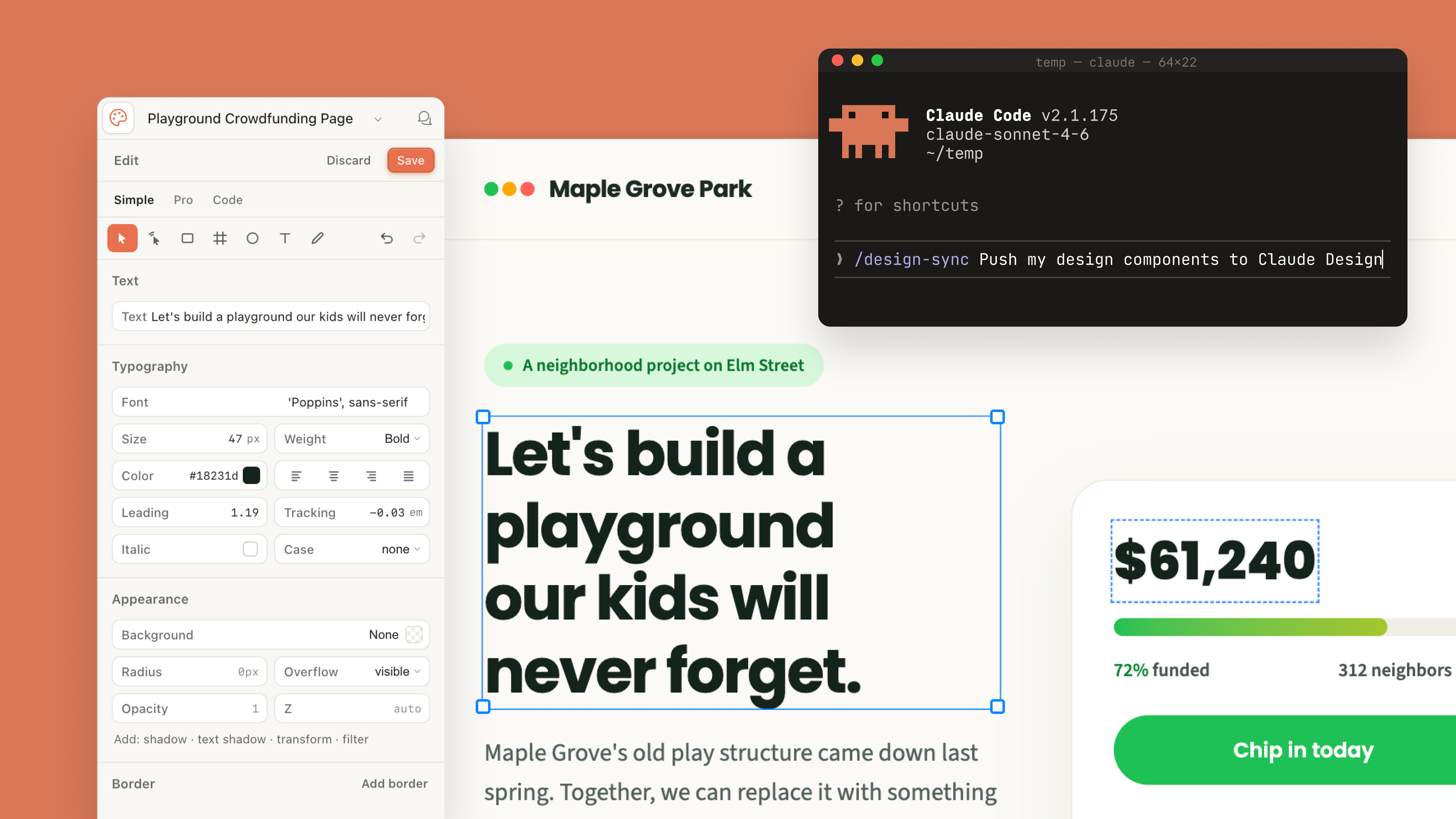
Anthropic’s Claude Design tool, initially launched as a “research preview” in April, rapidly gained significant user interest, exceeding one million users in its first week. However, this initial success was tempered by a considerable challenge: its voracious token consumption. Early reports highlighted how quickly users, particularly those on Claude Pro subscriptions, could exhaust their allowances generating only a few design iterations, leading to frustration and concerns about the tool’s practical usability within existing subscription limits.
Two months post-launch, Anthropic is introducing a significantly revamped version of Claude Design. This update aims to address the token consumption issue while strategically repositioning the product. Moving beyond its initial perception as a demonstration, the new Claude Design is being framed as a critical component for enterprises, functioning as a design system compliance layer that integrates directly with code and existing enterprise tools, crucially ensuring brand consistency.
This evolution coincides with an aggressive product expansion strategy from Anthropic. Over the past ten weeks, the company has introduced Claude Opus 4.8, launched and subsequently paused the Mythos-class Fable 5 model, released ten specialized agent templates for financial services, announced a major alliance with DXC Technology to embed Claude within the IT infrastructure of leading banks and airlines, rolled out Claude for Small Business with integrations into platforms like QuickBooks and PayPal, and published research indicating that Claude Code users are dedicating an average of 20 hours weekly to the tool.
The transformation of Claude Design from a novel experiment into a potential enterprise platform exemplifies Anthropic’s broader objective: to embed Claude not merely as an interactive assistant but as an integrated worker within the operational workflows of businesses.
Enhanced Design System Imports Transform Claude Design into an Enterprise Brand Compliance Solution
The most impactful feature of the latest update is its reimagined design system import functionality. While the new drag-and-resize editor and expanded export options are noteworthy, the design system integration signals Anthropic’s strategic pivot towards enterprise needs.
Users can now seamlessly import design systems from GitHub repositories, design files, or direct uploads. Claude Design then utilizes these imported components to build new designs, rigorously checking the output against the established design system rules and automatically correcting discrepancies before presenting them to the user. For large organizations, a new administrator role allows for the approval and lockdown of a single, standardized design system, ensuring that all AI-generated assets strictly adhere to corporate brand guidelines.
This represents a substantial shift from the tool’s initial offering. In April, Claude Design functioned as a blank canvas, producing visually appealing but stylistically arbitrary outputs based on prompts. While early testers noted its ability to anticipate needs and self-correct, the aesthetic was dictated by the AI rather than the user’s brand. This was suitable for individual creators but impractical for large enterprises with established brand standards.
The design system import fundamentally alters this dynamic. By ingesting a company’s specific components—such as buttons, typography, color palettes, and spacing rules—and validating generated content against these standards, Claude Design addresses a key challenge for human designers: maintaining brand consistency at scale and speed. The administrator control feature, preventing unauthorized modifications, directly targets enterprise procurement concerns regarding output control.
The Claude Code Round-Trip Integration Aims to Resolve Design-to-Engineering Handoff Issues
A second significant enhancement is the establishment of a bidirectional integration between Claude Design and Claude Code. Users can now leverage the `/design-sync` command within Claude Code to import their local codebase’s design system into Claude Design, ensuring that prototype development begins with actual components rather than approximations. Upon completion, designs are handed off to Claude Code, which can directly implement them without requiring manual re-creation or format conversion, bypassing traditional handoff friction points.
This integration addresses a long-standing bottleneck in software development: the inefficient transition between design and engineering teams. While tools like Figma’s Dev Mode and Zeplin have attempted to bridge this gap by generating specifications and code snippets, these processes often result in information loss and subsequent divergence between the designer’s vision and the engineer’s implementation, leading to iterative QA cycles.
Anthropic posits that by utilizing a single AI system for both design and coding, operating from a shared component library, the gap can be eliminated. The company argues that the design-to-code problem stemmed from interpretational differences between distinct human designers or tools. A unified AI system, operating across the workflow, bypasses the need for interpretation, enabling continuous progress.
The timing of this integration is particularly relevant given Anthropic’s recent research. An analysis of approximately 400,000 Claude Code sessions indicated that domain expertise, rather than pure coding proficiency, is the primary determinant of successful coding outcomes. The study found that individuals across various occupations achieved coding tasks at rates comparable to software engineers. This suggests that designers, by seamlessly transitioning between visual prototyping and code implementation via a single AI system, can succeed based on their deep understanding of design challenges, rather than solely on their coding skills.
Token Consumption Addressed, Yet Generative Design Economics Remain Challenging
The high token consumption that characterized Claude Design’s initial release posed a significant usability and viability concern. For individual users and small teams driving its viral adoption, the rapid depletion of subscription allowances rendered the tool impractical.
Anthropic’s response involves a two-pronged approach. Firstly, Claude Design now shares usage limits with other Claude tools like chat, Claude Cowork, and Claude Code, providing users with substantially more flexibility. Secondly, the company reports a reduction in average token consumption per interaction, maintained output quality, and a marked decrease in error rates.
The long-term efficacy of these measures remains to be seen. Generative design, by its nature, is computationally intensive. Each design variation requires the AI to simultaneously process and generate elements related to layout, typography, color, responsiveness, and content, a workload inherently more demanding than conversational AI tasks. While Anthropic’s efficiency improvements may mitigate the issue, the underlying economic model for token consumption in generative design remains a critical factor, especially for individual Pro subscribers, though potentially less so for enterprise clients with higher-tier plans.
The introduction of an interactive editor, allowing direct manipulation of design elements without incurring model turns for minor adjustments, offers some relief. Numerous stability enhancements also reduce wasted token usage on errors and regenerations, which were a major drain in the original version. These practical improvements are crucial for transitioning the tool from a research preview to a routinely used application.
Nine New Export Partners Position Claude Design as a Creative Starting Point, Not an Endpoint
A third key aspect of the update is the expansion of export destinations. Claude Design now supports integration with Adobe, Base44, Canva, Gamma, Lovable, Miro, Replit, Vercel, and Wix, in addition to existing options like PDF and PowerPoint. This broad network signals Anthropic’s strategy to position Claude Design as an initiation point for creative workflows rather than a final destination.
Partner testimonials underscore this strategy. Replit’s president Michele Catasta emphasizes meeting “builders wherever ideas begin,” while Canva’s Anwar Haneef describes the process as turning “a first draft” into a “finished asset—kept on-brand, personalized.” Vercel’s Andrew Qu highlights the ability to push concepts “straight to Vercel to ship.” In each instance, Claude Design serves as the origin, with partner tools facilitating refinement, collaboration, and deployment.
This hub-and-spoke model also serves as a strategic countermeasure against rapidly emerging open-source alternatives. The Open Design project, for example, has garnered significant community traction with features like local-first operation, multi-model support, and extensive design system integration, offering an alternative to cloud-based solutions. However, Anthropic’s competitive edge lies in its cultivated ecosystem of business partnerships, enabling native integrations with major platforms like Adobe, Canva, and Vercel—relationships that community projects cannot easily replicate.
Claude Design Aligns with Anthropic’s Broader Vision of AI Integration Across the Enterprise Stack
Understanding the significance of Claude Design’s evolution requires a broader perspective. Anthropic is cultivating a comprehensive product suite that spans creative work (Design), software development (Code), knowledge management (Cowork), and enterprise operations (Managed Agents). These offerings are increasingly unified by shared underlying models and contextual information that flows across applications.
The company’s recent activities underscore this trajectory. In May, Anthropic launched Claude for Small Business, integrating with QuickBooks, PayPal, and HubSpot to embed AI within core small business operations. Concurrently, ten agent templates for financial services were released, offering specialized capabilities for tasks such as pitchbook creation and KYC screening, with integrations into platforms like FactSet and S&P Capital IQ. The release of Claude Opus 4.8 introduced “dynamic workflows” capable of managing numerous parallel sub-agents. Following the announcement of Fable 5 and Mythos 5, access to both was temporarily suspended due to U.S. government export controls. The strategic alliance with DXC Technology aims to embed Claude expertise within the IT infrastructure of major financial and aviation institutions.
The design system imported into Claude Design serves as the same component library utilized by Claude Code for implementation. Financial models generated can transition from Claude for Excel to a pitchbook in Claude Design, then exported to PowerPoint. Brand assets created in Claude Design for small businesses can be directly shared with Canva. This reflects a platform-centric strategy, rather than a simple chatbot approach, with the Claude Design update—featuring design system imports, code synchronization, and an extensive export network—standing as a prime example of this vision.
Anthropic’s technical documentation also details robust security measures, including sandboxing and virtual machines, essential for protecting proprietary design systems and brand assets as Claude integrates more deeply into enterprise workflows. This infrastructure highlights both the ambition and the inherent risks associated with such deep integration, necessitating sophisticated security protocols.
The success of this latest update hinges on three critical factors. Firstly, the viability of the token economics for a wide user base, balancing shared limits and efficiency gains against the inherent cost of generative design. Secondly, the robustness of the design system import functionality for enterprise applications, a technically demanding task involving the accurate incorporation of code repositories into design variations. Lastly, the effectiveness of the Claude Code round-trip in truly eliminating the design-engineering gap, or merely shifting its focus.
Claude Design’s transition from a novel, experimental tool to a daily-use application hinges on its ability to foster team-wide trust in its brand consistency. The journey from a viral demonstration to an indispensable enterprise tool is fraught with challenges. Anthropic’s current strategy places its faith in design systems, not just design prompts, as the crucial element bridging this divide.
Business Style Takeaway: Anthropic’s strategic repositioning of Claude Design highlights a significant trend: AI tools are evolving from standalone novelties into integral components of enterprise workflows. By focusing on design system compliance and seamless code integration, Anthropic is addressing core business needs for brand consistency, efficiency, and reduced development friction, making AI a more robust solution for established organizations.
According to the portal: venturebeat.com