

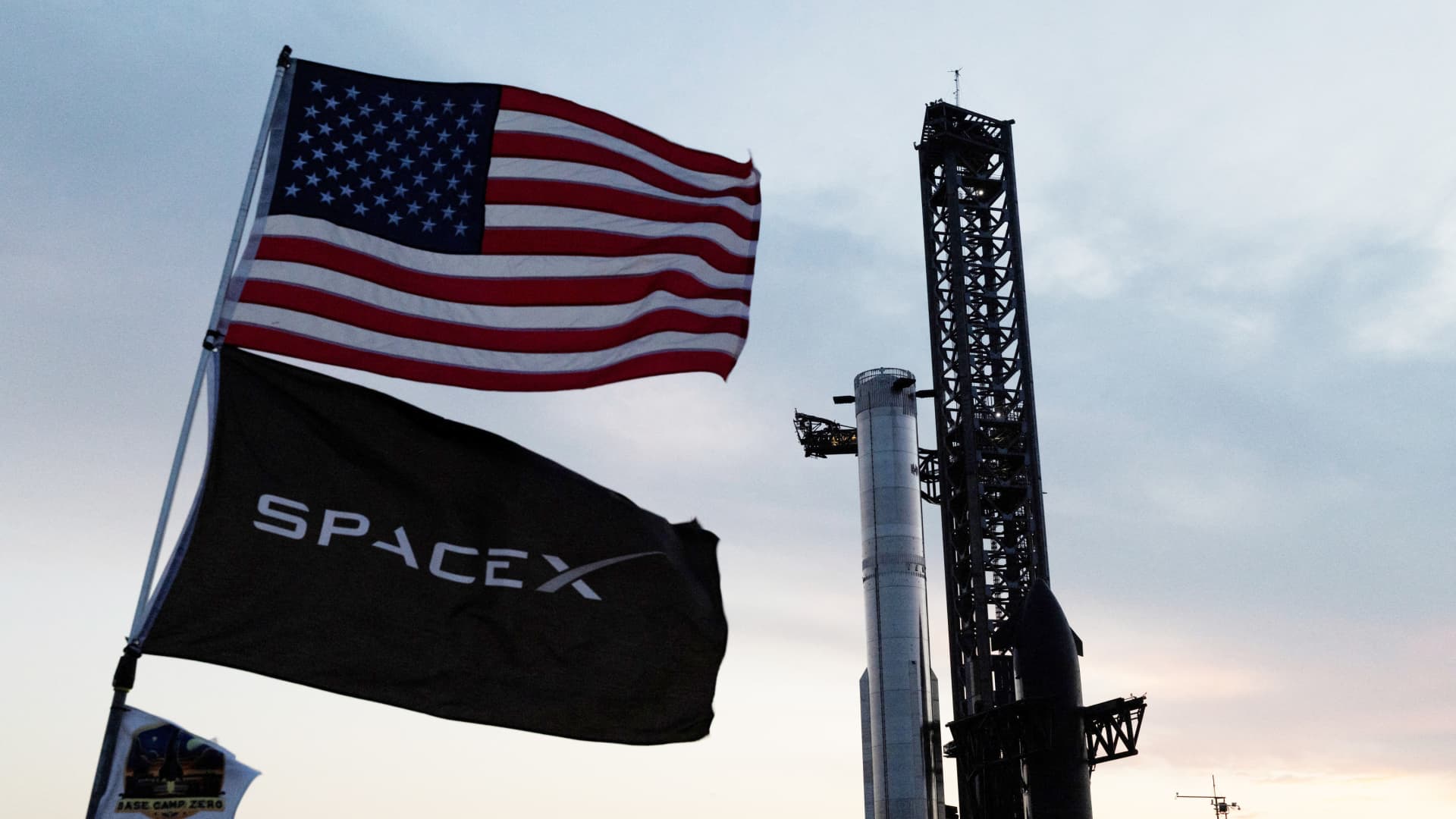
For close to two decades, a select group of sophisticated investors has meticulously built stakes in SpaceX, a privately held entity largely inaccessible to the public markets. With the company reportedly exploring an Initial Public Offering (IPO) at a valuation approaching $1.8 trillion, these early-stage commitments are on the cusp of realizing some of the most substantial paper gains ever recorded in the venture capital landscape.
Among the prominent beneficiaries are seasoned portfolio managers such as Ron Baron, Cathie Wood’s Ark Invest, and the venerable Fidelity Investments. Venture capital firms including Founders Fund, Sequoia Capital, and Andreessen Horowitz, alongside hedge funds like D1 Capital Partners and Coatue Management, are also positioned for significant returns. Furthermore, select pension funds and institutional endowments are set to share in this considerable financial uplift.
The magnitude of these gains is particularly striking for those investors who demonstrated conviction in SpaceX prior to its current trajectory of success. Ron Baron, for instance, initiated his investment in 2017 through employee tender offers when the company’s valuation was less than $22 billion. He has since participated in 27 subsequent funding rounds.
As of the close of March, SpaceX constituted a substantial 33% of the Baron Partners Fund’s assets, totaling $10.4 billion, and 25.5% of the Baron Asset Fund. This weighting underscores its pivotal role within the firm’s investment portfolio.
“We believe that SpaceX will emerge as the largest, most profitable enterprise globally,” Baron articulated during a recent investor webcast. His firm’s cumulative investment of approximately $2 billion over the years has reportedly appreciated to around $12 billion.
Early Stage Value Creation
Cathie Wood’s Ark Venture Fund has also experienced considerable benefits from SpaceX’s rapid ascent. As of March 31, SpaceX represented 11.4% of the fund’s net assets, making it the dominant holding within the portfolio.
Wood characterizes SpaceX as far more than a mere launch service provider. “Through Starship, Starlink, and the strategic acquisition of xAI, we contend that SpaceX is architecting vertically integrated artificial intelligence infrastructure foundational to an expanding space economy,” she commented.
This investment aligns with Ark’s broader investment thesis centered on technological convergence. SpaceX occupies a critical nexus of several key innovation themes championed by the firm, including artificial intelligence, robotics, and energy storage. Wood posits that the company’s next growth phase will likely be propelled not only by its established Falcon 9 launch operations and Starlink satellite network but also by Starship, its next-generation reusable rocket system, which could unlock novel commercial avenues in space exploration.
“For long-term shareholders, an IPO would grant broader market access to a company we perceive as still being in the nascent stages of its value realization,” Wood stated.
No traditional asset manager may have benefited more from SpaceX’s rise than Fidelity Investments. The Boston-based financial services firm secured early positions through former portfolio manager Gavin Baker, who began acquiring shares in 2015 when SpaceX was valued at approximately $10 billion.
As of March 31, SpaceX accounted for 4.7% of the $177 billion Fidelity Contrafund, one of the world’s largest actively managed mutual funds. The company also represented 3.3% of the $103 billion Fidelity Blue Chip Growth Fund and 2.6% of the nearly $99 billion Fidelity Growth Company Fund.
Fidelity has declined to provide an official comment regarding these holdings.
Exceptional Returns and Market Scarcity
The extraordinary returns generated by SpaceX are attributable not only to the company’s impressive growth trajectory but also to the inherent scarcity of access to its equity.
“They took a significant calculated risk on Elon Musk’s vision, and the outcome has been exceptionally favorable for them,” observed Greg Martin, co-founder and managing director of Rainmaker Securities. “Once they committed to this initial bet, securing long-term positions on the capitalization table became increasingly rare due to the company’s stringent management of ownership.” The capitalization table meticulously details a company’s equity ownership structure.
In contrast to numerous venture-backed entities that frequently broaden their shareholder base, SpaceX has maintained rigorous control over investor participation. Consequently, early investors often received preferential opportunities to participate in subsequent funding rounds, which were largely unavailable to the broader institutional market.
“Their early commitment to Elon Musk’s endeavor not only yielded substantial returns on their initial investment but also facilitated the deployment of significantly larger capital sums as the business demonstrated increasingly evident success,” Martin elaborated.
This strategic dynamic has been instrumental in transforming relatively modest initial investments into positions now valued in the billions. The venture firm Founders Fund began its support of SpaceX in 2008, while hedge funds such as Coatue and D1 gained exposure through later-stage private capital raises.
“Our success is largely predicated on identifying and pursuing strategies that others eschew, effectively undertaking approximately 75% of the required effort by simply deviating from conventional approaches,” remarked Philippe Laffont, founder of Coatue Management, at a recent industry conference.
Institutional Gains for Pensions and Endowments
Pension funds and university endowments are also poised to realize substantial financial gains from SpaceX’s potential public debut, highlighting the company’s success in benefiting institutions tasked with funding retirement security, educational scholarships, and academic research.
The Ontario Teachers’ Pension Plan invested over $200 million in SpaceX in 2019 through a newly established technology-focused investment vehicle. At the time, the pension fund manager identified SpaceX as a “compelling investment opportunity” due to its “proven track record of technological disruption within the launch sector and significant future growth potential in the satellite broadband market.”
University endowments have also emerged as significant beneficiaries. Washington University in St. Louis made an investment of approximately $50 million in SpaceX nearly a decade ago, a stake that has appreciated dramatically as the company has progressed toward its current IPO valuation. This holding now represents over 10% of the university’s endowment, estimated at approximately $17 billion, according to available reports.
Washington University has refrained from commenting on this matter, and the Ontario Teachers’ Pension Plan has not responded to inquiries.
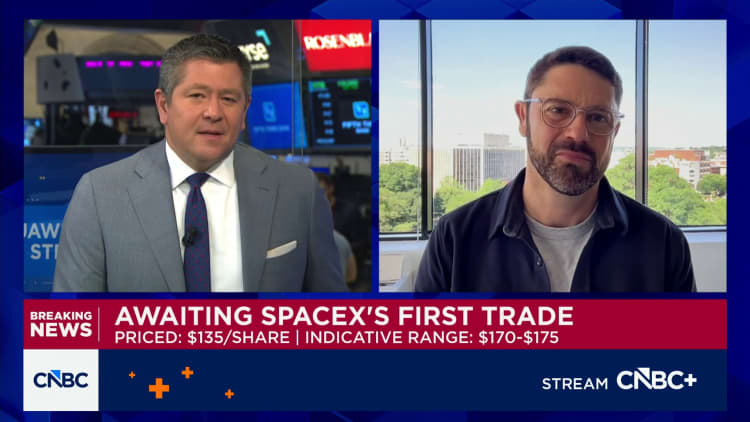 watch nowVIDEO1:4101:41Fundrise CEO Ben Miller on SpaceX IPO: 'This is the beginning of a new era in America'Squawk on the Street
Business Style Takeaway: The impending IPO of SpaceX is set to deliver unprecedented returns for a carefully curated group of early investors, showcasing the profound financial rewards of strategic long-term bets in disruptive technology sectors. This event underscores the evolving landscape of venture capital and its increasing intersection with traditional institutional investment, highlighting the potential for significant wealth creation outside of conventional public market access.
Based on materials from : www.cnbc.com