

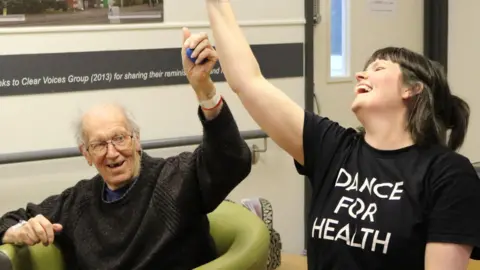
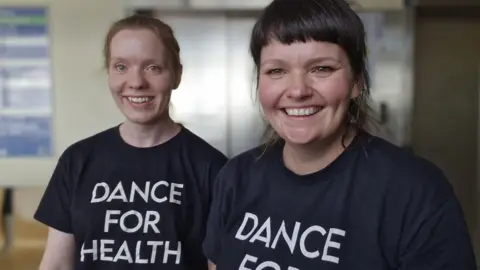
A hospital ward, often perceived as a place of clinical necessity rather than joy, is being transformed by the innovative “Dance for Health” initiative at Bedford Hospital. Sadie Hunt and Jenny Howells, the driving force behind this program, have been bringing the therapeutic power of movement to patients for over a year, proving that even within hospital walls, moments of upliftment and human connection are not only possible but profoundly beneficial.
From Pilot to Expansion: The Growing Impact of Dance for Health
Initially launched as a pilot program on two wards catering to older patients with frailty, Dance for Health has experienced significant growth. The initiative is now expanding into a comprehensive 30-week program, set to reach cancer patients and children. This expansion, fueled by continued support from organizations like the Bedfordshire Hospitals NHS Charity, Sport England, and Friends of Bedford Hospital, underscores the program’s tangible success and its recognized value in patient care.
 Bedfordshire Hospitals NHS Foundation Trust
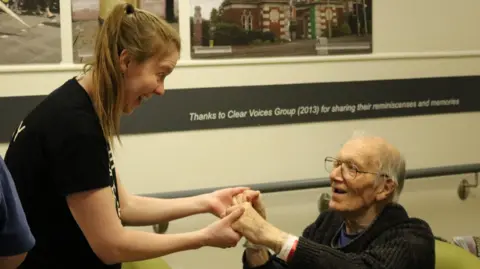
Sadie Hunt, a seasoned Dance for Health practitioner, describes her work as “the best job in the world.” She emphasizes that while the environment remains a hospital ward, their approach ensures they are never intrusive. In fact, hospital staff have noted a marked improvement in patient mood and cooperativeness following the sessions. The initial hesitancy from patients, often expressed as “dancing isn’t for me,” frequently gives way to enthusiastic participation, demonstrating the program’s ability to overcome perceived limitations.
 Dance for Health
Beyond Movement: The Multifaceted Benefits
The Dance for Health sessions incorporate movements often seen in physiotherapy, adapted for a more engaging and joyful experience. Patients have reported profound positive effects, with one sharing, “I thought I was going to be really embarrassed, but I wasn’t – I absolutely loved it.” Others describe the sessions as “very worthwhile” and feel “totally uplifted,” with one patient expressing, “This is the first time I have felt like myself since I have been here. We need this every day.” These testimonials highlight the program’s success in restoring a sense of self and normalcy amidst the challenges of hospitalization.
 Dance for Health
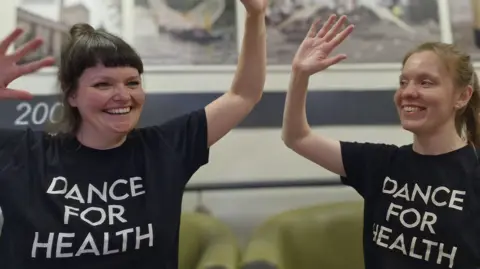
Hunt points out the profound impact of brief moments of music and movement in alleviating boredom and low spirits common in hospital settings. She also observes the positive effect on visitors, who witness their loved ones smile and engage. The physical benefits are significant, with patients reporting reduced pain, increased joint mobility, and a sense of muscular and tension release. Crucially, the program fosters a “shared sense of belonging,” transforming clinical bays into more communal and human spaces.
 Bedfordshire Hospitals NHS Foundation Trust
Jenny Howells echoes these sentiments, emphasizing the crucial role of dance and creative arts in supporting not only physical health but also enhancing mood, overall well-being, and community building. Patients have reported experiencing reduced pain and increased joint mobility during the sessions. Keely Birch, the hospital’s prevention of deconditioning lead, acknowledges the adverse effects of prolonged hospital stays on mental health, citing boredom, isolation, and low mood. She affirms that “creative health has a well-deserved place in the acute setting,” with participants confirming the project’s significant value to their hospital experience.
Business Style Takeaway: The success of initiatives like “Dance for Health” demonstrates a growing understanding of holistic well-being as a critical factor in patient recovery and satisfaction. For global brands and businesses, this highlights the increasing importance of integrating emotionally resonant, human-centric approaches into their strategies, whether in healthcare, customer service, or product development, to foster genuine connection and positive brand perception.
Based on materials from : www.bbc.com