

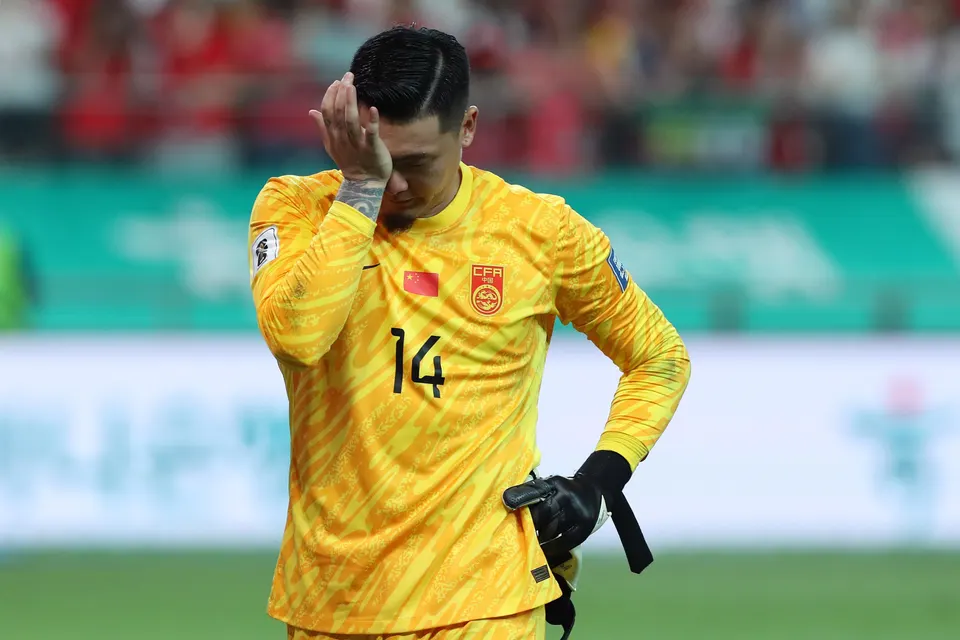
China’s national football team did not qualify for the current men’s World Cup, a situation not uncommon for the team.
China has only appeared in the tournament once, in 2002, where they were eliminated early after losing all three of their matches.
The team’s performance has declined significantly since its peak in the late 1990s, when it was ranked 37th globally.
Its ranking has since fallen as low as 109th, and it currently hovers in the 90s.
In contrast, China’s women’s national team has achieved greater success, ranking fourth in the world in the early 2000s and consistently remaining in the top 20.
A Failed Football Revolution
Recognizing the nation’s struggles in football, the Chinese government initiated a significant investment program ten years ago, championed by President Xi Jinping, with the ambitious goal of making China a leading FIFA nation by 2050.
This initiative saw substantial investment in the Chinese Super League through the acquisition of international players, the development of football infrastructure across cities, and the integration of football into school curricula.
There were even discussions about China hosting the 2034 FIFA Men’s World Cup, with FIFA President Gianni Infantino frequently visiting Beijing to meet with President Xi.
However, this ambitious “soccer revolution” has been hampered by a confluence of factors, including excessive government intervention in the sport, domestic economic instability, the global pandemic, the exploitation by international football opportunists, and the rise of formidable competitors like Saudi Arabia, which is set to host the 2034 tournament.
Many observers initially interpreted China’s 2050 ambition too narrowly, assuming it solely focused on player development.
However, football development in China is intrinsically linked to the country’s broader economic strategy and global influence, and by some measures, China may have already achieved its objectives.
China’s Growing Sponsorship Presence
Within FIFA’s global partnerships, China is represented by three entities: Hisense, Mengniu, and Lenovo, surpassing European representation which has only one partner, Adidas.
Beyond these official partners, numerous Chinese companies and brands are prominently featured among the national teams competing in the current tournament.
For instance, TCL International, a consumer electronics and display company, is sponsoring the national teams of Argentina, Brazil, and Germany. Vatti, a Chinese-owned home appliance business, is associated with the Spanish team.
These companies are actively engaging in sponsorship activation strategies on U.S. soil, ensuring their brands are visible through pitch-side digital signage.
The influence of Chinese industry extends beyond team sponsorships to individual players as well.
Declan Rice, a prominent English midfielder, recently signed a deal with the car manufacturer Xiaomi, a move carrying significant geopolitical implications.
Xiaomi had previously been blacklisted by the Trump administration due to concerns over its ties to the Chinese government, though this sanction was later removed by the Biden administration.
These concerns are not unfounded, as China’s involvement in football extends beyond commercial interests to encompass geopolitical dimensions.
Stadium Diplomacy in Africa
This geopolitical aspect may have influenced the surprise appearance of then-U.S. Secretary of State Antony Blinken at the Africa Cup of Nations in 2023.
While claiming to be a lifelong football enthusiast, Blinken’s presence in Ivory Coast was likely also strategic, given that the tournament’s stadium infrastructure was a gift from China, a common practice across Africa over the past two decades.
China’s strategy involves “stadium diplomacy,” where the construction of sports facilities is exchanged for strategic agreements with African nations, granting China preferential access to vital natural resources such as oil, lithium, and rare earth minerals.
Ivory Coast is participating in this summer’s World Cup, as are nations like Ghana, where the colossal Chinese state-owned Shanghai Construction Group was responsible for building the stadiums used for national team qualifying matches.
Chinese Fans’ Football Passion
Despite the absence of the Chinese national team from this year’s tournament, a considerable number of Chinese fans are expected to follow the event.
While pandemic-related travel restrictions prevented many from attending the previous World Cup, 60,000 Chinese fans traveled to Russia in 2018, a figure that surpassed the attendance of English fans, whose team reached the semi-finals that year.
With a Chinese diaspora exceeding 5 million in the United States and additional fans traveling from East Asia, significant Chinese attendance at the matches is anticipated.
This enthusiasm highlights a desire for a more competitive national team, and there remains potential for improvement.
The Jiangsu Super League has emerged as a successful model within China, inspiring similar initiatives in other provinces.
This league comprises teams from thirteen prefecture-level cities in Jiangsu province, incorporating both amateur and grassroots players.
Individual match attendances have occasionally surpassed 60,000 spectators, setting new records for amateur football viewership in China.
These developments offer hope that Chinese football may eventually achieve its on-field ambitions and secure a second World Cup qualification.
Business Style Takeaway: China’s approach to global football extends far beyond on-field performance, leveraging sponsorship and infrastructure development as tools for economic and geopolitical influence. While the national team’s competitive struggles persist, the nation’s strategic engagement through commercial partnerships and ‘stadium diplomacy’ demonstrates a sophisticated long-term strategy for increasing its global footprint.
According to the portal: www.forbes.com