

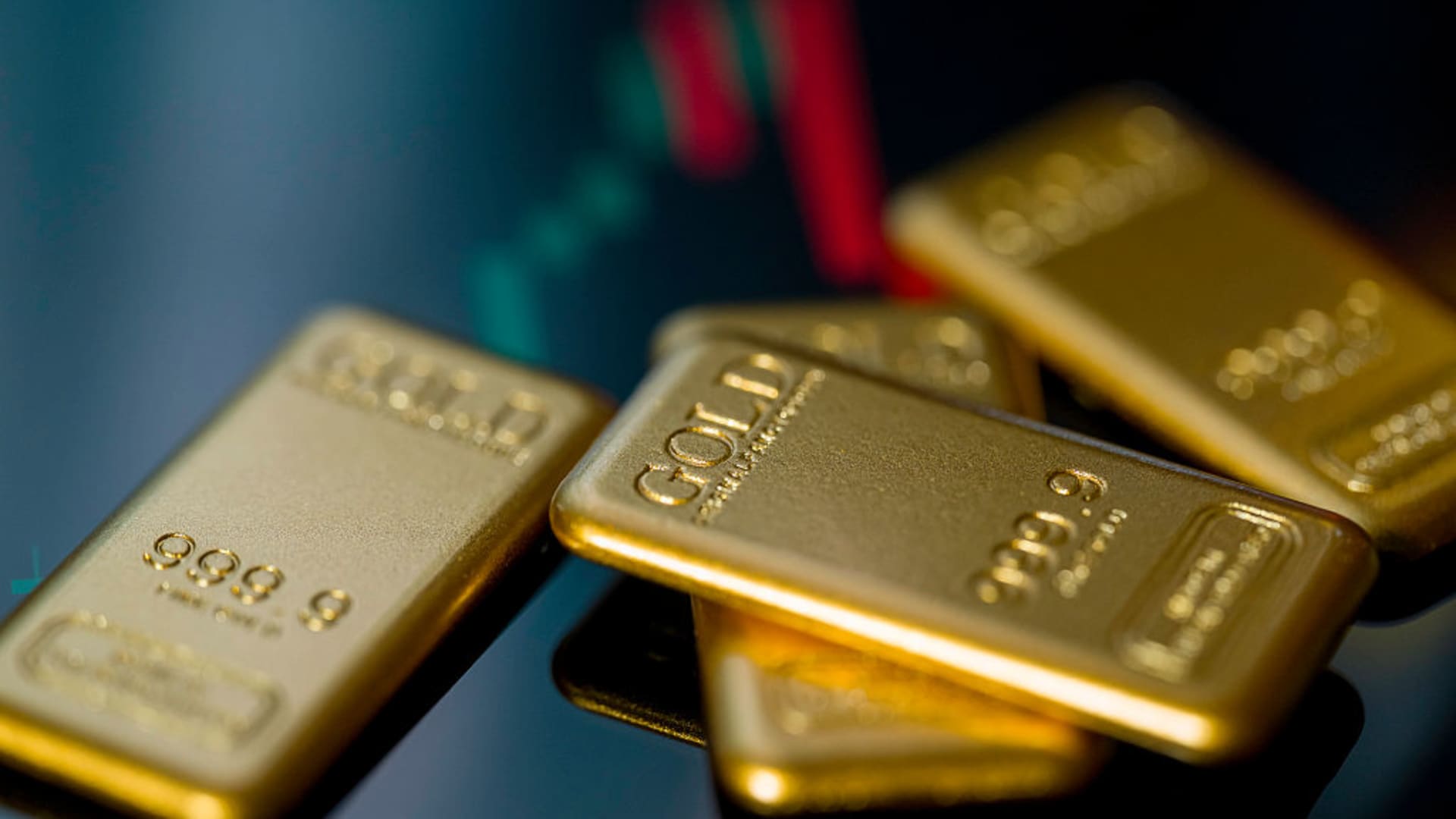
Gold experienced a significant downturn, reaching a fresh six-month nadir on Thursday. This decline is largely attributed to a broad investor divestment from the commodity, driven by escalating concerns that persistent inflation might compel the Federal Reserve to implement further interest rate hikes or maintain current restrictive policy levels through the remainder of the year.
However, a confluence of other salient factors is also contributing to this bearish sentiment.
August gold futures dipped to $4,046.20 per ounce on Thursday, marking their lowest valuation since November. This represents a substantial 6.3% weekly decline, positioning the precious metal for its second consecutive weekly loss and its most precipitous weekly performance since mid-March, a period when gold depreciated by 9.62%.
As of the latest update, gold futures were trading down 0.5% at $4,111.10 per ounce.
Fed Policy Pivot Concerns
Historically, gold has been a favored safe-haven asset, attracting investor capital during periods of market volatility and serving as a hedge against inflationary pressures. Nevertheless, its lack of yield makes it particularly susceptible to shifts in expectations for long-term real interest rates.
The ongoing geopolitical tensions, specifically the protracted conflict in the Middle East now entering its fourth month, have demonstrably exacerbated inflationary trends by driving up energy and commodity prices.
The latest U.S. consumer inflation data for May revealed an acceleration at its fastest pace in three years, primarily fueled by soaring energy-related product costs. Coupled with a robust May employment report that defied expectations, these developments have bolstered the narrative that the Federal Reserve may need to tighten monetary policy via interest rate increases by year-end to rein in price pressures.
Looking ahead, the Federal Reserve is widely anticipated to maintain its benchmark lending rate within the 3.50% to 3.75% range during its upcoming meeting, which marks the first under the leadership of newly appointed Chair Kevin Warsh. A significant majority of economists surveyed by Reuters now foresee interest rates remaining unchanged throughout the current year, a notable shift from earlier projections that anticipated multiple rate cuts.
Market participants, however, appear less convinced of a prolonged pause. Current futures pricing suggests a 67% probability of a Federal Reserve rate hike by December, according to data from the CME Group’s FedWatch tool.
Should higher interest rates prove effective in curbing inflation, they could render dollar-denominated assets, such as U.S. Treasury securities, more attractive to investors, thereby increasing the opportunity cost of holding non-yielding assets like gold.
Technical Weakness Underscores Sell-Off
Technical analysis of gold’s price action indicates a persistently weak market structure. The commodity recently breached its 200-day moving average, a significant technical threshold, for the first time since September 2023. This development was highlighted by Citigroup as a particularly bearish signal.
Citigroup analysts have expressed near-term caution regarding gold since the escalation of geopolitical conflict in March, citing concerns over elevated energy costs stemming from potential disruptions in key maritime routes like the Strait of Hormuz.
Despite the short-term headwinds, Citigroup maintains a constructive long-term outlook for the precious metal.
“While market participants grapple with the near-term outlook, which is heavily contingent on developments surrounding the Strait of Hormuz, the prevailing consensus remains positive over the medium to long term. This optimism is underpinned by robust, non-cyclical demand driven by increasing global geopolitical fragmentation, persistent sovereign debt and currency debasement concerns, and an ongoing trend of central bank reserve diversification,” stated Citi analysts.
The “Debasement Trade” Reversal
JPMorgan analysts observe a widespread unwinding of the “debasement trade” by both retail and institutional investors, a strategy predicated on hedging against currency devaluation and systemic financial instability.
This retreat from positions associated with the debasement trade, which began to materialize a few weeks ago, has continued to gain momentum.
The bank points to significant outflows from gold exchange-traded funds and a reduction in net long futures positioning. These trends are attributed to growing investor apprehension regarding the U.S. government deficit, the long-term inflation outlook, and heightened geopolitical uncertainties observed since 2022.
“Our momentum signal framework also corroborates a continued retreat from the debasement trade. The observed pattern since the onset of the conflict in the Middle East mirrors the trends in ETF flows and futures positioning proxies,” the bank elaborated.
JPMorgan’s analysis reveals approximately $20 billion in outflows from gold ETFs in the week ending June 5, following modest inflows in the preceding week. Concurrently, Bitcoin ETFs experienced gradual increasing outflows over the preceding four weeks.
In the futures market, investors have continued to reduce their exposure to the debasement trade. JPMorgan noted that this reduction in gold futures positions commenced in late February and has sustained a steady pace since mid-April.
Business Style Takeaway: The current decline in gold prices signals a potential recalibration of investor risk appetite, away from traditional safe havens towards assets perceived to benefit from higher interest rates or a strengthening U.S. dollar. Global businesses should monitor this shift as it may impact commodity pricing, currency valuations, and capital flows across international markets.
Details can be found on the website : www.cnbc.com