

This installment of From elicits a complex reaction, serving primarily as a prelude to the season’s conclusion. While the narrative arc is understandable in its setup for future events, certain character decisions and plot points proved particularly irksome, leading to a sense of impatience with the on-screen protagonists’ problem-solving capabilities.
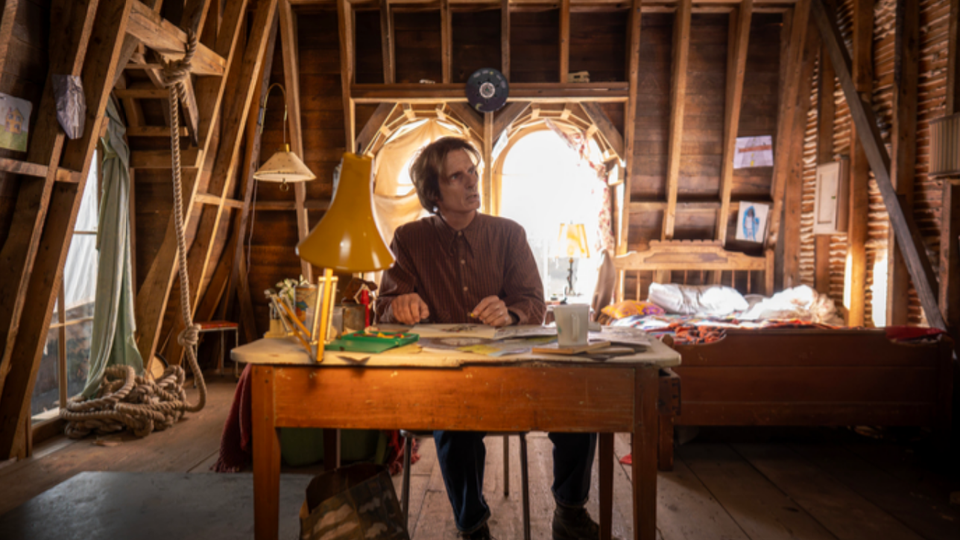
Consider Jade’s endeavor to devise a strategy for retrieving children’s bones from the sacrificial chamber via the tunnels. Boyd’s insistence on zero casualties presents a significant logistical hurdle. Even a spectral Father Khatri’s intervention highlights the impracticality of such a demand, yet Boyd remains steadfastly unwilling to compromise.
Almost immediately, the thought occurred: why not utilize Jade’s prior experience in the chamber and the presence of roots connecting to the surface? A direct approach from above—digging into the chamber, rappelling down, securing the bones, and then being hoisted to safety—seemed a far more logical solution.
When Jade eventually recalls this alternative access point, his eagerness to share it with Boyd is tempered by the plan’s inherent flaws. The strategy, attributed to a supposed genius, appears needlessly convoluted, suggesting either a narrative deficiency or a deliberate attempt to manufacture conflict.
The proposed plan involves a dual operation: one team ventures into the tunnels to reach the chamber and secure the remains, while a second team simultaneously works to uproot the bottle tree, ostensibly creating an escape route from above. The necessity for this simultaneous execution is questionable.
Why introduce such a high-risk, synchronized maneuver? Why not prioritize establishing a secure exit before any personnel enter the dangerous tunnels? The fundamental issue lies in the lack of a pre-established Plan B, leaving individuals vulnerable should the tree-removal process encounter complications.
A simpler approach would be to either excavate an opening adjacent to the tree or extract the tree first, thereby guaranteeing a safe egress. This alternative mitigates the risk of personnel being trapped should the tree extraction fail. Furthermore, if a viable opening is created, entry could be facilitated from above, bypassing the tunnels entirely.
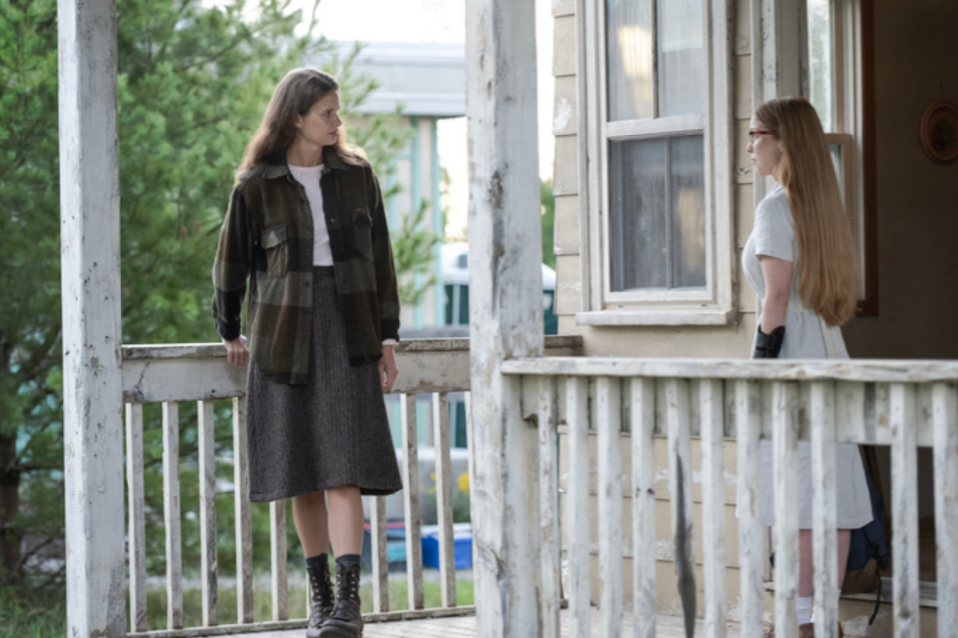
The absence of such considerations from the characters’ planning is perplexing. It raises questions about the intelligence and collaborative decision-making of Jade, Boyd, and Kenny. Instead of engaging in constructive dialogue to refine the plan, Boyd’s volatile demeanor leads to abrupt dismissals and a failure to explore more rational solutions.
Beyond Boyd, Tabitha’s actions are particularly frustrating. Her reluctant agreement to allow Victor to assist Ethan, only to prematurely dismiss his preparedness for the worst, sets a troubling precedent. Victor’s poignant reminder of his mother’s similar assurances highlights Tabitha’s pattern of offering false comfort.
Victor’s recounting of the Boy in White’s directives—the need for sustenance, the battle against loneliness, and a third, unstated piece of advice—is abruptly halted by Tabitha’s interference. This interruption, preventing Victor from imparting crucial wisdom, underscores Tabitha’s self-centered approach, prioritizing superficial reassurances over tangible guidance.
Her prioritization of unfounded hope over Victor’s potentially life-saving counsel places her at the forefront of the season’s most exasperating characters. This sentiment is compounded by Boyd’s increasingly erratic behavior, seemingly exacerbated by his disturbing visions, which he misinterprets as reflections of his wife’s past actions rather than premonitions of future events.
Henry’s arc is equally concerning. His initial disappointment in Victor is overshadowed by his own emerging visions, depicting a delusional state wherein he must “eliminate the anchor.” This internal conflict, coupled with the influence of a malevolent entity, suggests a dangerous path toward potentially harming Victor or others.
Kristi’s reprimand of Mari for offering Fatima hope is another point of contention. While Fatima’s dire medical condition—characterized by a heart rate and blood pressure inconsistent with life—raises questions about her prognosis, Kristi’s approach is perceived as overly critical. The narrative’s exploration of Fatima’s suffering, following her prior ordeal, emphasizes the pervasive lack of fairness within the show’s universe.
A lighter moment occurs at the RV, where Tabitha, after an inexplicable decision to let Ethan accompany Victor to Colony House, receives a threatening call from “Fake Thomas.” This leads her to the RV, where Ethan’s drawings are displayed, and she encounters the Man in Yellow. His cryptic pronouncements about potential outcomes—either freeing the children or unleashing unprecedented suffering—and his chilling admission of feeding on torment rather than merely inflicting death, heighten the sense of dread.
Scattered Thoughts
- Jade’s sarcastic retort to Boyd’s dismissal of his plan as mere “landscaping” was a moment of levity, though Boyd’s consistently dismissive attitude is becoming tiresome.
- The fate of the Talisman, potentially consumed with Roger, raises concerns about lost protective artifacts.
- The narrative could benefit from a character with mystical abilities to counter the Man in Yellow’s influence.
- Julie’s limited time-traveling interventions this season have been surprisingly scarce.
- The purpose behind the Man in Yellow displaying Ethan’s pictures remains unclear.
- Sophia’s clandestine actions and manipulative behavior go unnoticed, despite mounting evidence, including Sara’s renewed communication coinciding with Sophia’s arrival. Boyd’s dismissal of his visions as mere medical phenomena also seems shortsighted.
- The Man in Yellow’s possession of Jim’s tooth strongly suggests a dark, vampiric equivalent of a “tooth fairy” persona.
- It is hoped that Tabitha will disclose her encounter with the Man in Yellow, rather than dismissing it as unreal.
- Boyd’s visions should be interpreted within the show’s supernatural context, rather than being solely attributed to medical or psychological issues. Similarly, Fatima’s condition defies conventional scientific explanation. Henry’s reticence, while perhaps understandable given his recent arrival, should still be overcome by seeking counsel.
The central question remains: who will decipher Sophia’s true nature? The possibility of Tabitha recognizing a familiar melody or Sara connecting Sophia’s suspicious behavior to the missing suit and the Man in Yellow encounter warrants investigation. However, the characters’ communication patterns, characterized by frequent interruptions and unresolved discussions, hinder the collaborative process of uncovering critical truths.
Business Style Takeaway: Effective strategic planning requires open communication and a willingness to challenge assumptions, even when under pressure. Characters’ failure to collaborate and critically evaluate proposed solutions leads to inefficiencies and missed opportunities, mirroring real-world business scenarios where groupthink and leadership inflexibility can derail progress.
Source: : www.forbes.com