

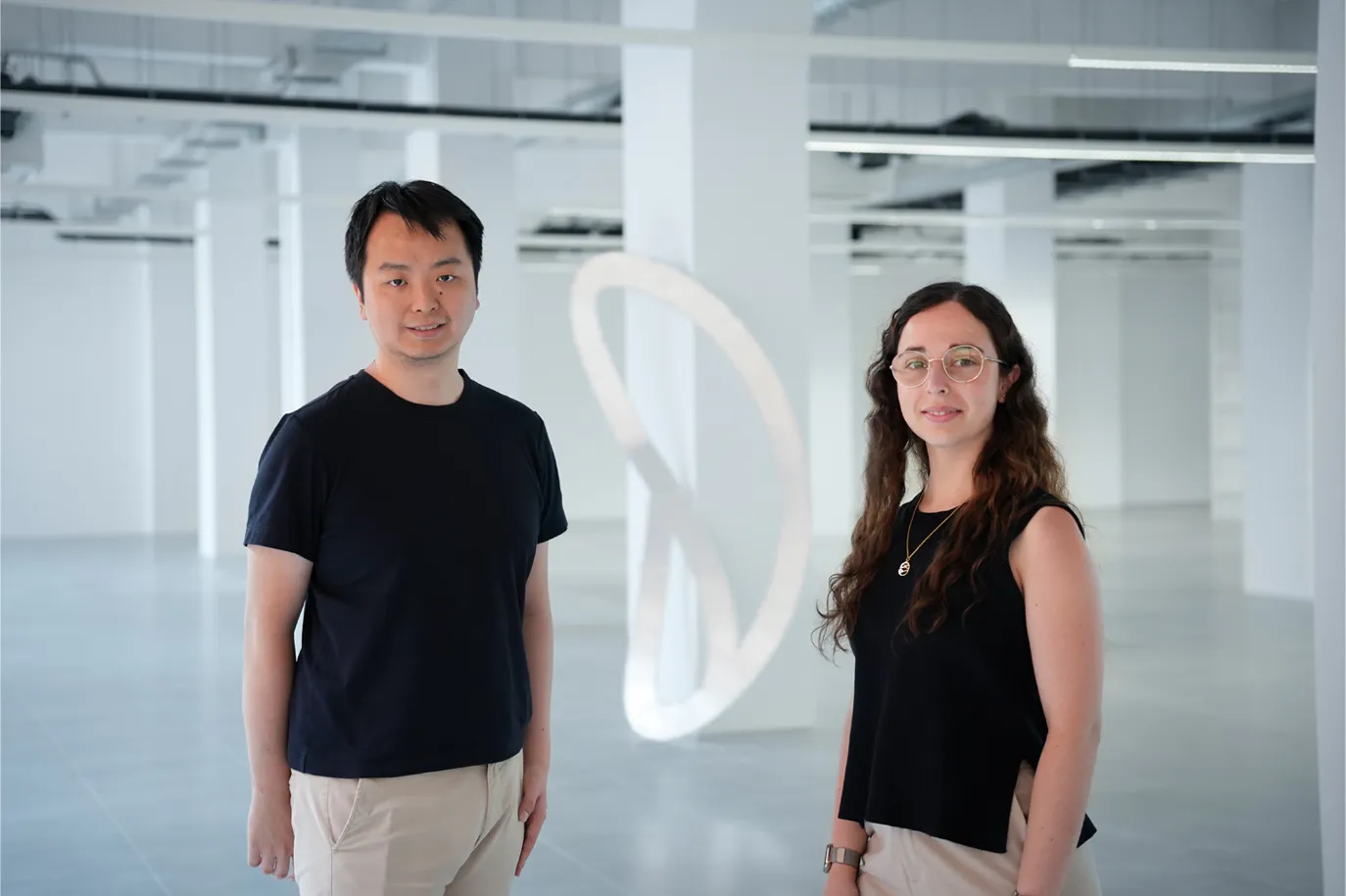
The escalating demand for automation in manufacturing, driven by persistent labor shortages, has created fertile ground for robotics startups that promise adaptability beyond single-task efficiency. Theker, an artificial intelligence robotics company, is positioning itself to capture this market by developing machines designed for versatile application, moving beyond the limitations of pre-programmed robots.
Core Technology and Vision
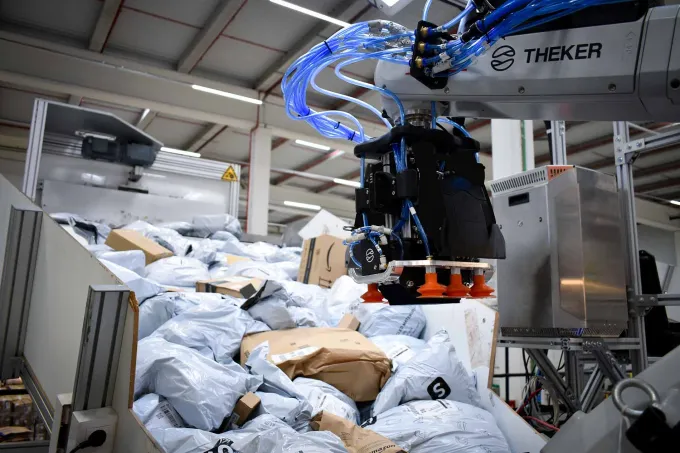
Unlike conventional robotic systems or fixed-form humanoids, Theker’s approach emphasizes modularity and reconfigurability. The company’s co-founder, Carla Gómez Cano, highlights the limitations of current automation, stating, “If you always have to put the same cookie in the same box, that works perfectly, but most processes aren’t like that.” Theker’s robots are engineered with interchangeable components, allowing arms, hands, and even the overall chassis to be adapted for diverse operational requirements, such as package sorting, apparel packing, or the handling of beverages and canned goods within warehouse environments.
Market Validation and Investment Traction
The endorsement from Inditex, the parent company of Zara, signifies Theker’s initial focus on the retail and logistics sectors. However, the company’s strategic roadmap extends to more demanding industrial manufacturing environments where complex and large-scale manual operations are prevalent. This broad market ambition has fueled significant investor interest, culminating in an $85 million Series A funding round, described by the company as the largest robotics Series A in Europe. This investment was co-led by CRV and included participation from major entities like Samsung and Aglaé Ventures, an investment arm of LVMH.
The inclusion of Samsung as both a potential customer and investor is particularly noteworthy. Gómez Cano indicated that discussions are advanced, and the synergy could provide Theker with substantial revenue and manufacturing credibility. The company’s go-to-market strategy bypasses traditional R&D departments to engage directly with logistics and operations teams, aiming for quicker adoption cycles. Theker plans to establish showrooms across key markets in Europe, the U.S., and Asia to support its expansion and demonstrate its capabilities. The company anticipates a significant scaling of its workforce, potentially growing from dozens to 120 employees by year-end, a growth trajectory that notably exceeded initial funding expectations.
The successful capital raise reinforces Theker’s commitment to maintaining its headquarters in Barcelona, a burgeoning hub for robotics innovation, and to leveraging the broader European technological ecosystem. Gómez Cano expressed optimism, stating, “It has never been a barrier to acceleration for us, so we are making the most of it.”
Business Style Takeaway: Theker’s emphasis on modular, reconfigurable robotics addresses a critical gap in industrial automation, offering a more flexible and scalable solution than rigid, single-purpose machines. This approach has significant implications for industries facing labor shortages and seeking to enhance operational efficiency, positioning Theker as a potentially disruptive force in the evolving landscape of advanced manufacturing and logistics.
Details can be found on the website : techcrunch.com