

Despite formidable obstacles, the New York Knicks consistently achieved victory, while the San Antonio Spurs frequently encountered defeat.
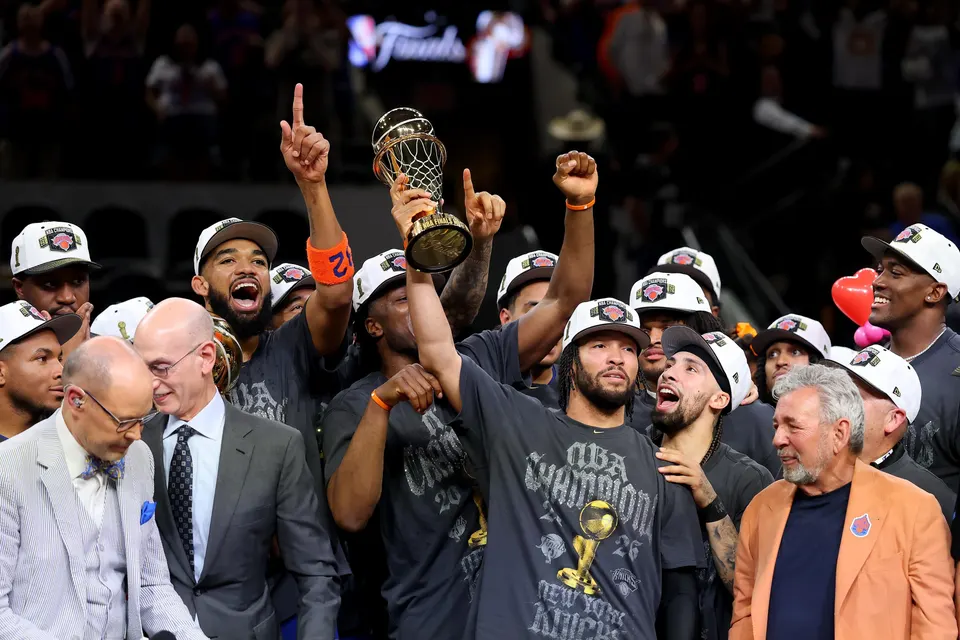
This outcome presents a striking irony. The New York Knicks have clinched the 2026 NBA championship, concluding a 53-year drought that was exacerbated by years of organizational turmoil. In contrast, the Spurs, a franchise long lauded for its astute management, inspirational coach Gregg Popovich, and selfless stars like Tim Duncan, had amassed five NBA titles. However, the Knicks secured their decisive Game 5 victory over the Spurs with a 94-90 score, signifying a fundamental shift in their team identities.
The Knicks ascended to championship contention by assembling the optimal combination of talent: selfless stars, effective supporting players, astute coaching, and unwavering resilience. Conversely, the Spurs demonstrated they were not yet prepared to contend for a championship, struggling to consistently integrate these essential qualities.
Key Player Matchups and Coaching Decisions
Veteran Knicks guard Jalen Brunson consistently delivered in crucial moments, whereas Spurs guard De’Aaron Fox faltered with critical missed shots and costly errors. While Spurs center Victor Wembanyama largely showcased his burgeoning talent, Knicks center Karl-Anthony Towns and Mitchell Robinson effectively limited his impact.
Knicks head coach Mike Brown skillfully managed his player rotations and strategically challenged calls. In contrast, Spurs first-year coach Mitch Johnson hesitated to bench Fox during critical junctures and allowed his team to rely excessively on three-point attempts.
Knicks forwards OG Anunoby and Josh Hart consistently made impactful plays on both ends of the court, embracing their supporting roles. Spurs guards Stephon Castle and Dylan Harper demonstrated flashes of potential, but their contributions were inconsistent due to questionable coaching rotations, limited offensive opportunities, and missed crucial shots.
The Knicks navigated the Spurs’ physical play effectively, even when opposing physicality went uncalled. The Spurs, however, often appeared overwhelmed by the Knicks’ physicality, which was typical of playoff intensity.
Few observers anticipated this dynamic to unfold in such a manner.
Unexpected Trajectories
The Spurs had not reached the NBA postseason since their streak ended in 2020. Despite this, their performance in the Finals suggested they were not overwhelmed by the magnitude of the moment. Wembanyama has already established himself as a generational talent. Fox, Harper, and Castle developed a promising synergy in managing ball-handling and shot distribution. Johnson demonstrated adeptness in player management and strategic execution. Consequently, the Spurs impressively dethroned the defending champions, the Oklahoma City Thunder, in a seven-game Western Conference Finals series.
The Knicks, conversely, faced challenges establishing their dominance within a weakened Eastern Conference, contending with underperforming rivals like the Cleveland Cavaliers and Milwaukee Bucks, and navigating key injuries to teams such as the Indiana Pacers. While Brunson and Towns coexisted effectively, their combined potential was not consistently maximized, and the Knicks struggled to identify a reliable third scoring option. Head coach Mike Brown, with his extensive experience, preparedness, and adaptability, had proven his coaching mettle. Nevertheless, his initial tenure was marked by the pressure to deliver a championship, especially after replacing Tom Thibodeau shortly after their first Eastern Conference Finals appearance in 26 years.
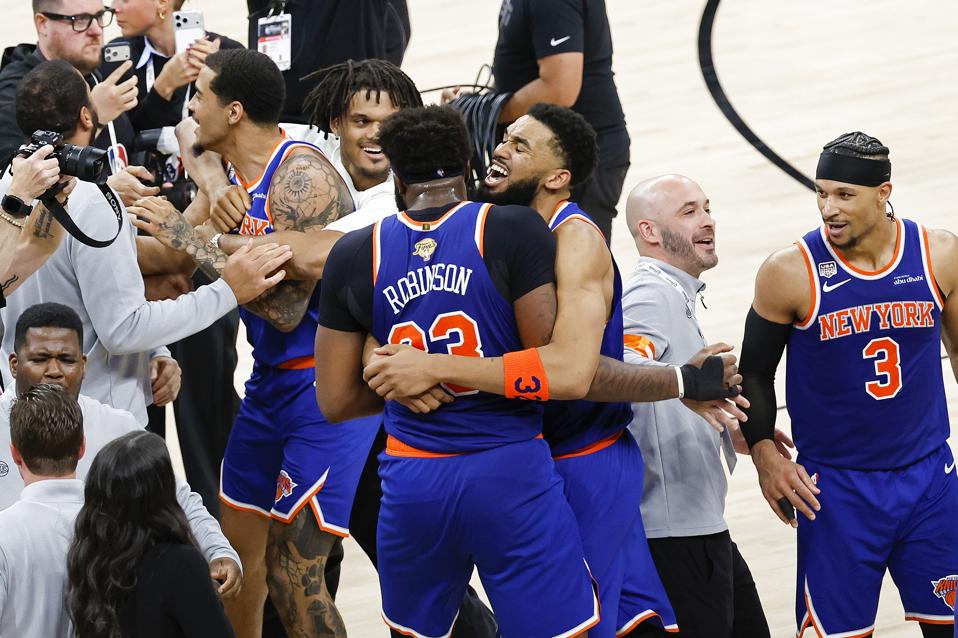
The Knicks ultimately proved capable of meeting elevated expectations. Since January, they transformed into one of the NBA’s premier defensive teams. Offensively, Brunson and Towns maintained their individual brilliance while enhancing their two-man chemistry. Brunson showcased his leadership in guiding a team to an NBA championship despite his size. Towns demonstrated two-way impact, even while contending with foul trouble. Anunoby’s improved health allowed him to excel as a two-way player, culminating in a dramatic game-winning tip-in to secure Game 4. Mikal Bridges found greater scoring consistency while maintaining his effectiveness as a perimeter defender. Josh Hart remained a reliable contributor across all facets of the game. While the Knicks’ 13-game postseason winning streak was partly aided by facing injury-plagued and chemistry-compromised opponents, their dominance was primarily driven by their unwavering consistency.
The Spurs, on the other hand, suddenly appeared unprepared for this championship stage.
Spurs’ Struggles and Knicks’ Triumph
The Spurs seemed emotionally depleted after expending significant energy to overcome the defending champions. Wembanyama’s fundamental brilliance was occasionally overshadowed by over-aggression or unnecessary physicality. Fox, who had provided steady leadership and clutch performances throughout the season, played as if he were a rookie, struggling to make crucial shots during the series. A critical error in Game 4 saw him drive for a layup instead of managing the clock. The Spurs lacked dependable role players to support their star talent.
The Spurs organization may glean valuable lessons from this series, potentially setting the stage for future championship runs. The Knicks, meanwhile, might have experienced a serendipitous season and could face challenges replicating this championship formula. However, for the 2025-26 campaign, the Knicks have finally delivered an NBA championship to their devoted fanbase, emulating the qualities that once defined the Spurs’ success. While selflessness, collaboration, and resilience are often associated with smaller market teams, the Knicks mastered these attributes to restore greatness to one of the NBA’s largest markets.
Business Style Takeaway: The New York Knicks’ championship victory highlights the critical importance of team cohesion, clutch performance, and adaptive coaching, even for established franchises. This win underscores that success in highly competitive markets hinges not just on star power, but on consistent execution and the ability to embody qualities traditionally associated with underdog organizations.
Information compiled from materials : www.forbes.com